Women of color student veterans experience higher education differently
Institutions of higher ed can set out a welcome mat for women of color veterans

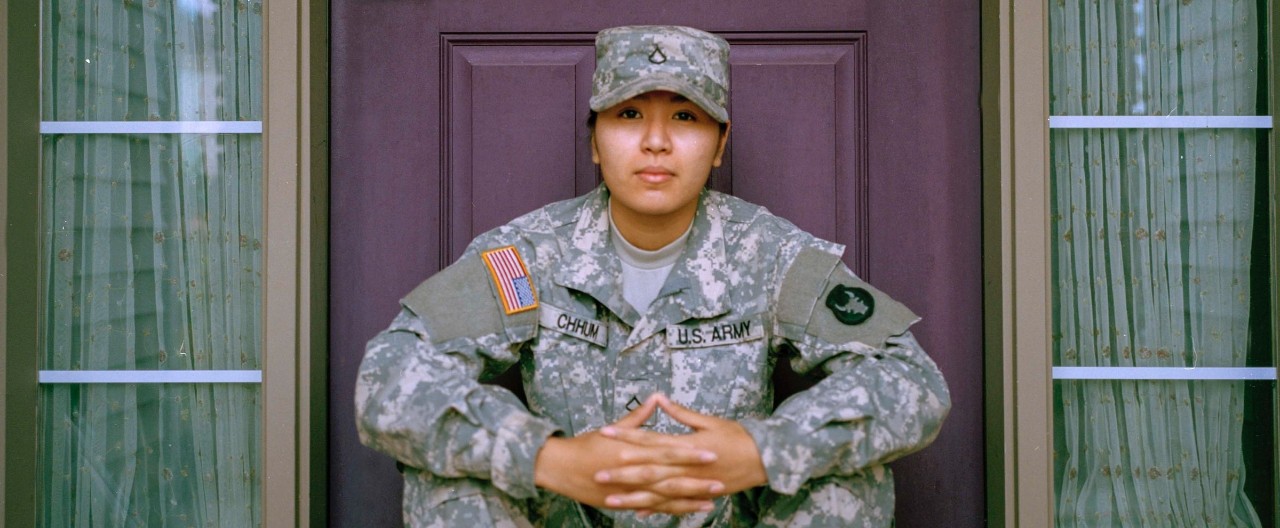
Women of color who are veterans and pursue higher education are what University of Cincinnati researcher Rachel Saunders, PhD, refers to as students who possess “triple minority status,” and these students, she says, have the potential to go overlooked, unheard and under acknowledged in the pursuit of higher education.

Rachel Saunders, PhD, joined the UC faculty in 2021. research focus is on training for counselors in cultural responsiveness and social justice advocacy work in academic, career and social/emotional development for students. Photo/provided by Saunders.
“When we think of veterans, we tend to think of that ‘good ole boy’ soldier image,” says Saunders, an assistant professor of counseling in UC’s School of Human Services and lead author on a study, called “Bended womanhood bended back: The intersection of race, gender, and culture in women of color veterans and their transition into higher education.”
The study, which appears in the American Psychological Association’s Journal of Diversity in Higher Education, revealed four interrelated themes that characterize the transition to higher education journey for women of color: (a) suppressed and redemanded identity, (b) fighting for visibility, (c) marginalized academic identity, and (d) no belonging.
According to Saunders, the findings came to light during a larger study of veterans on campus at the University of North Carolina while Saunders was studying for her doctoral degree. During the study interviews, Saunders says, it became apparent that a small group of women of color veterans expressed different experiences and barriers than all other student veteran groups.
“They were used to being cultural outsiders, and the study highlights the systemic barriers of being a woman of color and a veteran,” where the perception of a veteran is hypermasculine.
Veterans’ offices at academic institutions should evaluate if their office is perpetuating social stereotypes of white servicemen
Rachel Saunders UC assistant professor of counseling
For example, there is an inherent dichotomy between the military, which is rigorously structured, and academia where students are encouraged to explore.
Additionally, feelings of isolation led women of color veterans “to proactively construct their own support system on and off campus, which further served as a psychological sanctuary and motivational cradle,” says Saunders. In the context of higher education, the participants showed great resilience and relied on social strategies to honor their marginalized identities.
The study, she says, has implications for all institutions of higher education. “Veterans’ offices at academic institutions should evaluate if their office is perpetuating social stereotypes of white servicemen. Beyond just the veterans’ office, institutions need to be creative with how to support women of color student veterans given the deeply seeded structure of racism and oppression.”
Saunders research focus is on training for counselors in cultural responsiveness and social justice advocacy work in academic, career and social/emotional development for students.
Featured image at top courtesy of Unsplash.
Impact Lives Here
The University of Cincinnati is leading public urban universities into a new era of innovation and impact. Our faculty, staff and students are saving lives, changing outcomes and bending the future in our city's direction. Next Lives Here.
Related Stories
Cancer Center plays key role in lab research, clinical trials for new pancreatic cancer drug
September 1, 2026

WLWT and WCPO highlighted the contributions of University of Cincinnati Cancer Center researchers that helped lead to the recent FDA approval of daraxonrasib, a new treatment for pancreatic cancer.
Campus buzz returns as UC students experience their first week
August 27, 2026
Near-perfect weather, record first-year enrollment, Thrifty Move-In and a packed Involvement Fair mark the University of Cincinnati’s first week back as thousands of Bearcats move into campus housing.
UC, NKU renew longstanding partnership supporting Army ROTC cadets
August 26, 2026
The University of Cincinnati Army ROTC and Northern Kentucky University (NKU) have renewed a longstanding partnership that supports students preparing to become Army officers and leaders in their communities. The universities formalized the renewed agreement during a signing event Aug. 11 at NKU.