
Grant supports UC pilot program that couples science with humanities
UC professor has a philosophy about science: Nonscientists can participate too

The introduction to math and science typically begins in elementary and middle school. That’s also when students begin to think that they have to be a math whiz to study science, says University of Cincinnati assistant professor of philosophy Melissa Jacquart.
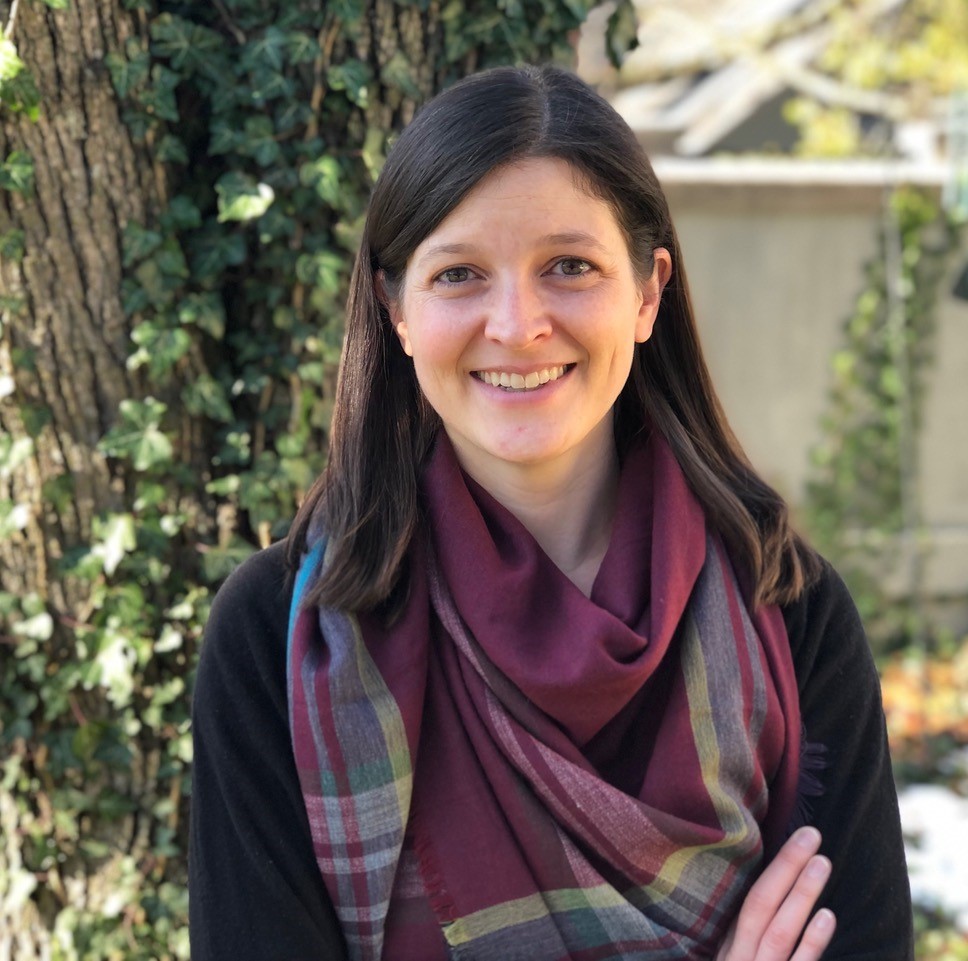
Melissa Jacquart wants to teach middle school students another way of looking at science, through a philosopher’s eyes. Photo/provided.
Jacquart, however, wants to change that impression, by offering middle school students an after-school program that introduces them to another way of looking at science, through a philosopher’s eyes.
“My intent is to show the students who think of themselves as nonscientists that they do have a place in science, and that the humanities have a role in science as well,” says Jaquart who has been awarded a $50,000 Whiting Public Engagement Program grant to pilot a Philosophy & Science Fair Club for seventh and eighth graders at a Cincinnati Public School in fall 2023.
Although the program has a science foundation, it will more so focus on the humanistic aspects of science, she says. “It will be bidirectional that way,” says Jaquart whose research focus examines the role philosophy can play in general public understanding of science and in science education. For example, students may consider how scientists’ intellectual context and worldviews impact the scientific method and process of discovery or the role trust plays in the public’s understanding of scientific findings.
Jacquart’s initiative will be carried out through the UC Center for Public Engagement with Science, in partnership with the Greater Cincinnati STEM Collaborative. The groups will work to create lesson plans designed to introduce students to the philosophical and other humanistic aspects of science by identifying a theme, such as space exploration or climate change, and then deploying philosophical methods of inquiry to deeply investigate it. She will teach the pilot program with graduate student assistance.
This is a deeply innovative initiative
Angela Potochnik Professor of philosophy and director of the Center for Public Engagement with Science
“At the Center for Public Engagement with Science, we prioritize an interdisciplinary approach including the humanities, as well as partnership with other community organizations; this is a deeply innovative initiative that embodies both of these priorities,” says Angela Potochnik, UC professor of philosophy and the center’s director.
Over the course of 15 weeks, students will develop individual projects related to the shared theme and informed by philosophical discussion. The course will culminate with each student entering their project in the Southwest Ohio Science and Engineering Expo Science Fair, one of the nation’s largest student science fairs.
The overall intent, says Jacquart, is to expand the program to other Cincinnati public schools and schools across the country.
According to the Whiting Foundation grant committee, they saw Jacquart’s project as one that teaches children cross-disciplinary inquiry skills that are indispensable to civic literacy and described it as representing an important avenue for demonstrating the ways that the humanities are essential.
Per the foundation: “Without the humanities … we can’t fully understand why science matters.”
Featured photo at top of glass beakers/Adobe.
Impact Lives Here
The University of Cincinnati is leading public urban universities into a new era of innovation and impact. Our faculty, staff and students are saving lives, changing outcomes and bending the future in our city's direction. Next Lives Here.
Related Stories
'Very inspiring'; UC professor wins award for greenhouse-gas research, credits students for her passion
October 30, 2026
Amy Townsend-Small, a College of Arts and Sciences professor, won the 2026 Sustainability Leadership award for her nearly two decades of work looking into the oil and gas industries. Townsend-Small, who teaches for the School of Environment and Sustainability (SEaS), said she studies where methane is emitted through the life cycle of natural gas, and what can be done to reduce emissions. Methane, according to Townsend-Small, is very good at trapping heat in the atmosphere. Specifically, she works to quantify the emissions with the goal to be providing accurate data for policy change.
When grief doesn't end: Nursing PhD students bring a classroom theory to Ohio families
October 29, 2026
Most of us think of grief as something with an ending. A loss happens, it hurts, and over time the hurt fades. For many parents of children with developmental disabilities, it doesn't work that way. The sadness can quiet down for months or years and then come back. It might return on the first day of kindergarten, at a cousin's wedding, at a high school graduation, or on the day a young adult ages out of school services. Nurses and researchers have a name for this: chronic sorrow. Last October, two University of Cincinnati College of Nursing PhD students helped bring that name to a room of families, people with disabilities and the professionals who support them.
Arts and Sciences student wins national award for work on vigilante political violence in India
October 29, 2026
A competitive academic award in the political sciences arena has been captured by College of Arts and Sciences student, Yash Sharma. The prestigious HFG Emerging Scholar award is open to students from across the world and every discipline within the scope of political violence. Sharma's dissertation is on the study of anti-minority vigilante violence, specifically religious nationalism and political violence in his home country of India.