
Op-Ed: Adopt a ‘both/and’ approach to create policies that sustain over time
Lindner Dean Marianne Lewis proposes way for bridging societal division

The Supreme Court’s Dobbs decision that overturned a half-century of abortion rights has sparked intense and opposing emotions. Lindner College of Business Dean and Professor of Management Marianne Lewis, PhD, explored this issue in a recent editorial for MarketWatch.
"We find ourselves, yet again, in a polarized political fight with the battlegrounds in Congress, in the boardrooms, on the streets, on social media and, for some of us, at our kitchen tables.”
Lewis' research and forthcoming book, “Both/And Thinking: Embracing Creative Tensions to Solve Your Toughest Problems,” explore how organizations can transform tensions into opportunities for innovation and personal growth.
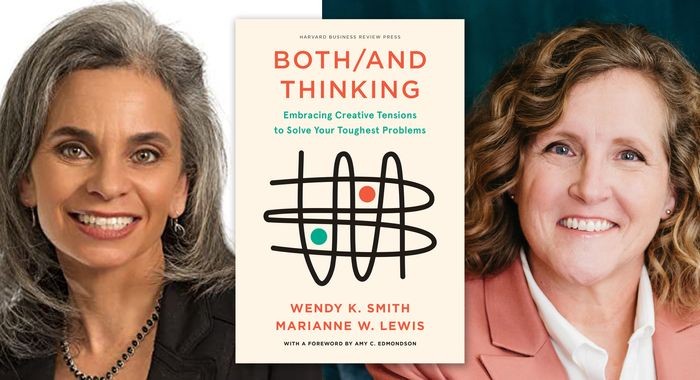
Smith, left, and Lindner Dean Marianne Lewis coauthored "Both/And Thinking: Embracing Creative Tensions to Solve Your Toughest Problems."
Lewis and coauthor Wendy Smith, PhD, Dana J. Johnson Professor of Management at the University of Delaware Lerner College of Business and Economics, "have spent the last 25 years studying how people face such complex and tenuous issues. Our research shows that when decisionmakers engage opposing positions and adopt what we call both/and thinking, they generate more sustainable and creative solutions.”
Impact Lives Here
The University of Cincinnati is leading public urban universities into a new era of innovation and impact. Our faculty, staff and students are saving lives, changing outcomes and bending the future in our city's direction. Next Lives Here.
Related Stories
How can Cincinnati provide more affordable housing? This new lab aims to find out
October 16, 2026

The University of Cincinnati Real Estate Center helped launch a new regional research and development initiative designed to identify, test and scale solutions to the region’s housing challenges called the Housing Innovation Lab. The project is built around a simple idea: What if communities approached housing challenges the way leading companies approach innovation?
Collaboration over consultation
October 16, 2026
New University of Cincinnati research published in the journal Health Expectations found stroke survivors participating in rehab research desire an approach that prioritizes shared decision-making, peer relationships and a focus on what they can accomplish rather than their deficits.
Cincinnati Spotlight features CCM's new Conservatory Series concerts
October 15, 2026

Cincinnati Public Radio features CCM's new Conservatory Series in its latest "Cincinnati Spotlight." The series launches on Wednesday, Oct. 21 with its inaugural "Grand Tradition" concert featuring a variety of CCM's distinguished faculty artists.