Allegheny Front: UC survey finds urban woodlands dense with invasive species
UC biologist Denis Conover is replicating plant surveys from 200 years ago

The Allegheny Front, a public radio program in Pennsylvania, highlighted a botanical survey by a University of Cincinnati professor that found an abundance of invasive species growing wild in urban woodlands compared to similar surveys 100 and 200 years earlier.
UC College of Arts and Sciences professor Denis Conover is retracing the steps of botanist Thomas G. Lea, who conducted a plant survey of Greater Cincinnati between 1834 and 1844, and a second survey of the same areas by famed UC botanist E. Lucy Braun in her 1934 study published in The American Midland Naturalist.
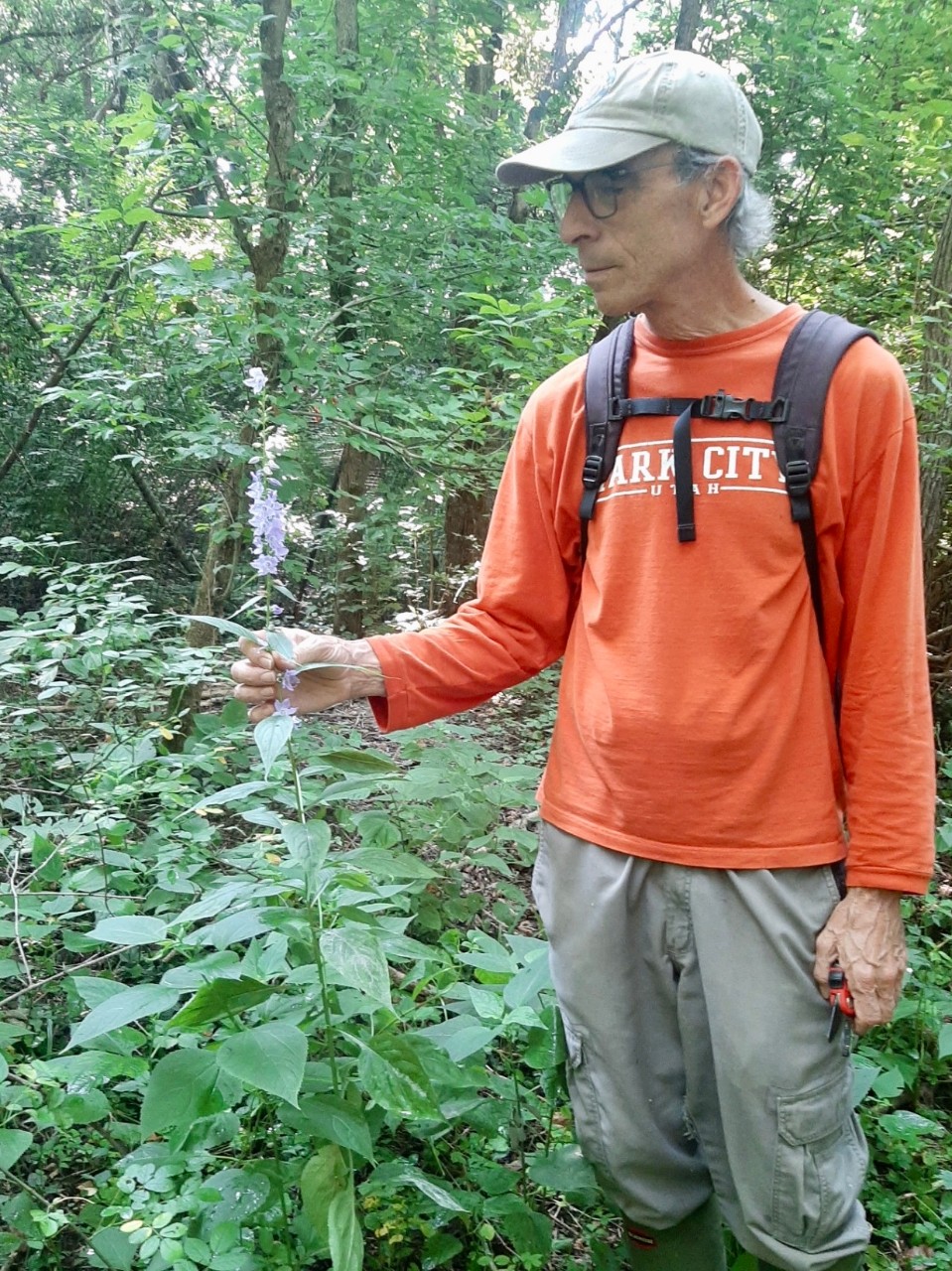
UC biology professor Denis Conover will teach a class titled Flowering Plant Classification this fall. Photo/Provided
Conover teaches botany, including an upper-level lecture class this fall titled Flowering Plant Classification. He also leads nature hikes Sundays at Burnet Woods where he talks about the plants and animals they find.
While Braun found few or no invasive species in her survey, Conover said he is finding dozens of species including some such as Amur honeysuckle that were the dominant species in some areas.
“One of the most striking things that I’ve noticed is the huge increase in non-native, invasive plants that have invaded the woodlands here in southwestern Ohio,” Conover told Allegheny Front managing editor Julie Grant. “And it’s very disturbing because it’s very detrimental to the native plants, plus the wildlife, including the insects that depend on those native plants.”
Many of the species he is finding such as Callery pear trees were introduced to neighborhoods through horticulture. Birds quickly spread their seeds.
Likewise, Amur honeysuckle was a favorite backyard bush but has become ubiquitous in many forests where its leafs out in late winter and stays green later in the fall, crowding out native plants growing in the understory.
“So once it gets going in the woods, it just keeps spreading and spreading, and it literally takes over because there will be very little vegetation growing underneath these shrubs,” he said.
But Conover told the Allegheny Front that volunteers have had some success eradicating invasive species such as Amur honeysuckle, allowing native plants to return.
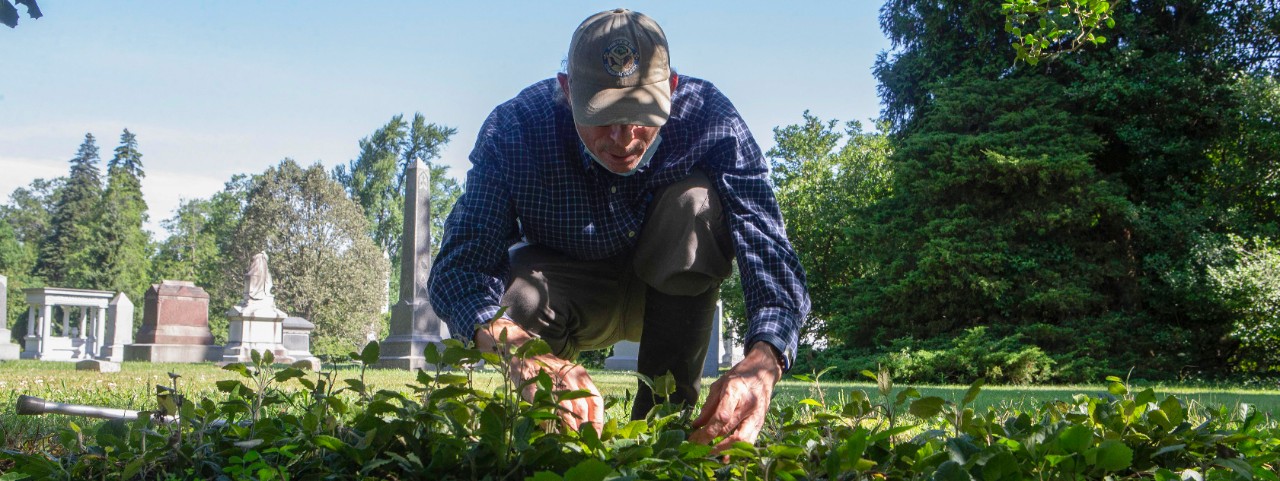
Featured image at top: UC biology professor Denis Conover examines the ground cover on E. Lucy Braun's grave at Spring Grove Cemetery & Arboretum. Photo/Joseph Fuqua II/UC
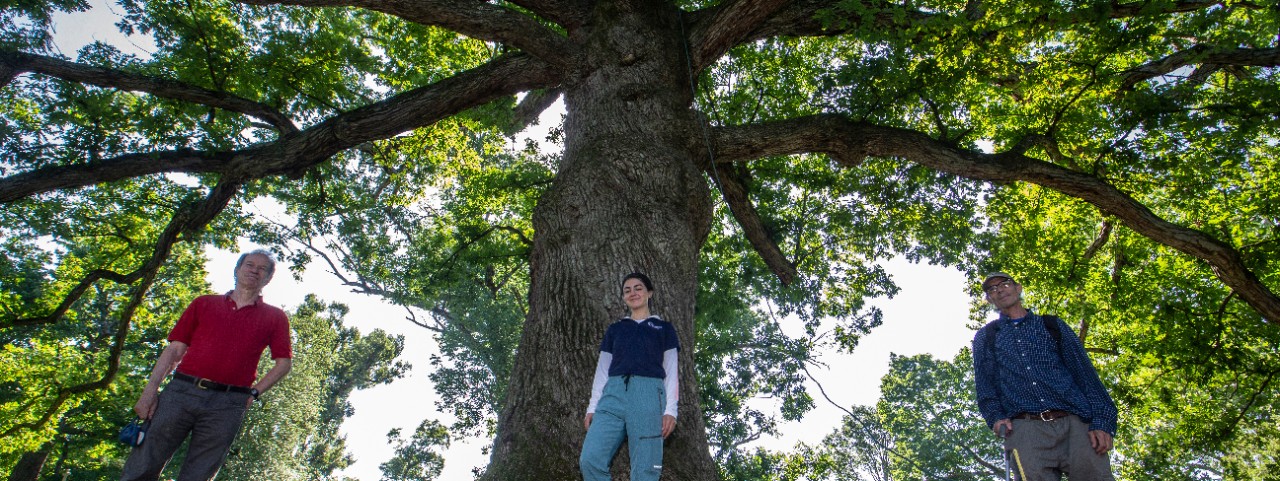
Bob Bergstein, left, Samantha Al-Bayer and Denis Conover stand in the shade of an enormous white oak believed to be at more than 400 years old at Spring Grove Cemetery & Arboretum. Photo/Joseph Fuqua II/UC
Related Stories
These teeny spiders are social media stars
August 28, 2026

The New York Times turned to a University of Cincinnati professor to explain the appeal of jumping spiders on social media.
An internal divide among unions on AI impacts the Wisconsin gubernatorial race
August 28, 2026

Anne Lofaso, a professor in the Donald P. Klekamp College of Law at UC, spoke with Wisconsin Public Radio, about the schism among unions over AI and whether it is a plus, a negative, or somewhere in between when looking at job creation.
UC, NKU renew longstanding partnership supporting Army ROTC cadets
August 26, 2026
The University of Cincinnati Army ROTC and Northern Kentucky University (NKU) have renewed a longstanding partnership that supports students preparing to become Army officers and leaders in their communities. The universities formalized the renewed agreement during a signing event Aug. 11 at NKU.