55KRC: UC studies sickle cell's effect on neurological conditions

Sickle cell disease, a genetic blood disorder that primarily affects people of African ancestry, can cause a variety of symptoms, including muscle pain, nonhealing ulcers, stroke and cognitive impairment.
Hyacinth I. Hyacinth, PhD, MBBS, associate professor of neurology and rehabilitation medicine and the Whitaker and Price Chair in Brain Health in UC’s College of Medicine, joined 55KRC's Simply Medicine program to discuss his research into how sickle cell disease affects stroke and cognitive impairment.
Hyacinth explained that children as young as two with sickle cell disease are at risk for stroke, and children as young as three with sickle cell can have cognitive impairment.
"So that in itself makes it a heartbreaking complication, because when you see a five-year-old with a stroke, it’s heart wrenching," he told Simply Medicine.
Cognitive impairment is in part caused by inflammation in the brain, and Hyacinth's lab recently received new grant funding to test if a drug can help "turn down" the inflammation and reduce cognitive impairment.
Listen to the Simply Medicine interview. (Note: Segment begins around 9:30 mark of program.)
Read more about Hyacinth's research.
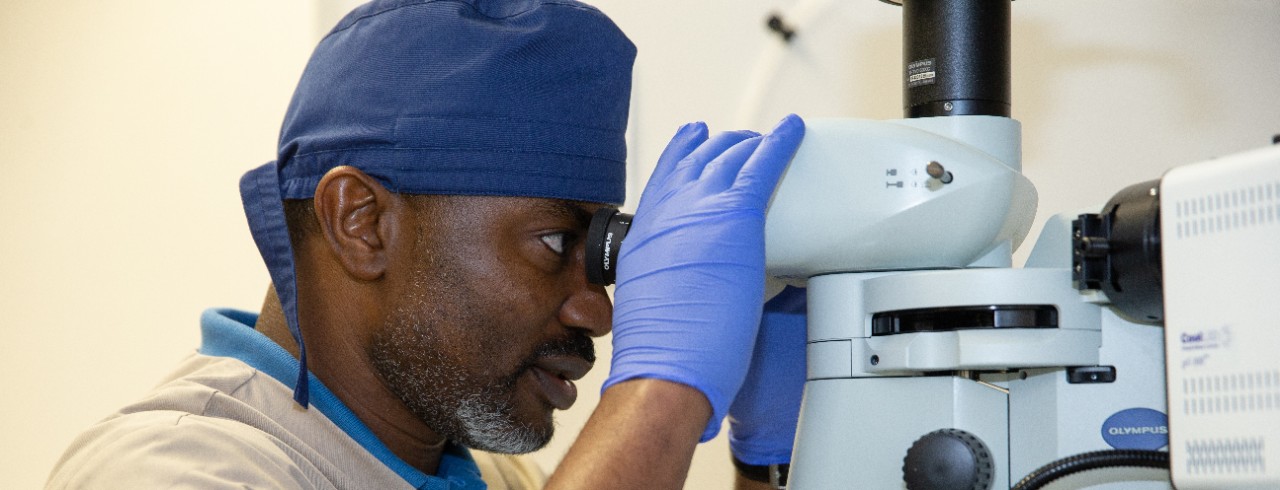
Featured photo at top of Hyacinth working in his lab. Photo/Andrew Higley/UC Marketing + Brand.
Related Stories
UC doctoral student shares his journey with Spectrum News
July 27, 2026

UC doctoral student Amota Ataneka spoke with Spectrum News about his educational journey. Ataneka, a native of the Pacific island nation of Kiribati, is one of 35 emerging scholars across the United States to win the National Academy of Education/Spencer Dissertation Fellowship.
How scammers can persuade you with AI
July 27, 2026
Spectrum News recently dove into how cloning voices with artificial intelligence is making it easier to scam people over the phone. The news outlet spoke with Kimberly Hyun, assistant professor of marketing at UC’s Lindner College of Business, to examine why AI is making it so much easier to trick people.
Decade of discovery
July 27, 2026
Every summer, UHP Discover has connected undergraduate students in the University Honors Program (UHP) to a unique array of opportunities in original interdisciplinary research. This year, the program celebrates its 10th anniversary.