
Fast Company: How to overcome email overload
Lindner professor says a new mindset is key to reducing stress, inefficiency

Email overload has become a major problem for knowledge workers, increasing stress and inefficiency, Scott Dust, PhD, an associate professor of management in the University of Cincinnati’s Carl H. Lindner College of Business, wrote in Fast Company.
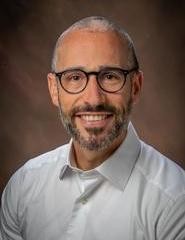
Scott Dust, PhD, associate professor of management at the University of Cincinnati Carl H. Lindner College of Business.
“Although email has become an important and ubiquitous communication medium, it has also become an increasingly problematic source of burnout,” Dust wrote. “This phenomenon, called email overload, entails an ongoing inability to effectively respond to the volume of email messages that one receives, and it’s a bigger problem than you might suspect. Research suggests that individuals who struggle with email overload are not only experiencing higher levels of stress, but are incredibly inefficient.”
Workers have developed strategies to combat email overload, but they aren’t sufficient in overcoming the problem. That’s because it’s not a tactical problem but rather a psychological one, Dust wrote.
Dust suggested people should take care of themselves first and reframe the conversation of email overload in terms of “both/and” not “either/or.” Workers should focus on the merits of always being on email and never being on email and come up with solutions that tap into the benefits of both while minimizing the negative impact.
“Looking back on its history, email can be and is an amazing tool that has revolutionized the speed at which information is shared,” Dust wrote. “But more isn’t always better. To ensure you’re maximizing your contributions for both you and your organization, strategies and tactics are a start, but changing your mindset is the real key to success.”
Featured image at top courtesy of Unsplash.
Impact Lives Here
The University of Cincinnati is leading public urban universities into a new era of innovation and impact. Our faculty, staff and students are saving lives, changing outcomes and bending the future in our city's direction. Next Lives Here.
Related Stories
UC Foundation celebrates 2026 philanthropy winners
October 23, 2026
The University of Cincinnati Foundation recognized its Outstanding Philanthropic Volunteer Award honorees at the George Rieveschl Recognition Dinner on October 22, 2026.
UC expert explains potential impact of Pennsylvania’s new vape product law
October 22, 2026

UC professor Ashley Merianos speaks to the Pittsburgh Post-Gazette about Pennsylvania’s new vape law, youth vaping prevention, enforcement challenges and possible unintended consequences.
Still the top ‘cat
October 20, 2026

The University of Cincinnati Bearcat mascot was voted Cincinnati’s favorite mascot in a Cincinnati Enquirer reader poll, earning 45.1% of the vote and topping other local favorites.