Radiology Business: In-house medical 3D print shops may save time, cut costs

New research shows surgeons and interventionalists who used 3D printing services from the University of Cincinnati's Department of Radiology to plan and practice upcoming procedures saved almost half an hour per operation over the course of a year.
The results of the study were published online Aug. 18 in the Journal of the American College of Radiology.
Led by Prashanth Ravi, PhD, research associate in the Department of Radiology, and Frank J. Rybicki, MD, professor and vice chair of quality and safety in the Department of Radiology, the researchers estimated the in-house 3D print shop saved almost $3,000 per patient in operating room costs due to shortened procedure times. The models themselves were also cheaper, around $2,200, compared to a price of approximately $2,500 if printed by an outside vendor.
"Utility and cost benchmarks for anatomic models 3-D printed in a hospital can inform health care budgets," the study authors wrote. "Realizing pecuniary benefit from the procedure time saved requires future research."
The study was recently highlighted by Radiology Business and AuntMinnie.com.
Read the Radiology Business article.
Read the AuntMinnie.com article.
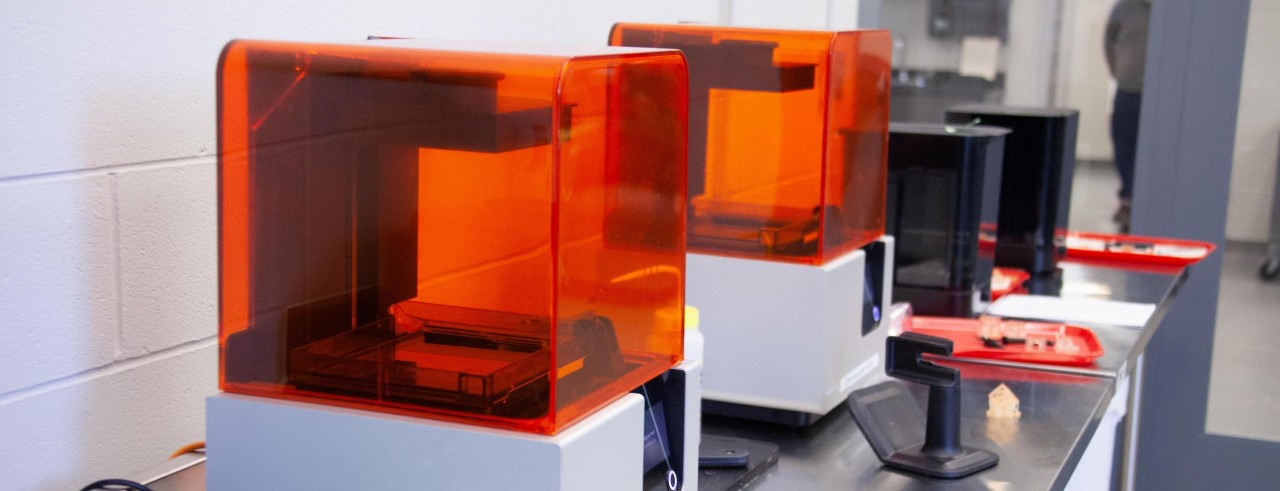
Featured photo at top of 3D printers. Photo/Ravenna Rutledge/UC Marketing + Brand.
Related Stories
These teeny spiders are social media stars
August 28, 2026

The New York Times turned to a University of Cincinnati professor to explain the appeal of jumping spiders on social media.
An internal divide among unions on AI impacts the Wisconsin gubernatorial race
August 28, 2026

Anne Lofaso, a professor in the Donald P. Klekamp College of Law at UC, spoke with Wisconsin Public Radio, about the schism among unions over AI and whether it is a plus, a negative, or somewhere in between when looking at job creation.
On-site training in Speech & Hearing Clinic sets UC’s programs apart
August 27, 2026
At the University of Cincinnati’s Speech & Hearing Clinic, Doctor of Audiology and Speech-Language Pathology graduate students gain real-world experience while providing free speech and hearing services to the community.