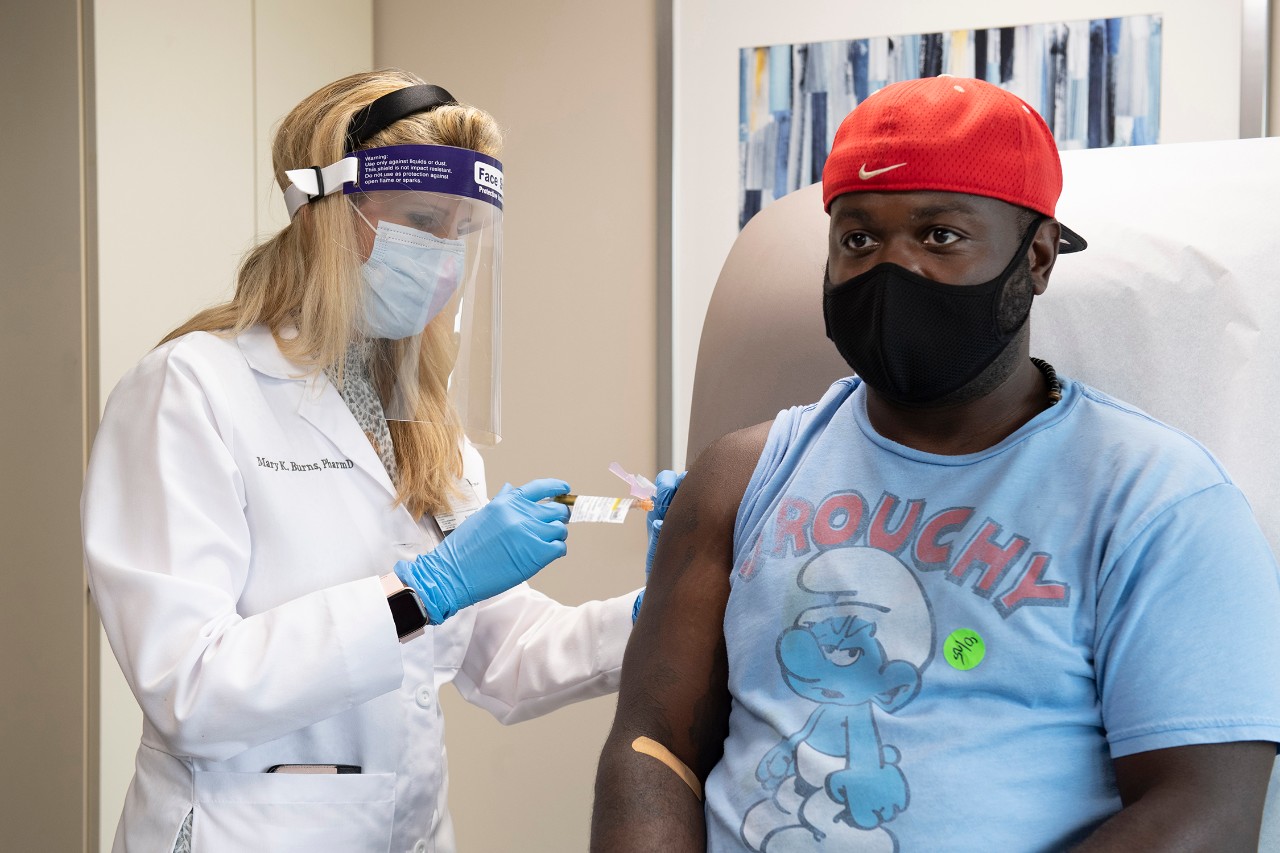
Cincinnati.com: Should I get one of the new COVID-19 boosters?
UC expert says it's best to get boosted before winter

The new booster vaccines to protect against severe COVID-19 have been authorized for use, and they come with the bonus of extra protection against the omicron variants that have been infecting people for months.
The U.S. Food and Drug Administration authorized the Pfizer BioNTech and Moderna boosters on Aug. 31 and the Centers for Disease Control and Prevention followed with approval the following day.
They're called bivalent vaccines because they target two strains of the virus, the original, which all previous vaccines have protected against, and the omicron subvariants BA.4 and BA.5.
Cincinnati.com checked with local experts on COVID-19 boosters, including Carl Fichtenbaum, MD, of the Division of Infectious Diseases in the Department of Internal Medicine at the UC College of Medicine.
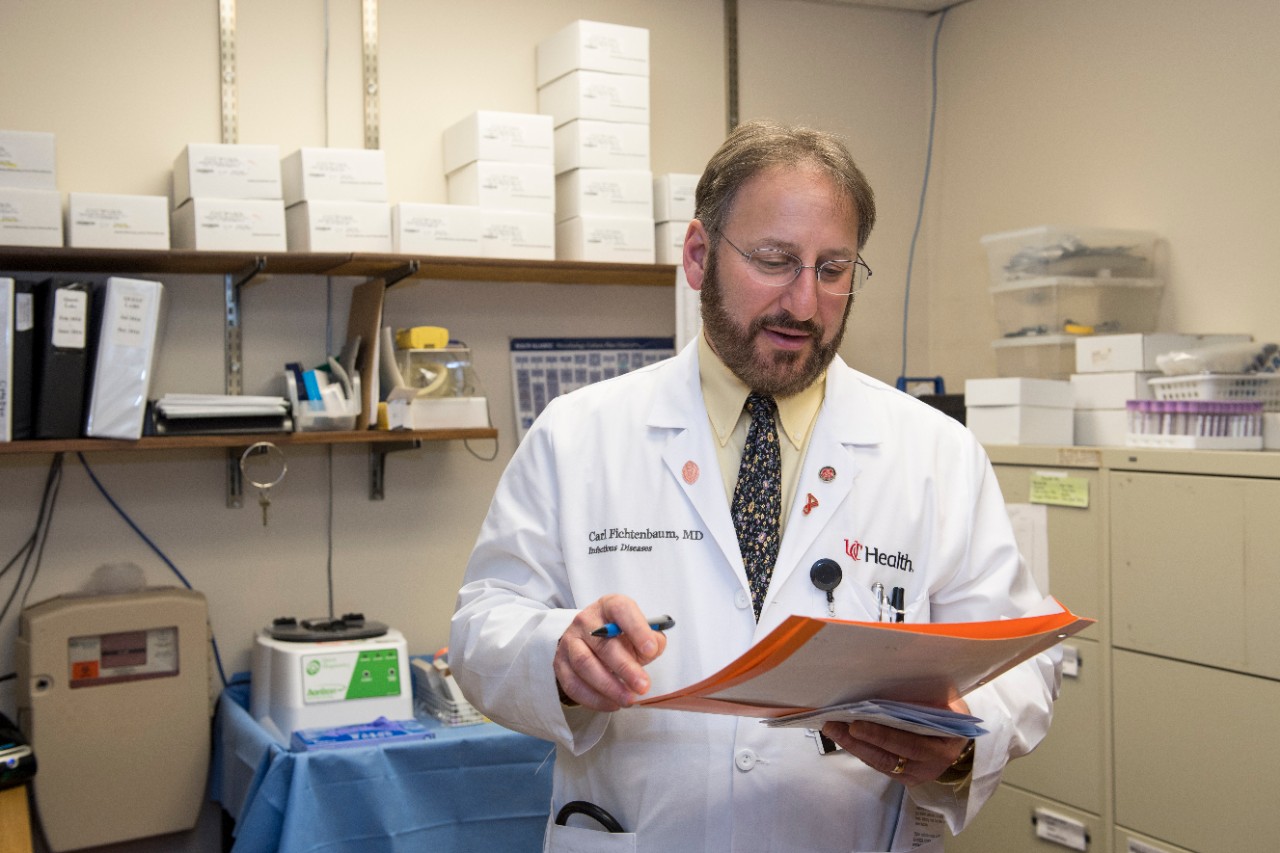
Carl Fichtenbaum, MD, of the Division of Infectious Diseases at the UC College of Medicine/Photo/Colleen Kelley/UC Marketing + Brand
The experts cited by Cincinnati.com said the sooner you can get a booster shot the better, and to at least get it done before winter.
"It's best to do this from September to November, in approach of the cold and flu season," said Fichtenbaum.
Fichtenbaum listed a range of ways boosters protect communities.
- They help ensure fewer lost work and school days.
- They prevent economic losses.
- They mean fewer hospitalizations for respiratory-related illnesses during cold and flu season.
"When you add this booster to prior vaccination and prior infection immunity," he said, "there will be a lot more protection in the community against COVID."
Fichtenbaum was also interviewed about COVID-19 boosters on Cincinnati Edition on WVXU. Hear that interview here.
Lead photo/Colleen Kelley/UC Marketing + Brand
Next Lives Here
The University of Cincinnati is classified as a Research 1 institution by the Carnegie Commission and is ranked in the National Science Foundation's Top-35 public research universities. UC's graduate students and faculty investigate problems and innovate solutions with real-world impact. Next Lives Here.
Related Stories
These teeny spiders are social media stars
August 28, 2026

The New York Times turned to a University of Cincinnati professor to explain the appeal of jumping spiders on social media.
An internal divide among unions on AI impacts the Wisconsin gubernatorial race
August 28, 2026

Anne Lofaso, a professor in the Donald P. Klekamp College of Law at UC, spoke with Wisconsin Public Radio, about the schism among unions over AI and whether it is a plus, a negative, or somewhere in between when looking at job creation.
On-site training in Speech & Hearing Clinic sets UC’s programs apart
August 27, 2026
At the University of Cincinnati’s Speech & Hearing Clinic, Doctor of Audiology and Speech-Language Pathology graduate students gain real-world experience while providing free speech and hearing services to the community.