WPFW: UC expert discusses breast cancer racial disparities

The University of Cincinnati's Rifat Wahab, DO, recently joined What's at Stake, a radio show and podcast produced by Washington, DC based WPFW radio, to discuss Breast Cancer Awareness Month.
Wahab noted that while Caucasian women are diagnosed at a slightly higher rate, Black and Hispanic women are 40% more likely to die of breast cancer and have a lower five-year survival rate. Approximately 72% of minority women are more likely to be diagnosed with breast cancer under the age of 50 years, she said.
"One of the biggest gripes that I have is that certain society guidelines are actually recommending starting screening at the age of 50. Well that’s already putting our women of color at a disadvantage," said Wahab, adjunct associate professor in UC's College of Medicine and a UC health physician. "We’re seeing breast cancers at a younger age in that group of women. I highly suggest one of the biggest things we can do is follow the American College of Radiology guideilnes and begin screening at the age of 40."
Wahab said women should begin a conversation about breast health with their primary care providers starting at age 30, discussing any symptoms, family history and/or genetic dispositions.
"If there’s a strong family history of breast cancer, we may need to start screening sooner than the age of 40 for these women," she said.
Listen to the What's at Stake podcast.
Dr. Wahab also recently spoke with Fox 19 about UC Health's mobile mammography unit. Watch or read the Fox 19 story.
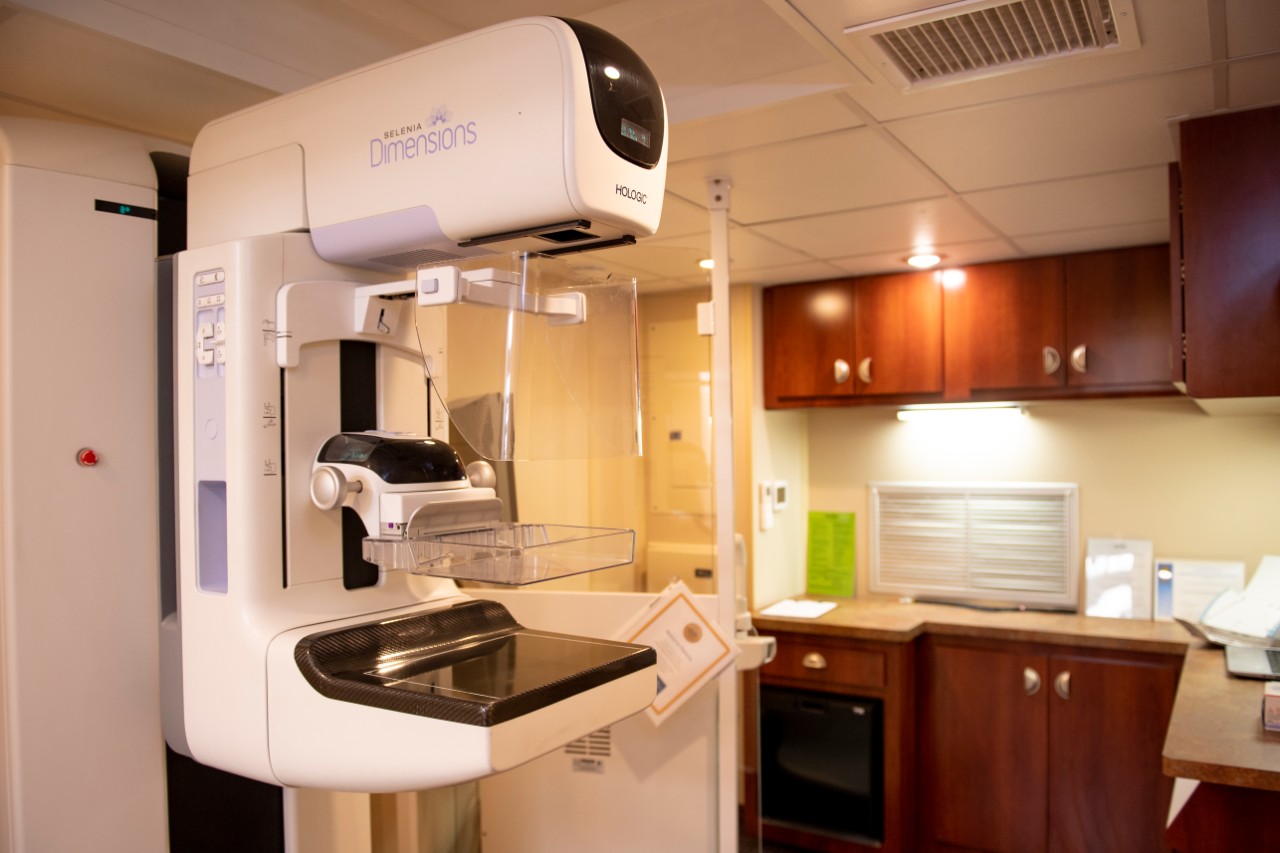
Featured photo at top of a 3D mammogram machine. Photo/Colleen Kelley/UC Marketing + Brand.
Related Stories
These teeny spiders are social media stars
August 28, 2026

The New York Times turned to a University of Cincinnati professor to explain the appeal of jumping spiders on social media.
An internal divide among unions on AI impacts the Wisconsin gubernatorial race
August 28, 2026

Anne Lofaso, a professor in the Donald P. Klekamp College of Law at UC, spoke with Wisconsin Public Radio, about the schism among unions over AI and whether it is a plus, a negative, or somewhere in between when looking at job creation.
On-site training in Speech & Hearing Clinic sets UC’s programs apart
August 27, 2026
At the University of Cincinnati’s Speech & Hearing Clinic, Doctor of Audiology and Speech-Language Pathology graduate students gain real-world experience while providing free speech and hearing services to the community.