NBC News: UC expert discusses stroke recovery

Democratic Pennsylvania Senate candidate John Fetterman suffered a stroke in May. His campaign has said his underlying cognition has not been affected by the stroke, but his ability to understand and produce speech has been affected.
Fetterman sometimes uses a screen and transcription technology to read speech during conversations, as he said he is able to better comprehend things by reading than by hearing at this stage in his recovery.
While not commenting on Fetterman's recovery specifically, the University of Cincinnati's Pooja Khatri, MD, joined NBC News' Meet the Press Now to discuss stroke recovery.
"There are basically overlapping circuits in the brain that affect your ability to be able to read versus hear and then comprehend that language," said Khatri, professor of neurology and director of the vascular neurology division in the UC College of Medicine’s Department of Neurology and Rehabilitation Sciences; co-director of the UC Gardner Neuroscience Institute Stroke Center of Excellence and the NIH StrokeNet National Coordinating Center housed at UC; as well as a UC Health physician. "So it’s certainly not uncommon at all, and that’s part of the recovery process."
Khatri said it is a common misconception that some stroke patients have underlying cognitive damage or are confused when they struggle to understand speech and speak themselves.
"We can do cognitive testing to show us that actually people are thinking just fine, they just can’t get those words out," she said. "Sometimes they can write, they can read."
Watch the Meet the Press Now segment. (Note: Segment begins around 12:00 mark.)
Khatri has provided her expertise on strokes to a number of outlets before and after Fetterman's recent debate with Republican Senate candidate Mehmet Oz.
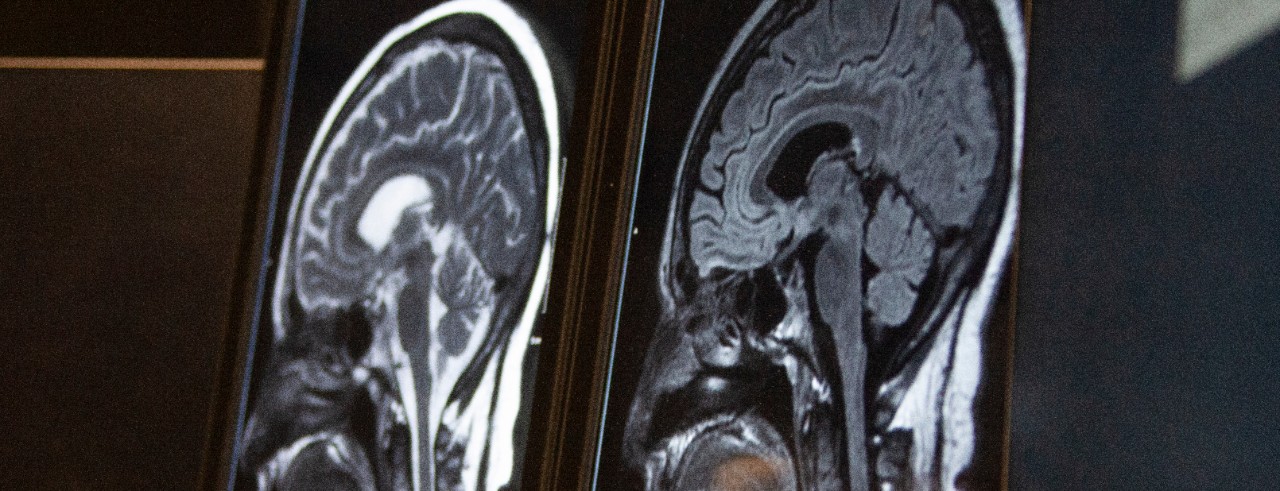
Featured photo at top of MRI brain scan. Photo/Ravenna Rutledge/University of Cincinnati.
Related Stories
Ride Free UC offers free transportation options this fall
August 21, 2026
Ride Free UC: UC students, faculty and staff can take advantage of free UC Metro Pass and the Bearcats Shuttle for convenient travel between campuses and throughout Cincinnati.
What is electroacoustic music?
August 21, 2026

Professor Mara Helmuth spoke with Cincinnati Spotlight about her upcoming faculty recital on Cincinnati Spotlight.
More Applicants, Broader Reach: inside UC Klekamp Law’s incoming class
August 21, 2026
The University of Cincinnati Donald P. Klekamp College of Law is welcoming a new generation of students across its JD, LLM and MLS programs amid a significant increase in interest in a UC Klekamp Law education, with JD applications reaching their highest level in a decade.