
WLWT: UC works with art museums to identify fakes and forgeries
Project uses latest science tools to study art in a new way

WLWT highlighted a novel collaboration between art museums and geologists, chemists and art historians at the University of Cincinnati to examine precious artworks using the latest scientific tools.
UC worked with the Taft Museum of Art to use tools such as Xray fluorescence spectroscopy to study the pigments in two paintings in the hopes of learning more about the masterpieces.
Art historian Christopher Platts in UC's College of Design, Architecture, Art, and Planning, and UC College of Arts and Sciences geologist Daniel Sturmer and chemists Pietro Strobbia and Lyndsay Kissell examined "Panel with the Crucifixion" and "Landscape with Canal" in Taft's collection.
The first was a painting on a wood panel in the style of Italian Renaissance artist Bernardo Daddi. UC's chemical analysis revealed more modern pigments in the painting.
UC's experts hoped to shed light on the landscape painting's suspicious signature. The painting was signed John Constable, but experts long have suspected the work was created by contemporary Frederick Waters Watts. UC's analysis was inconclusive.
UC researchers say these tools can help historians pin down the dates the artworks were created and potentially identify a fake or fraud. The Taft Museum of Art included the paintings in an exhibit titled Fakes, Forgeries and Followers in the Taft Collection that runs through Feb. 5.
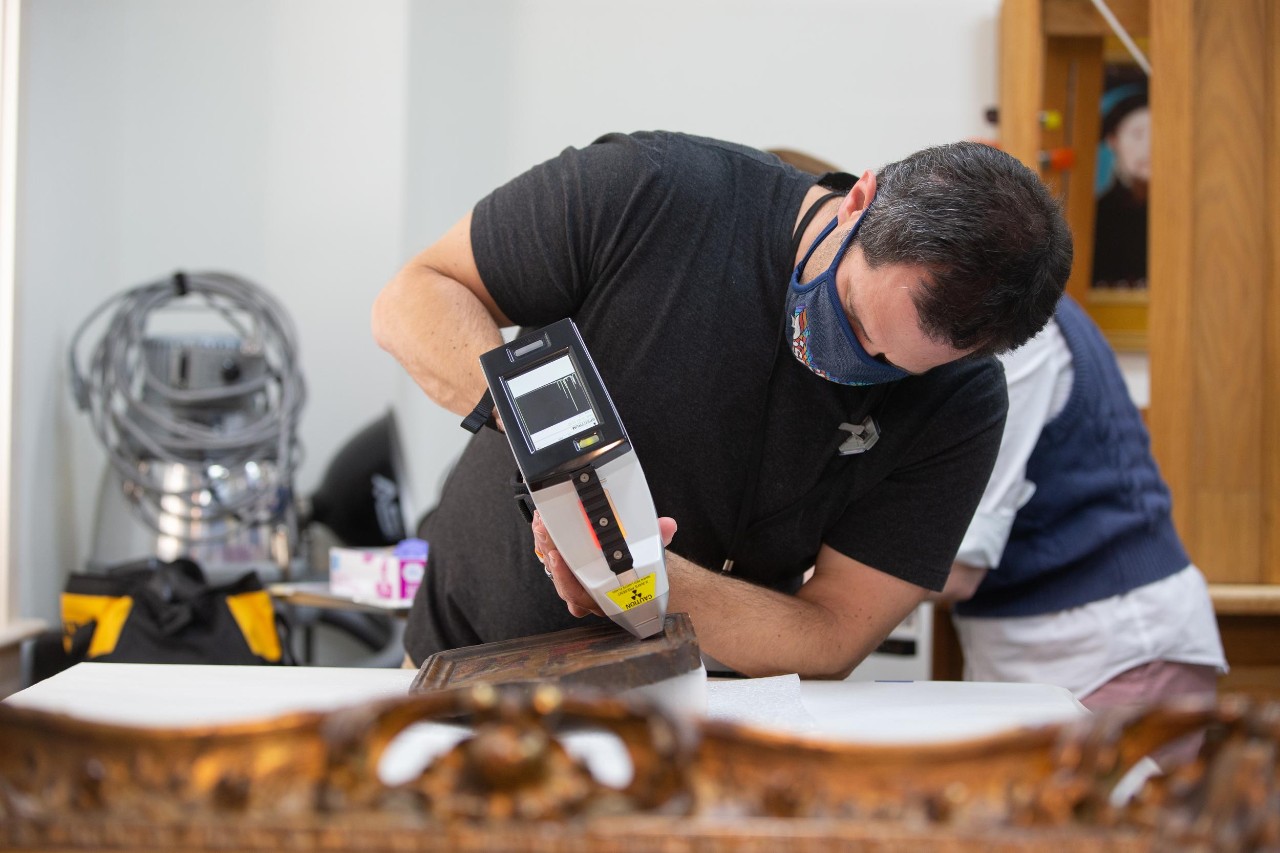
UC geologist Daniel Sturmer uses XRF spectroscopy to study a painting in the style of Italian Renaissance master Bernardo Daddi in the conservation lab of the Taft Museum of Art. Photo/Andrew Higley/UC Marketing + Brand
Related Stories
From hobbyist photographer to professional educator
October 9, 2026

DAAP alum and photographer HATSUE studied communication design after a pivot in high school from a track toward veterinary school. Today, they teach photography at 1001 Colors white working as an artist and curator in Cincinnati.
UC researcher to launch national study with $2.5 million NIH grant
October 9, 2026

A University of Cincinnati researcher has received a $2.5 million National Institutes of Health grant to conduct research during the next five years. Natalie Kreitzer, MD, a University of Cincinnati College of Medicine physician-researcher, received an R01 independent research grant from the NIH's Eunice Kennedy Shriver National Institute of Child Health and Human Development. The funding will support a test program for caregivers of patients with traumatic brain injury, as reported by the Cincinnati Business Courier.
Simple ways to find a deeper sense of happiness and well being
October 8, 2026

UC assistant professor Suzie White, featured in an AARP story on practical ways to live a happier, healthier life, shared research-backed strategies for increasing well-being through gratitude and service to others. White teaches Happiness in Action, a course that helps students apply the science of happiness in everyday life.