WVXU: VR headsets put caregivers in the shoes of those they are assisting
UC faculty and students collaborate with experts on aging to create virtual tutorials for caregivers

A new virtual reality training program helps caregivers navigate the trials and tribulations of caring for the elderly with experienceable scenarios.
“Most of us are not trained in what to do,” about medication management or topics such as end of life conversations, says Ming Tang, director of UC’s extended reality lab.
Tang, an associate professor in the College of Design, Architecture, Art and Planning, collaborated with the Council on Aging of Southwestern Ohio (COA) to design a virtual reality program that teaches the user how to navigate difficult situations before experiencing them firsthand.
Among the five scenarios in the training program, called EVRTalk, are end of life conversations. “It’s a very heavy topic,” that Tan says led to students developing a protype, evaluations and implementation.
In an interview with WVXU, Tan and program directors discuss the outcomes of this type of virtual training.
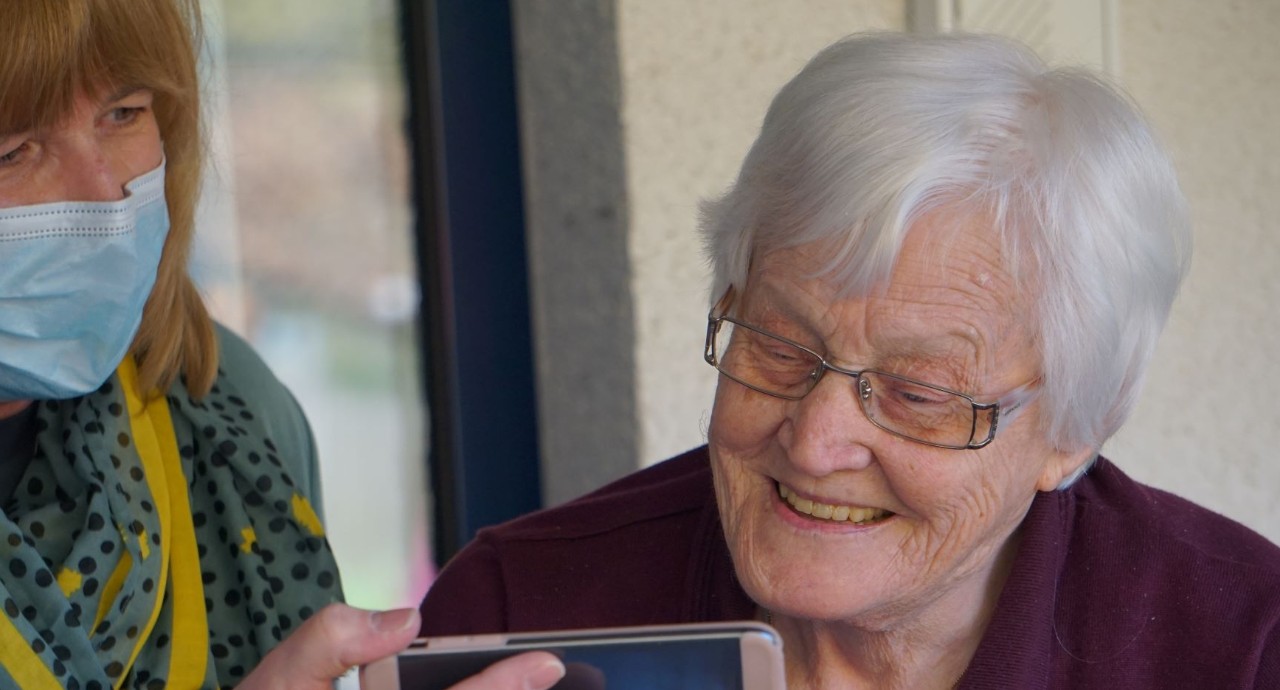
Featured photo courtesy of Unsplash.
Impact Lives Here
The University of Cincinnati is leading public urban universities into a new era of innovation and impact. Our faculty, staff and students are saving lives, changing outcomes and bending the future in our city's direction. Next Lives Here.
Related Stories
The subtle changes in hearing you should never ignore
July 24, 2026

It’s easy to dismiss changes in hearing as minor. But as The Washington Post recently reported, these symptoms could also signal a medical emergency that many people don’t recognize — known as sudden sensorineural hearing loss, a rapid decline in hearing that occurs suddenly or over a few days.
UC experts say proper produce washing is key defense against Cyclospora
July 24, 2026

Hamilton County Public Health reports confirmed cases of cyclosporiasis, as concerns persist. Cyclospora is a parasite that can cause a stomach illness lasting days — sometimes even weeks. University of Cincinnati medical experts say it is usually linked to contaminated water or food, often fresh produce.
What are the options for male birth control?
July 24, 2026
Despite major advances in contraception during the past several decades, responsibility for pregnancy prevention falls largely on women. As recently reported in Endocrinology Advisor, a new generation of male contraceptive candidates is advancing into early- and mid-stage clinical trials.