
Cincinnati Edition: The federal spending bill’s effect on retirement, savings
UC finance professor Mike Neugent provides personal finance guidance

Included in the $1.7 trillion federal spending bill signed into law last month are provisions that could affect Americans’ retirement and savings decisions.
Mike Neugent, associate professor-educator and director of the MS Finance program, told WVXU’s “Cincinnati Edition” that a provision in the new bill that caught his eye was the automatic enrollment option for new retirement plans.
“The person is automatically enrolled in the program — you have to opt out,” Neugent said. “Regrettably, a lot of employees have access to plans, but don’t participate.”
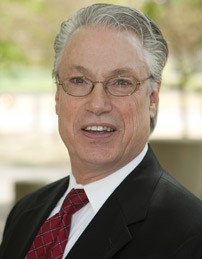
Mike Neugent, associate professor-educator and director of the MS Finance program.
Additional provisions, which Neugent termed “emergency fund withdrawals,” grant access to previously untouchable funds in the case of a life-altering event.
“A lot of people are afraid that if they put money into a 401k plan that they can’t access that money. If that’s a small-value account, that may be the only money that person has set aside,” Neugent said. “You can now once a year withdraw $1,000 on an emergency level. [It provides] a sense of security to the individual.”
For those who may be behind or haven’t started saving for retirement, Neugent noted that it’s never too late to start setting money aside for the future.
“The reality is that at some point, the funds will be needed. There are numerous things that can be done. Working longer or part-time — especially when we have more of a remote-based economy,” Neugent said. “Saving for retirement isn’t limited to qualified accounts. It’s not limited to IRAs or 401ks. There are savings accounts and many other things you can invest in if you don’t have access to a 401k plan. You can still invest or save in other avenues that are not tax-deferred.”
Listen to Mike Neugent’s full interview on WVXU.
Featured image courtesy of Adobe Stock.
Next Lives Here
The University of Cincinnati is classified as a Research 1 institution by the Carnegie Commission and is ranked in the National Science Foundation's Top-35 public research universities. UC's medical, graduate and undergraduate students and faculty investigate problems and innovate solutions with real-world impact. Next Lives Here.
Related Stories
UC student veterans explore engineering careers
August 19, 2026

Stars and Stripes magazine highlighted the co-op experience of a University of Cincinnati mechanical engineering student who is working with the U.S. Army Corps of Engineers.
UC expert helps rehome endangered Ohio bats
August 19, 2026

UC College of Education, Criminal Justice, and Human Services Assistant Professor Joe Johnson is helping an Ohio marine rehome bats to make way for renovations. He launched a new tracking project that uses tiny transmitters that record bat migration using the internet of things.
Carl H. Lindner III Center for Insurance and Risk Management welcomes first executive director
August 19, 2026
The Carl H. Lindner III Center for Insurance and Risk Management has named Shannon Lewandowski as its inaugural executive director.