
WVXU: New year means new airlines, tech for CVG
UC grad helps predict crowding at airports to shorten lines

WVXU highlighted one of the ways the University of Cincinnati is helping Cincinnati Northern Kentucky International Airport improve the travel experience.
UC College of Engineering and Applied Science doctoral graduate Javier Viaña is using artificial intelligence to help the airport's data tracker better predict when it could see longer lines at the terminal and security.
The system considers factors such as whether a passenger will use long-term parking, check a bag or travel with family to predict surges in foot traffic.
Airports already know how many passengers to expect from flight reservations. But Viaña said that doesn’t tell them how many people to expect in a terminal at any given time.
“There’s a big difference between the flight schedule and the actual flow of people,” he said. “You might be able to say 10,000 people will be taking off at 10 a.m. But they don’t show up at 10 a.m. Some might show up at 8:45 or 9:20.”
His algorithm more precisely predicts how many people will filter through check-in and security in 15-minute intervals, Viaña said.
“It’s an exciting project. We’ve been getting good results,” Viaña said.
Featured image at top: UC students pick up their bags at Cincinnati Northern Kentucky International Airport. Photo/Joseph Fuqua II/UC
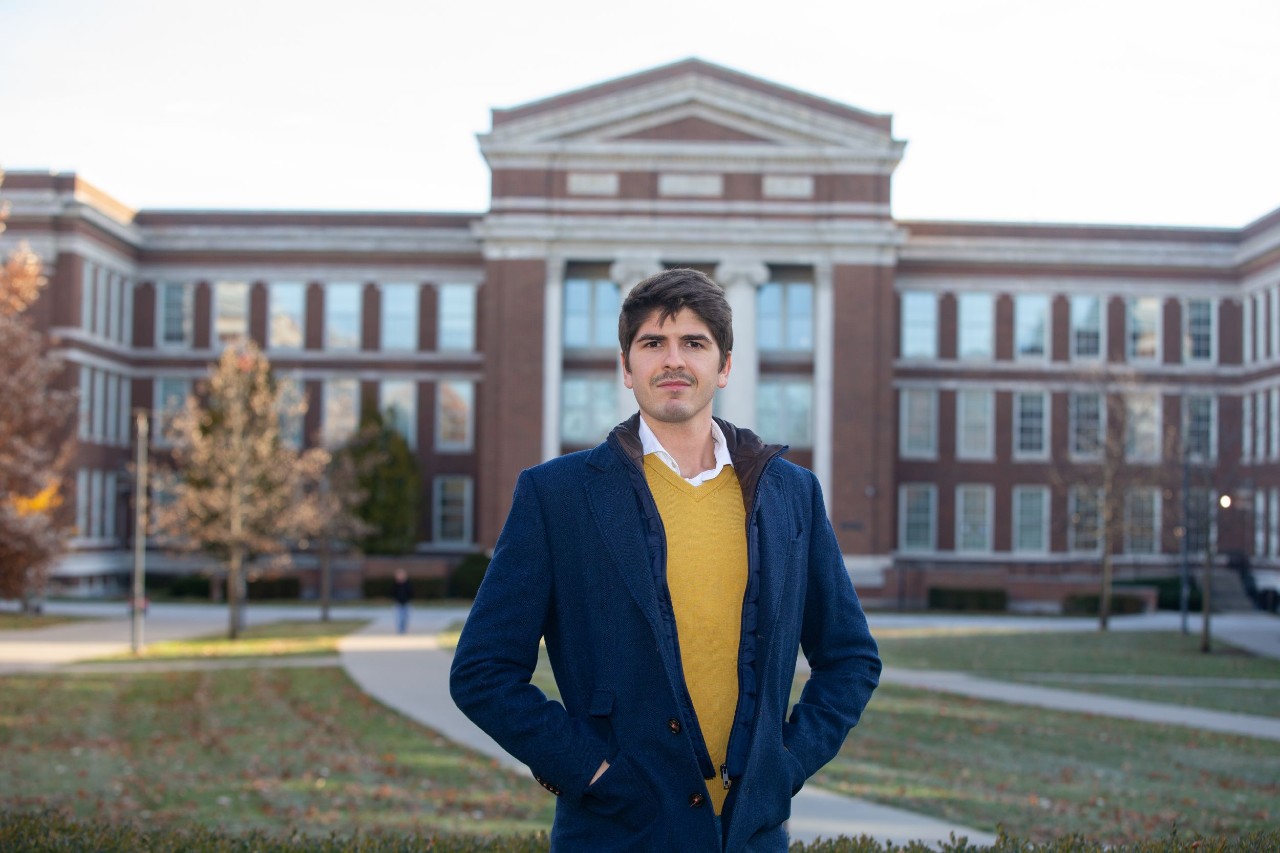
UC College of Engineering and Applied Science graduate Javier Viaña developed an algorithm to help airports predict crowding. Photo/Andrew Higley/UC Marketing + Brand
Related Stories
How can Cincinnati provide more affordable housing? This new lab aims to find out
October 16, 2026

The University of Cincinnati Real Estate Center helped launch a new regional research and development initiative designed to identify, test and scale solutions to the region’s housing challenges called the Housing Innovation Lab. The project is built around a simple idea: What if communities approached housing challenges the way leading companies approach innovation?
Environmental engineer researching methods to monitor river quality
October 16, 2026
Pradeep Ramtel has been conducting research on river water since he was an undergraduate student in Nepal. He is currently a PhD student at the University of Cincinnati and is studying under Associate Professor Dongmei Feng. His research uses collected data and machine learning to better assess risks to river water quality and prepare for problems before they arise. Recently, he was named Graduate Student Engineer of the Month by UC's College of Engineering and Applied Science.
Collaboration over consultation
October 16, 2026
New University of Cincinnati research published in the journal Health Expectations found stroke survivors participating in rehab research desire an approach that prioritizes shared decision-making, peer relationships and a focus on what they can accomplish rather than their deficits.