Yahoo News: Poor oral health may contribute to declines in brain health
UC expert comments on new study

A new research study suggests that flossing and brushing your teeth may offer benefits beyond avoiding cavities.
The study found adults who are genetically predisposed to poor oral health may also be more likely to show signs of declining brain health compared to people with healthy teeth and gums. Early intervention and treatment of poor oral health may also lead to brain health benefits, the study found.
The University of Cincinnati's Joseph Broderick, MD, was not involved in the study, but commented in a Yahoo News article. He said it is important to note the study did not find that improving dental hygiene directly improves brain health, but the results are "intriguing" and should lead to further research.
"Environmental factors such as smoking and health conditions such as diabetes are much stronger risk factors for poor oral health than any genetic marker except for rare genetic conditions associated with poor oral health, such as defective or missing enamel," said Broderick, professor in UC’s Department of Neurology and Rehabilitation Medicine in the College of Medicine, director of the UC Gardner Neuroscience Institute and a UC Health physician. "It is still good advice to pay attention to oral hygiene and health. However, since people with poor brain health are likely to be less attentive to good oral health compared to those with normal brain health, it is impossible to prove cause and effect."
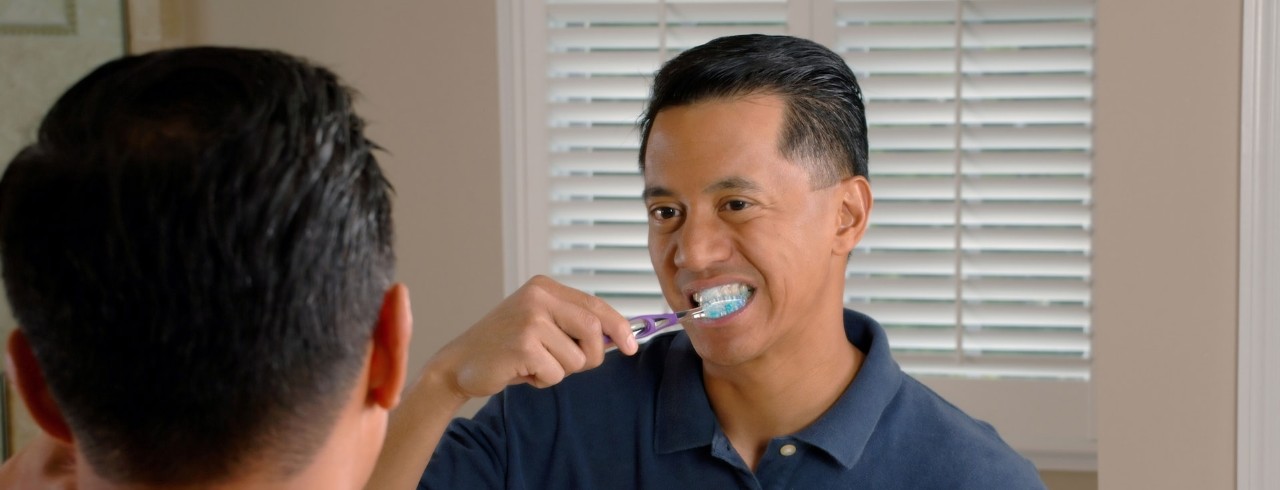
Featured photo at top courtesy of Unsplash.
Related Stories
Get to know CCM’s newest faculty and staff members
September 2, 2026
UC’s College-Conservatory of Music will welcome a variety of new faculty and staff members to its roster of distinguished performing and media arts experts, researchers and educators this fall.
Cancer Center plays key role in lab research, clinical trials for new pancreatic cancer drug
September 1, 2026

WLWT and WCPO highlighted the contributions of University of Cincinnati Cancer Center researchers that helped lead to the recent FDA approval of daraxonrasib, a new treatment for pancreatic cancer.
An expert pieced together this Roman document like a puzzle
September 1, 2026

National media highlighted a new project by UC Classics Assistant Professor Matthijs Wibier to piece together and translate an ancient Roman text from fragments buried in the desert for more than 1,600 years.