HealthDay: 'Neuroprotectant' drug could boost outcomes after stroke
UC's Broderick comments on study

A new study found using a "neuroprotectant" drug alongside the standard surgical removal of a blood clot may reduce the risk of death and disability following a stroke.
Researchers presenting data at the International Stroke Conference reported the medication, called ApTOLL, protects brain tissue from continuing damage by cooling down inflammation.
More than 150 people who had an ischemic stroke were enrolled in the study in France and Spain, either receiving ApTOLL at two different doses or a placebo medication in addition to mechanical blood clot removal.
The patients who received the higher dose of ApTOLL were four times less likely to die from stroke compared to the patients who received a placebo.
Joseph Broderick, MD, professor in UC’s Department of Neurology and Rehabilitation Medicine in the College of Medicine, director of the UC Gardner Neuroscience Institute and a UC Health physician, commented on the study for HealthDay. He said the drug needs to be tested more thoroughly before becoming a standard of care.
"The data warrants further study in a phase 3 study, but differences seen in this trial may be due to small number of patients and imbalances in factors related to outcome," Broderick said, adding that a much larger trial would be needed to confirm the findings.
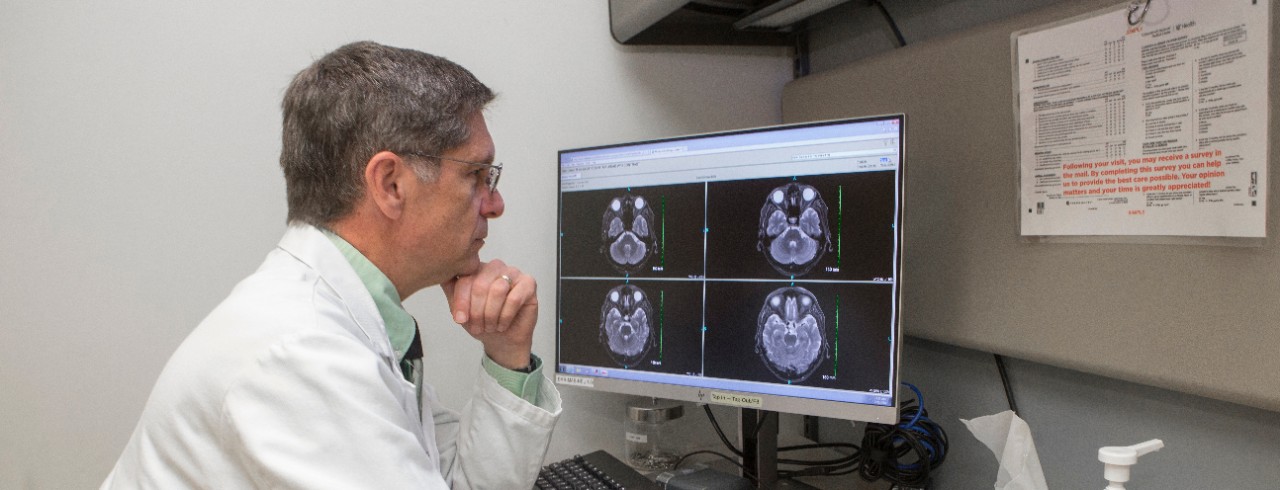
Featured photo at top of Dr. Broderick. Photo/Joseph Fuqua II/University of Cincinnati
Related Stories
These teeny spiders are social media stars
August 28, 2026

The New York Times turned to a University of Cincinnati professor to explain the appeal of jumping spiders on social media.
An internal divide among unions on AI impacts the Wisconsin gubernatorial race
August 28, 2026

Anne Lofaso, a professor in the Donald P. Klekamp College of Law at UC, spoke with Wisconsin Public Radio, about the schism among unions over AI and whether it is a plus, a negative, or somewhere in between when looking at job creation.
On-site training in Speech & Hearing Clinic sets UC’s programs apart
August 27, 2026
At the University of Cincinnati’s Speech & Hearing Clinic, Doctor of Audiology and Speech-Language Pathology graduate students gain real-world experience while providing free speech and hearing services to the community.