Making COVID-19 treatments more effective and safe
UC researcher receives grant to study interaction between FDA-approved therapeutics

When approaching a task, members of a team need to work in synergy. Nothing can be accomplished if you’re pulling in different directions.
The same is true for drugs. Even if they work well on their own, drugs administered together can sometimes counteract each other and lead to worse outcomes. But when drugs are combined effectively, it can lead to better success than a single treatment could bring.
The Food and Drug Administration has approved three drug treatments for COVID-19, commonly referred to as small molecule therapeutics. But there is little known about how they can effectively be used in combination with each other.
“All of the new COVID-19 treatments are used alone,” said University of Cincinnati’s Bingfang Yan, PhD, DVM. “People started to think, ‘OK, we should put the COVID-19 drugs approved by the FDA together.’ But how?”
Yan’s research team has received a $2.5 million National Institutes of Health grant to answer the question of how these COVID-19 therapeutics can work together to create more effective and safe treatments for patients.
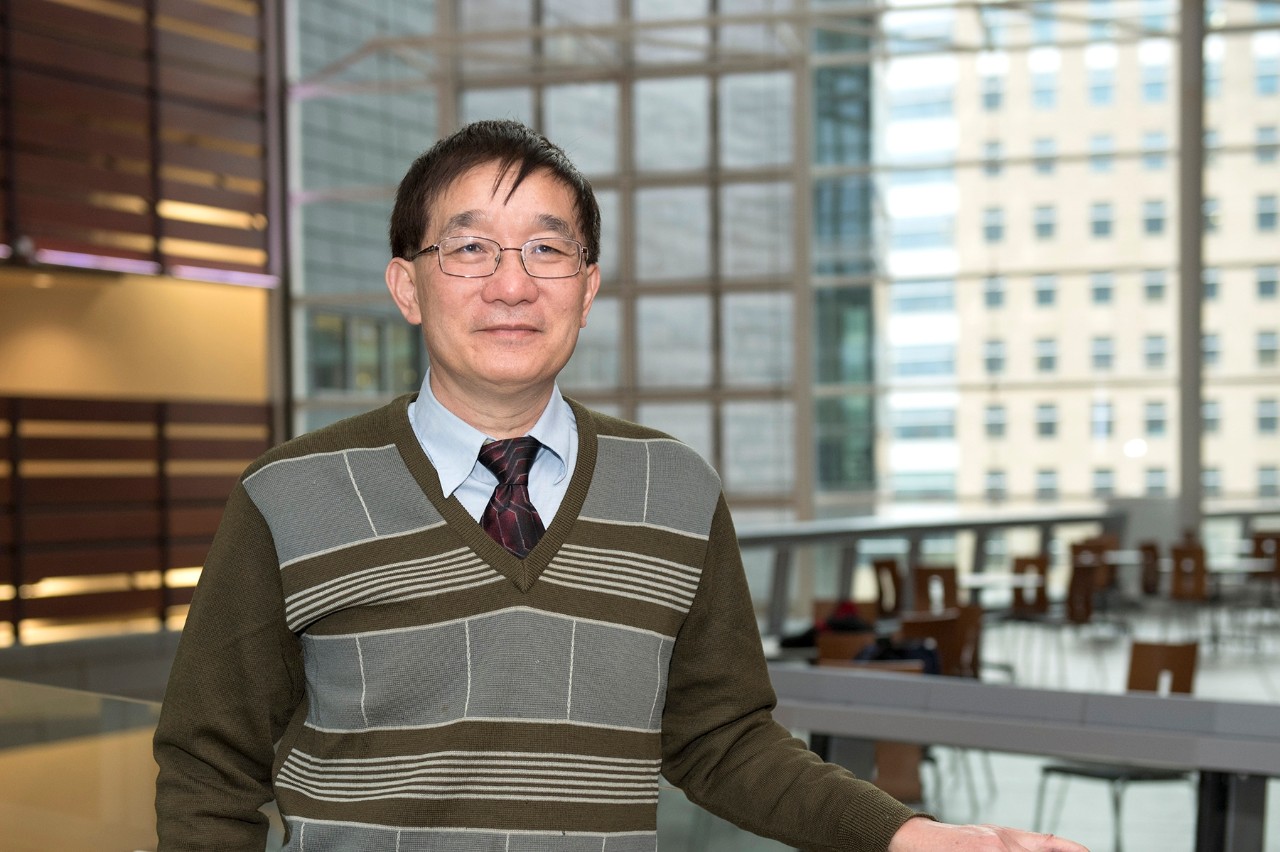
Bingfang Yan, PhD, DVM. Photo/Colleen Kelley/UC Marketing + Brand.
The research will focus on the antiviral drugs known commercially as Paxlovid, Lagevrio and Veklury, or remdesivir. Yan said there is currently a “whole-body strategy” where the drugs are not considered specifically at cell levels, but the research could shed light on specific cell targets and eliminations that would make them more effective and safe.
“People have kind of ignored why certain COVID-19 medicines are working for certain people but not for other people,” he said. “The problem is the cells are being infected with COVID-19 virus, but may not be able to metabolize or activate the medicine. One single cell can be infected by COVID-19, but if that drug cannot go into the particular cell or be activated, it’s basically not working.”
Yan and his team will test the drugs in combination with each other using animal models and human-derived cells including engineered human lung and liver cells.
“We really want to know when and how these drugs can combine together, because they are probably better when they work in synergy,” said Yan, professor and associate dean for research and innovation at UC's James L. Winkle College of Pharmacy. “So the question is when and how to deliver that synergy.”
We’re going to wrap up the medicines using nanoparticles, and we think it could be a better way to deliver them, a better way to go to targeted organs such as the lung.
Bingfang Yan, PhD, DVM
The team will additionally look at the drugs’ safety and effectiveness to treat other viral diseases, as Yan noted this winter’s “tripledemic” of COVID-19, influenza and respiratory syncytial virus, known as RSV, highlighted the need for treatments of multiple infections at once.
“These drugs have a broad spectrum of antiviral activities,” Yan said. “Some of them actually work against influenza as well, and some of them work against RSV. That’s something I want to really look at more carefully at a global level.”
Yan said they will also research if a different delivery mechanism using nanotechnology alters the safety and efficacy of the drugs when used in combination with each other. He previously researched this nanotechnology as a delivery method for anticancer medicines, but it is now being repurposed for antivirals.
“We’re going to wrap up the medicines using nanoparticles, and we think it could be a better way to deliver them, a better way to go to targeted organs such as the lung,” Yan said.
Therapeutics will become increasingly important as the COVID-19 virus continues to mutate, Yan said.
“The vaccine’s target itself changes quickly, but the therapeutic target is relatively stable and conserved,” he said.
Next Lives Here
The University of Cincinnati is classified as a Research 1 institution by the Carnegie Commission and is ranked in the National Science Foundation's Top-35 public research universities. UC's medical, graduate and undergraduate students and faculty investigate problems and innovate solutions with real-world impact. Next Lives Here.
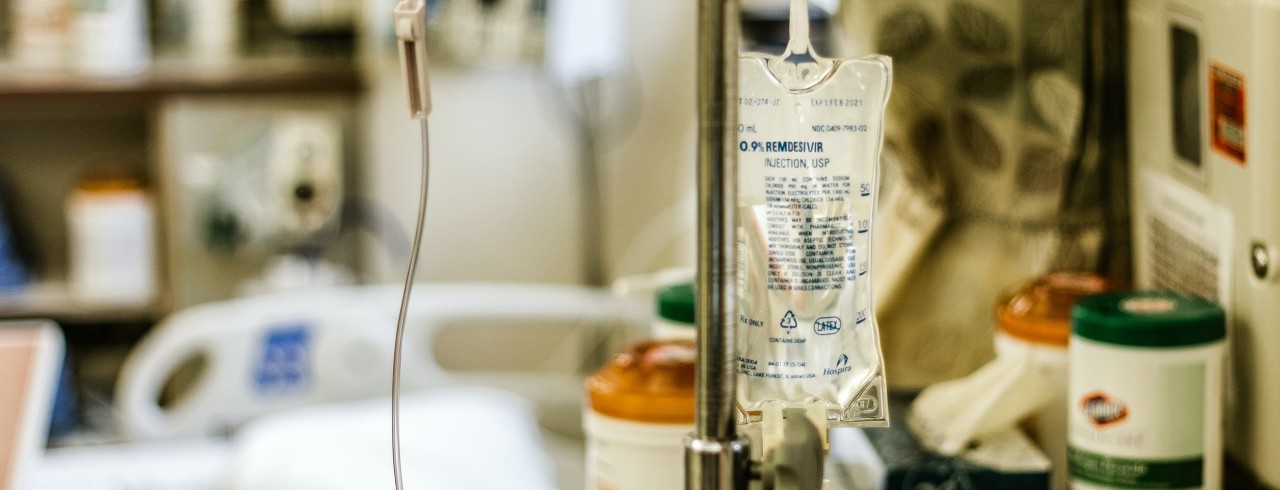
Featured photo at top of remdesivir in an IV bag. Photo/Dimitri Karastelev/Unsplash.
Related Stories
Is Cincinnati building new homes fast enough?
September 22, 2026

Gary Painter, professor and academic director of the Real Estate Center at UC's Lindner College of Business, offers comments on affordability issues in Cincinnati.
'Discovery, mentorship, momentum': UC College of Medicine's graduate programs celebrate year of success
September 22, 2026
From new mentorship honors to a growing research pipeline, see how the University of Cincinnati College of Medicine's graduate programs made this a standout year.
Tina Cheng, MD, receives American Academy of Pediatrics’ highest honor
September 22, 2026
UC Pediatrics chair Tina Cheng, MD, has received the American Academy of Pediatrics' highest honor for her decades of advancing child health.