WLWT: A change in mammography standards could help save lives

A new Food and Drug Administration policy will soon require health care providers to tell women if they have dense breast tissue, a trait that can make cancer harder to detect. The move is aimed to support prevention, early detection and treatment of breast cancer.
The announcement also follows advocacy from patients, lawmakers and University of Cincinnati Cancer Center physicians that led to the passage of Ohio House Bill 371, which requires insurance companies to cover additional screenings for individuals who are at high risk for breast cancer or have dense breast tissue.
Erich J. Boomgarden, MD, assistant professor in UC's College of Medicine and a UC Health radiologist, told WLWT mammography is still the standard of care, but additional MRI or ultrasound screenings can help see through dense breast tissue.
"If you get your screening mammogram, and assuming it comes back negative, meaning there was nothing suspicious in there, we would recommend getting a supplemental screening in six months," Boomgarden said. "We do that because it's helpful for us because again, by staggering it that way, then anything that may be developing, between the screening mammogram and MRI hopefully will be detected sooner then."
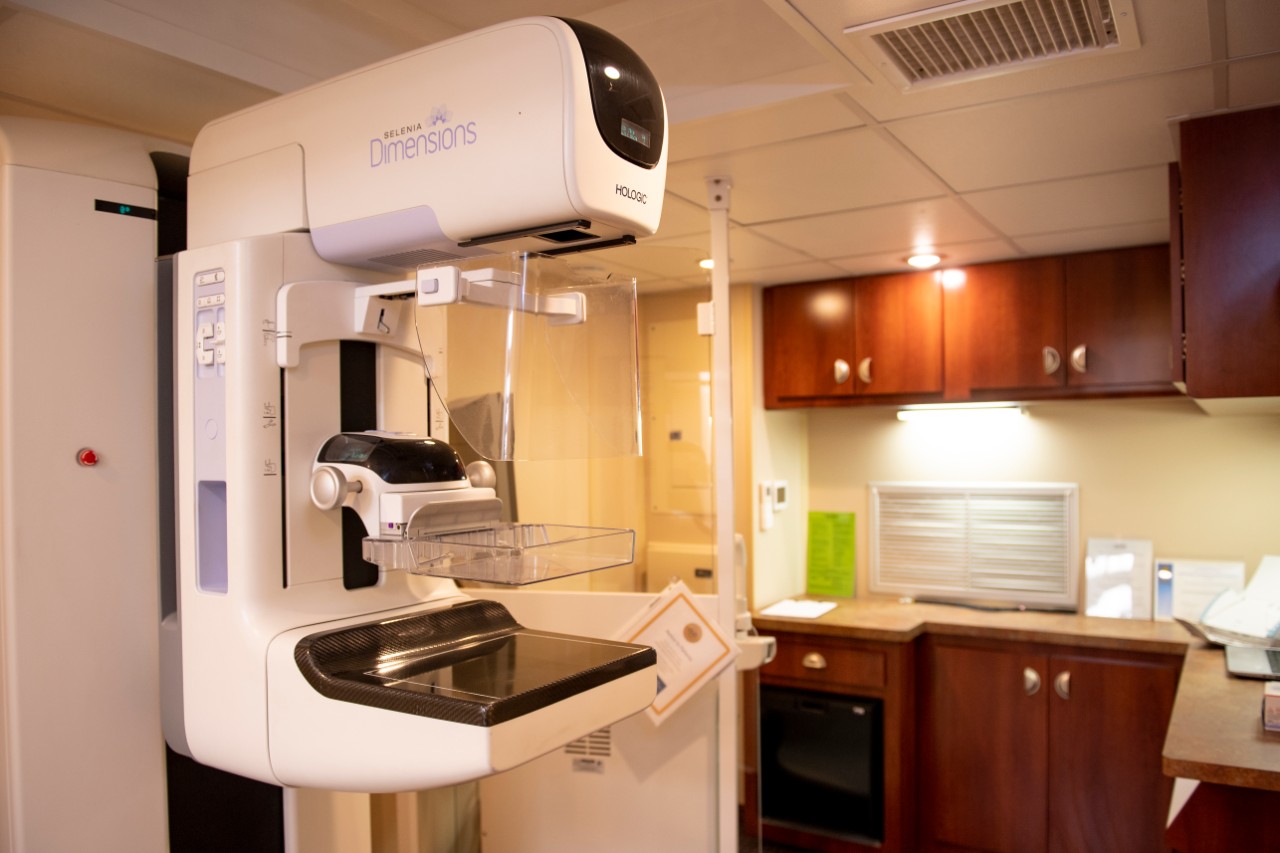
Featured photo at top of a 3D mammogram machine. Photo/Colleen Kelley/UC Marketing + Brand.
Related Stories
Bidirectional link between oral, kidney health calls for patient education, access
August 4, 2026

Despite growing awareness of the connection between oral health and chronic health conditions, patient awareness and access to dental care remain limited, according to University of Cincinnati experts who recently spoke with Healio | Nephrology News & Issues.
'Be human in it': UC College of Medicine welcomes Class of 2030 at 31st White Coat Ceremony
August 4, 2026
The University of Cincinnati College of Medicine welcomed 185 first-year medical students in the Class of 2030 at the 31st annual White Coat Ceremony.
UC-built detector at CERN looks for enticing evidence to explain dark matter
August 4, 2026
A physicist from the University of Cincinnati and his research partners from around the world conducted an experiment at CERN’s Large Hadron Collider in Switzerland to look for evidence that might help explain one of science’s most baffling questions: dark matter.