Fox 19: May is American Stroke Month

The University of Cincinnati's Eva Mistry, MBBS, joined Fox 19's morning show to discuss American Stroke Month.
Mistry said it is important to remember the FAST acronym for stroke (see box below).
"The most important thing to remember about strokes is that they happen suddenly," said Mistry, assistant professor in the Department of Neurology and Rehabilitation Medicine in UC’s College of Medicine and a UC Health physician at the UC Gardner Neuroscience Institute. "It hits you like lightning, and so if any of these [symptoms] happen suddenly, you have to call 911 because it’s a time critical event. And it may also happen in your sleep. So you may wake up with these symptoms, but the action plan remains the same. Call 911."
While there is progress being made in treating strokes, prevention and avoiding strokes altogether is the best treatment. Managing blood pressure and cholesterol and aiming to get about 7-9 hours of sleep per night are prevention tools everyone can take to lower their risk of stroke.
"It is a life long, cumulative risk, if you will. So how you take care of your heart health in general which is tied very closely to brain health matters over the time of years," Mistry said. "It’s an accumulation of what you have done over the years that really matters in terms of stroke prevention and heart health generally."
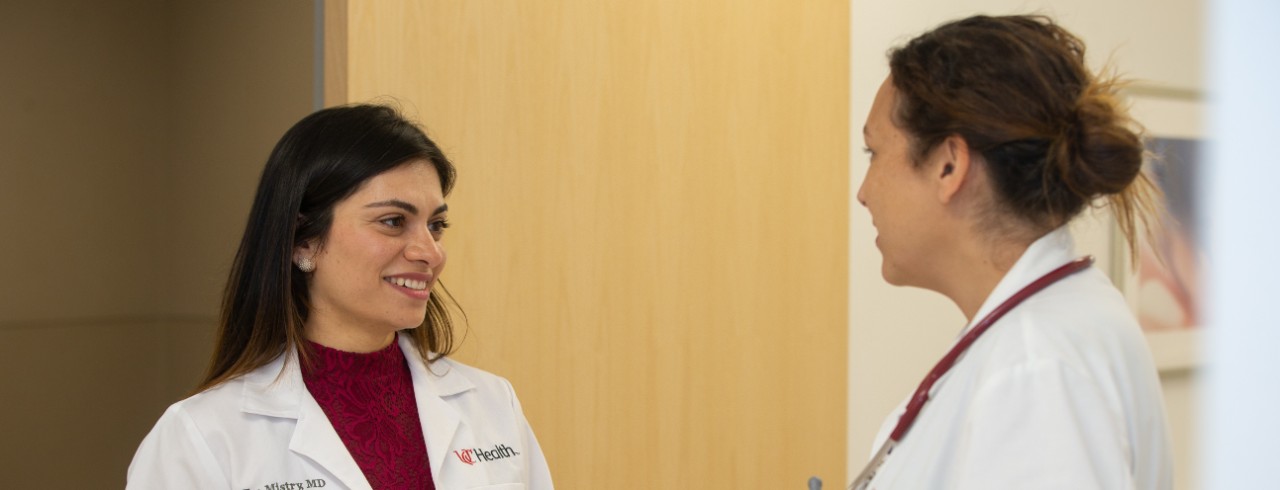
Featured photo at top of Mistry, left, and Stacie Demel, DO. Photo/Andrew Higley/UC Marketing + Brand.
Remember how to identify a stroke
Because of the quick onset of stroke, it is important to know the FAST mnemonic device that details the most common signs of stroke and how to respond:
- F: Facial drooping
- A: Arm or leg drop, or weakness in the arm or leg
- S: Speech issues, such as slurred speech or an inability to get your words out
- T: Time is of the essence; call 911 immediately
Related Stories
Highlighting urban design's interdisciplinary impact
September 30, 2026
Two keynote invitations — one to a room of computer scientists and engineers, another to the Federal Reserve — show how Vikas Mehta’s research on public space and sociability is changing the way other fields think about the way people connect, interact and experience cities.
Doctoral student studies the human brain and how those studies make it to the lab
September 29, 2026
Hana Schwierling, a pharmaceutical sciences doctoral student at the University of Cincinnati’s James L. Winkle College of Pharmacy, is turning her fascination with the brain into research, presenting neurotrauma findings on national stages and expanding her career options.
Co-op the CAHS way
September 29, 2026
While many University of Cincinnati students participate in cooperative education (co-op) experiences, the College of Allied Health Sciences incorporates clinical placements to provide the hands-on training required for professional accreditation. Maddison (Maddie) Dixon, a second-year student in the master of science in athletic training program, shares tips that have helped her succeed through the program's four required clinical placements.