Spectrum News: UC researchers publish study on how stress during pregnancy affects babies
UC expert says stress during pregnancy can impact prenatal neurodevelopment

New research out of UC examines the impact that maternal stress during pregnancy has on the neurodevelopment of babies. The study was published in the journal Molecular Psychiatry.
Spectrum News interviewed the lead researcher of the study, Anna Ruehlmann, PhD, a post doc fellow in the Department of Environmental and Public Health Sciences at the UC College of Medicine.
“We have 41 co-authors from across the globe that participated in this study,” Ruehlmann told Spectrum. “We worked with 12 different groups of pregnant moms which totaled almost 5500 of them. So it is a major undertaking and a big big project so we’re just really proud that we were able to do it here, centered in Cincinnati.”

Anna Ruehlmann, postdoctoral fellow in the Department of Environmental and Public Health Sciences at the UC College of Medicine/Photo/Andrew Higley/UC Marketing + Brand
Ruehlmann and her team spent more than three years on the study and their conclusions stress the importance of a calm pregnancy, and avoiding stress.
“What we found was, as stress accumulates during pregnancy, with some very specific types of life stress, such as abuse or death of a family member or friend that the baby’s DNA is epigenetically modified so it’s chemically affected by mom’s stress during pregnancy,” Ruehlmann said.
The stress can turn off or mutate genes needed to help Mom’s child stay healthy physically and mentally.
“A chemical modification or change that happens to someone’s DNA doesn’t change the sequence of your DNA,” she said. “However, it does add a chemical component to your DNA in specific places.”
Their study was the first to look at a wide variety of ways DNA and genes can be affected.
“Maternal stress during pregnancy has many different implications for the developing fetus such as cardiac, such as immunologic, it can impact their behavior as they grow up, their emotions, and even their cognition,” Ruehlmann said.
Read more about this research here.
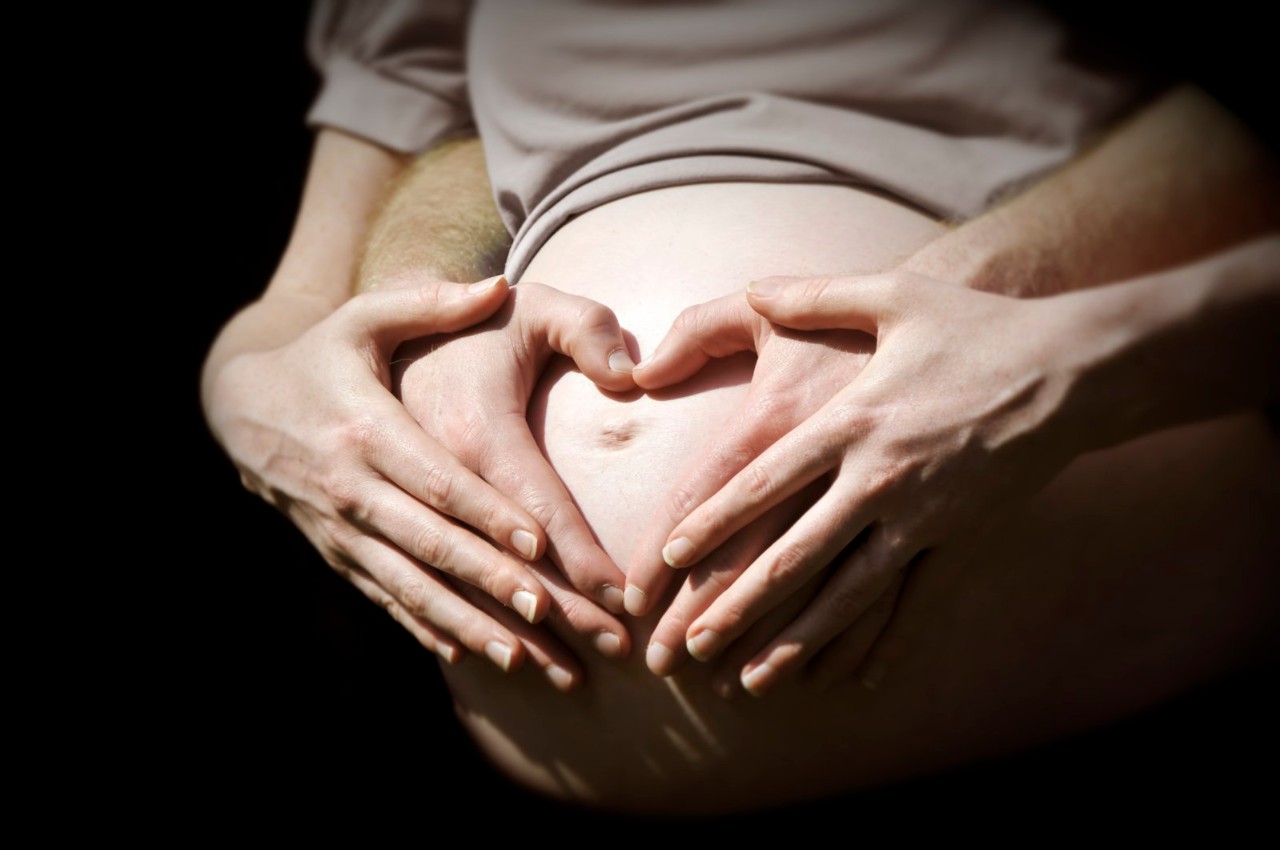
Lead photo/ecahal/FreeImages
Next Lives Here
The University of Cincinnati is classified as a Research 1 institution by the Carnegie Commission and is ranked in the National Science Foundation's Top-35 public research universities. UC's graduate students and faculty investigate problems and innovate solutions with real-world impact. Next Lives Here.
Related Stories
Cancer Center plays key role in lab research, clinical trials for new pancreatic cancer drug
September 1, 2026

WLWT and WCPO highlighted the contributions of University of Cincinnati Cancer Center researchers that helped lead to the recent FDA approval of daraxonrasib, a new treatment for pancreatic cancer.
An expert pieced together this Roman document like a puzzle
September 1, 2026

National media highlighted a new project by UC Classics Assistant Professor Matthijs Wibier to piece together and translate an ancient Roman text from fragments buried in the desert for more than 1,600 years.
Cancer Center physician receives $150,000 New Investigator Research Grant to study treatment-resistant leukemia
September 1, 2026
The University of Cincinnati Cancer Center’s Sarah Skuli, MD, PhD, received a two‑year, $150,000 Leukemia Research Foundation New Investigator Grant to study TP53‑mutated leukemia, a treatment‑resistant subtype with very poor outcomes.