
Pinder named Cancer Moonshot Scholar by NCI
College of Medicine faculty member among first receiving honor

Leeya Pinder, MD, MPH, associate professor in the UC College of Medicine Department of Obstetrics and Gynecology, Division of Gynecologic Oncology, is among the first 11 people named as Cancer Moonshot Scholars by the National Cancer Institute (NCI).
The Cancer Moonshot Scholars program is designed to advance cancer science while also diversifying the pool of researchers and the approaches to cancer research that NCI funds. The program is supported by the White House’s Cancer Moonshot initiative and aligns with NCI’s Equity and Inclusion Program and NIH’s UNITE Initiative. The Cancer Moonshot Scholars program is led by the Center to Reduce Cancer Health Disparities. NCI intends to fund up to 30 additional Cancer Moonshot Scholars.
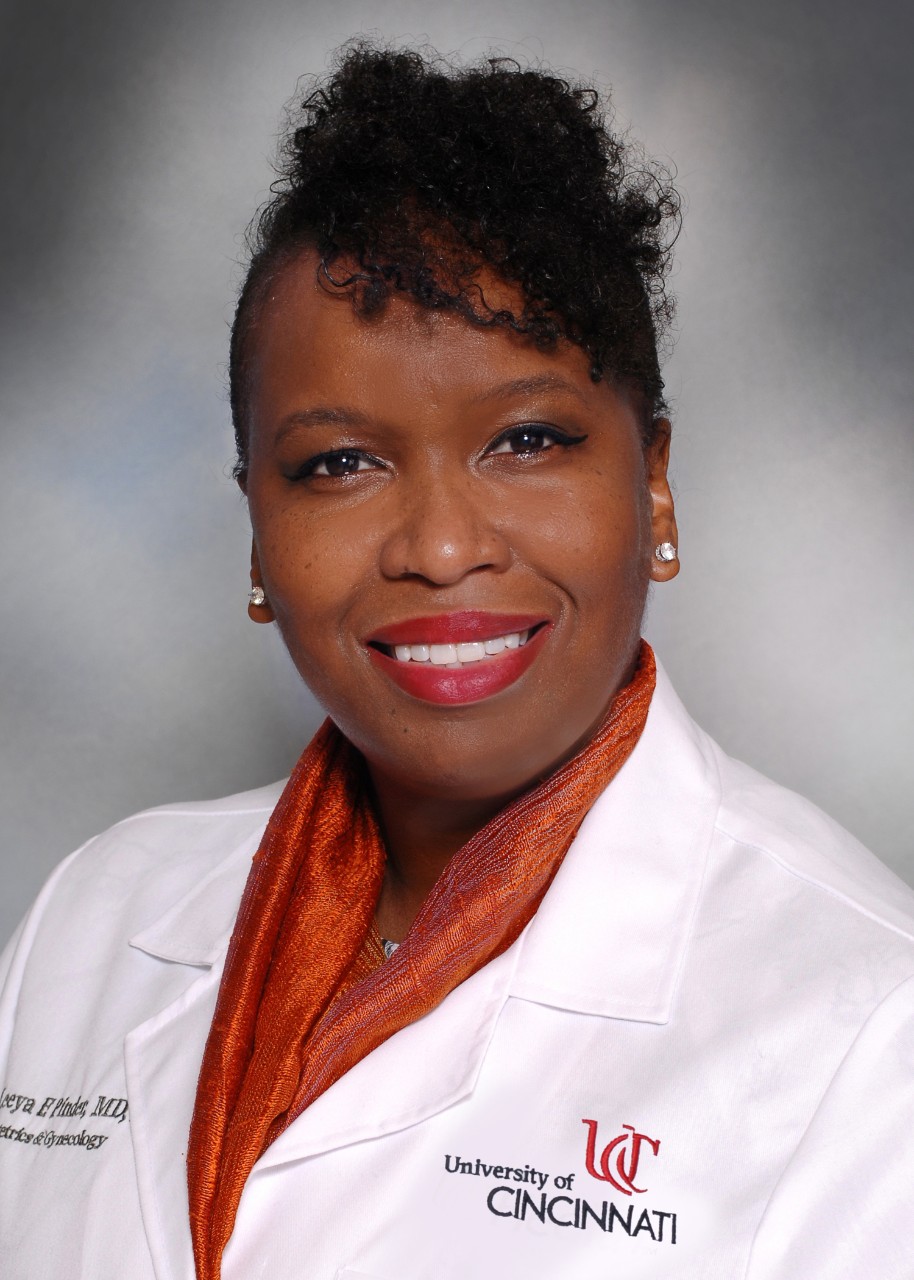
Leeya Pinder, MD, MPH, associate professor in the UC College of Medicine Department of Obstetrics and Gynecology. Photo/Dan Davenport/UC College of Medicine
Pinder’s project is “Repurposed Antiretroviral Therapies to Eliminate Cervical Cancer (POLESA Trial).” Her R37 is a seven-year award totaling $2.75 million during the first five years, with additional funding coming during the project’s last two years.
The overall goal of Pinder’s project is to find new, non-invasive, easily scalable solutions that address the profound gap in secondary cervical cancer prevention, particularly among women living with HIV. The study, which will enroll 180 women who present for cervical cancer screening in a Cervical Cancer Prevention Program clinic in Zambia, will also assess the safety and acceptability of a vaginal capsule containing the protease inhibitors lopinavir and ritonavir given alone or in combination with thermal ablation to treat screened women found with precancerous abnormalities that are eligible for ablative therapy.
Related Stories
UC Foundation celebrates 2026 philanthropy winners
October 23, 2026
The University of Cincinnati Foundation recognized its Outstanding Philanthropic Volunteer Award honorees at the George Rieveschl Recognition Dinner on October 22, 2026.
AI breast cancer survival model from Cancer Center could improve accuracy and personalize care
October 23, 2026
UC Cancer Center researchers, including lead author Wedad Alatebi, developed a deep learning survival model for breast cancer that combines detailed clinical and genetic information, potentially offering physicians a more accurate tool to guide treatment decisions.
UC expert explains potential impact of Pennsylvania’s new vape product law
October 22, 2026

UC professor Ashley Merianos speaks to the Pittsburgh Post-Gazette about Pennsylvania’s new vape law, youth vaping prevention, enforcement challenges and possible unintended consequences.