Business Courier: UC Gardner Neuroscience Institute renewed as StrokeNet National Coordinating Center

The Cincinnati Business Courier highlighted recent news that the UC Gardner Neuroscience Institute has been renewed as the National Coordinating Center of the National Institutes of Health (NIH) StrokeNet, which is the primary infrastructure for multicenter trials of stroke funded by NIH and the pipeline for new potential treatments for adults and children with stroke and those at risk for stroke.
Created in 2013, NIH StrokeNet conducts clinical trials and research studies to advance acute stroke treatment, prevention, and recovery and rehabilitation following a stroke. The national network includes 27 regional coordinating centers or hubs associated with over 200 hospitals enrolling in its trials.
The University of Cincinnati has served as the National Coordinating Center for NIH StrokeNet since its inception in September 2013, with renewal every five years, most recently in October 2023 with Joseph Broderick, MD, physician-researcher and director of the UC Gardner Neuroscience Institute, as lead principal investigator and Pooja Khatri, MD, physician-researcher, associate director of the UC Gardner Neuroscience Institute and vice-chair of research at the UC Department of Neurology and Rehabilitation Medicine as co-principal investigator.
In December 2023, Khatri will be competitively awarded the grant as lead principal investigator. The renewed infrastructure has 21 ongoing or upcoming studies, and is currently partnering with researchers in seven countries and at seven companies to help advance stroke care worldwide. NIH StrokeNet will have new features including enhanced activities related to patient representation and advocacy and diversity, equity and inclusion initiatives, as well as a new Clinical Research Professional training initiative.
“It is truly a privilege to harness the leadership and experience of the stroke research field to create and complete high-quality, multi-site trials, as well as collaborate with other stroke networks worldwide,” Khatri said. “We are also proud to be able to bring our expertise to our local community every day with a state-of-the-art perspective.”
“StrokeNet brings together leadership and researchers across the country to work more efficiently and avoid duplication of efforts with one centralized infrastructure,” Broderick said. “This research network has significantly advanced the field of stroke and directly resulted in improvements to patient care and outcomes in our region and across the world over the past decade. We are thrilled to be able to continue this important work.”
Read the Cincinnati Business Courier article. (Note: Subscription may be required to access full article.)
Read more about the National Coordinating Center renewal.
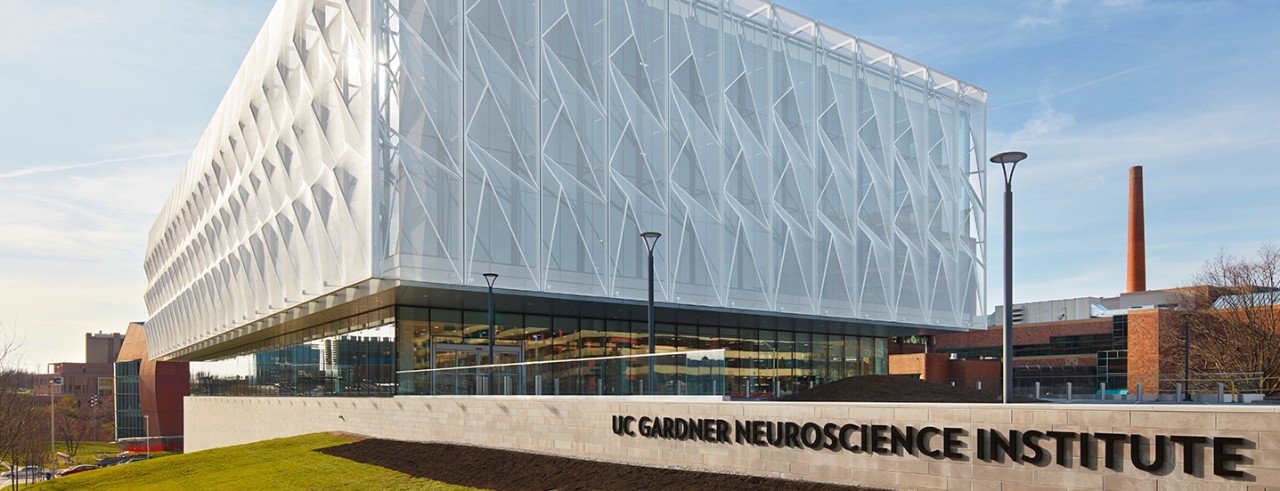
Featured image at top of UC Gardner Neuroscience Institute building. Photo/University of Cincinnati.
Related Stories
Heavy social media use linked to depression
August 31, 2026

U.S. News and World Report, Yahoo! News, MSN, USA Today and other national media highlight a new study by the University of Cincinnati and Northwestern University that found a correlation between heavy social media use and depression in adults.
These teeny spiders are social media stars
August 28, 2026

The New York Times turned to a University of Cincinnati professor to explain the appeal of jumping spiders on social media.
An internal divide among unions on AI impacts the Wisconsin gubernatorial race
August 28, 2026

Anne Lofaso, a professor in the Donald P. Klekamp College of Law at UC, spoke with Wisconsin Public Radio, about the schism among unions over AI and whether it is a plus, a negative, or somewhere in between when looking at job creation.