Clinical Research News: Action plan developed to enhance enrollment in acute stroke trials

Clinical trials are a critical step in improving treatments and care for acute stroke patients, and enrolling a large and diverse patient population in trials helps push research forward.
At the Stroke Treatment Academic Industry Roundtable XII meeting in March, stroke physicians, researchers, industry representatives and members of the National Institute of Neurological Disorders and Stroke and the U.S. Food and Drug Administration discussed the current status of enrolling patients in acute stroke trials and the most pressing issues impacting enrollment.
The meeting's review and recommendations were published in the journal Stroke, led by corresponding author Joseph Broderick, MD, professor in the University of Cincinnati’s Department of Neurology and Rehabilitation Medicine in the College of Medicine, director of the UC Gardner Neuroscience Institute and a UC Health physician.
“While we may have a lot of good ideas, none of them are going to get tested without recruitment," Broderick told Clinical Research News.
Due to the time sensitive nature of treatments being tested for acute stroke, Broderick said emergency consent procedure is one area in need of improvement. The published recommendation is for centralizing some of the exception from informed consent workload and using national data in conjunction with local community events and including patients and family members in trial planning.
“This past year we added stroke survivors to our working groups that help design future trials,” Broderick said. They’re engaged with an assortment of questions, among them: Does this make sense to you? Do you think this would be worthwhile? How would you present this trial opportunity to a potential patient?"
Read the Clinical Research News article.
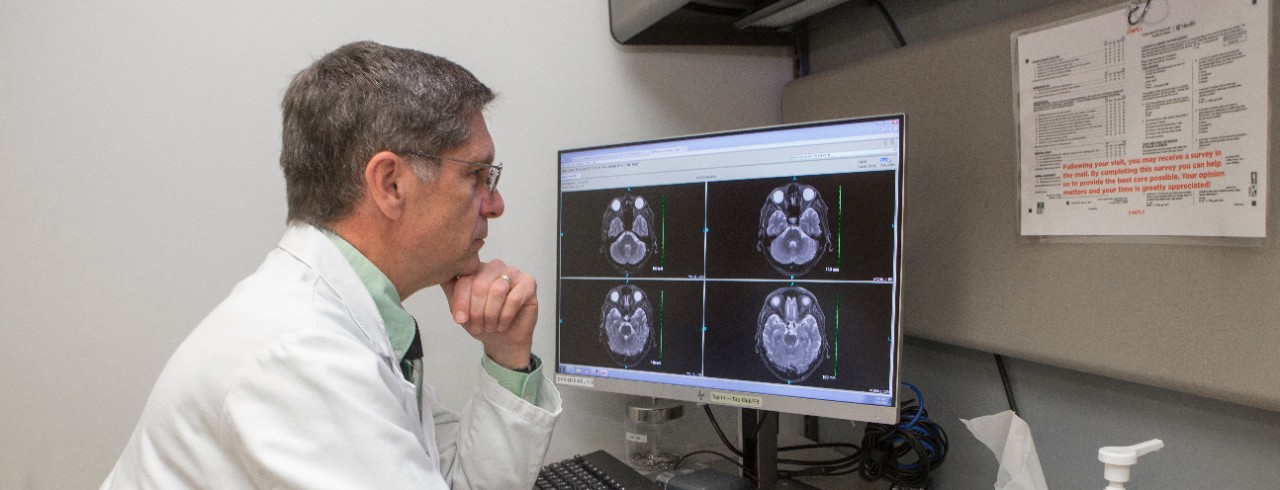
Featured photo at top of Dr. Broderick. Photo/Joseph Fuqua II/University of Cincinnati
Related Stories
Cancer Center plays key role in lab research, clinical trials for new pancreatic cancer drug
September 1, 2026

WLWT and WCPO highlighted the contributions of University of Cincinnati Cancer Center researchers that helped lead to the recent FDA approval of daraxonrasib, a new treatment for pancreatic cancer.
An expert pieced together this Roman document like a puzzle
September 1, 2026

National media highlighted a new project by UC Classics Assistant Professor Matthijs Wibier to piece together and translate an ancient Roman text from fragments buried in the desert for more than 1,600 years.
Cancer Center physician receives $150,000 New Investigator Research Grant to study treatment-resistant leukemia
September 1, 2026
The University of Cincinnati Cancer Center’s Sarah Skuli, MD, PhD, received a two‑year, $150,000 Leukemia Research Foundation New Investigator Grant to study TP53‑mutated leukemia, a treatment‑resistant subtype with very poor outcomes.