
CNN: Fossil could help solve evolutionary mystery
UC expert says discovery of new mosasaur helps us understand prehistoric oceans

CNN turned to a University of Cincinnati biology professor to explain the significance of the discovery of a new species of mosasaur found in 2015 in North Dakota.
UC College of Arts and Sciences Associate Professor Takuya Konishi is an expert in mosasaurs, marine reptiles that ruled ancient oceans as apex predators for millions of years about 70 million years ago. This animal was the surprise hero of the blockbuster film “Jurassic World.”
A team of researchers led by Amelia Zietlow with the American Museum of Natural History described a new species of mosasaur they called Jormungandr walhallaensis, named for a Norse myth about an enormous serpent that dwelled in the land of Midgard.
The mosasaur was about 24 feet long with features resembling different types of marine reptile that defied easy classification. The findings were published in the journal Bulletin of the American Museum of Natural History.
Konishi, who was not part of the study, told CNN that the process of fossilization can sometimes distort bone, making it more difficult to conceive what the animal looked like before it died.
“Just how distinct J. walhallaensis is from (the other species) has yet to be investigated further,” Konishi told CNN.
But we still have much to learn about these ancient marine reptiles, Konishi said, and studies such as Zietlow's are unlocking secrets about their rich diversity on the planet during the Cretaceous.
Featured image at top: The fearsome maw of a mosasaur. Photo/Ravenna Rutledge/UC
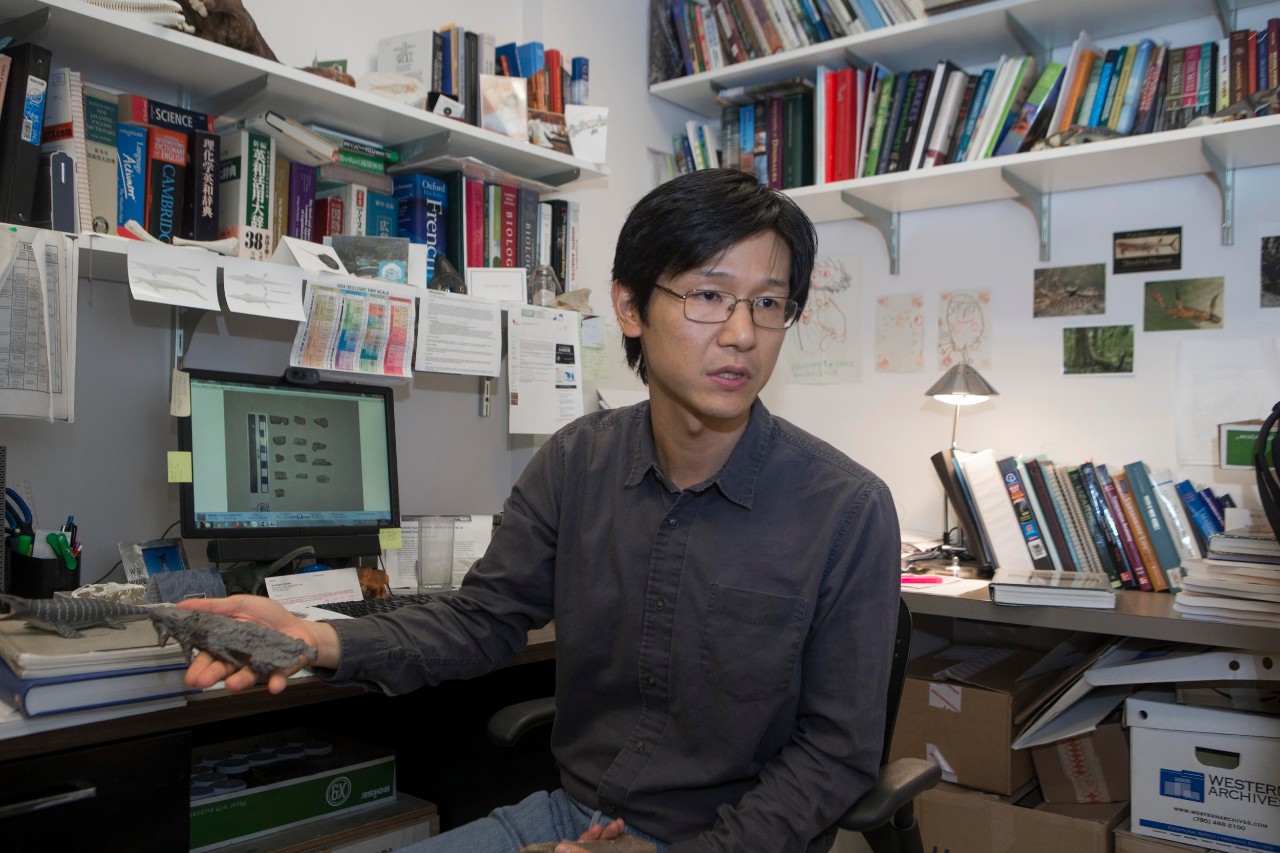
UC Associate Professor Takuya Konishi is an expert on ancient marine reptiles called mosasaurs. Photo/Joseph Fuqua II/UC
Related Stories
Simple ways to find a deeper sense of happiness and well being
October 8, 2026

UC assistant professor Suzie White, featured in an AARP story on practical ways to live a happier, healthier life, shared research-backed strategies for increasing well-being through gratitude and service to others. White teaches Happiness in Action, a course that helps students apply the science of happiness in everyday life.
New vending machine helps people with addiction
October 8, 2026

The University of Cincinnati's Daniel Arendt was featured in a Spectrum News report on a new harm reduction vending machine installed at the IPM Food Pantry in partnership with the Hamilton County Mental Health and Recovery Services Board.
Defying the demographic cliff
October 7, 2026

Despite the looming demographic cliff, the University of Cincinnati and five other major Greater Cincinnati universities grew enrollment this fall, with UC reaching a record 54,437 students, helped by strong first-year demand.