
Failure to pass fire levies can lower house values
UC economists find fire protection funding has strong correlation to home prices

Cuts to fire protection funding initially have a larger effect on home prices than crime, school quality or environmental quality, but the short-term decreases don’t persist, University of Cincinnati economists found.
David Brasington, PhD, and Olivier Parent, PhD, professors of economics in UC's Carl H. Lindner College of Business, studied the effects of communities that don’t pass fire protection renewal levies on housing values for a research article that was published in the journal Regional Science and Urban Economics.
Brasington was surprised by how cuts to fire protection funding had a greater effect on housing prices than other factors.
“We were really surprised about it having an effect and the magnitude of the effect, too,” he said. “It was surprising to me, also, because schools get the bulk of funding, and police services are so important.”
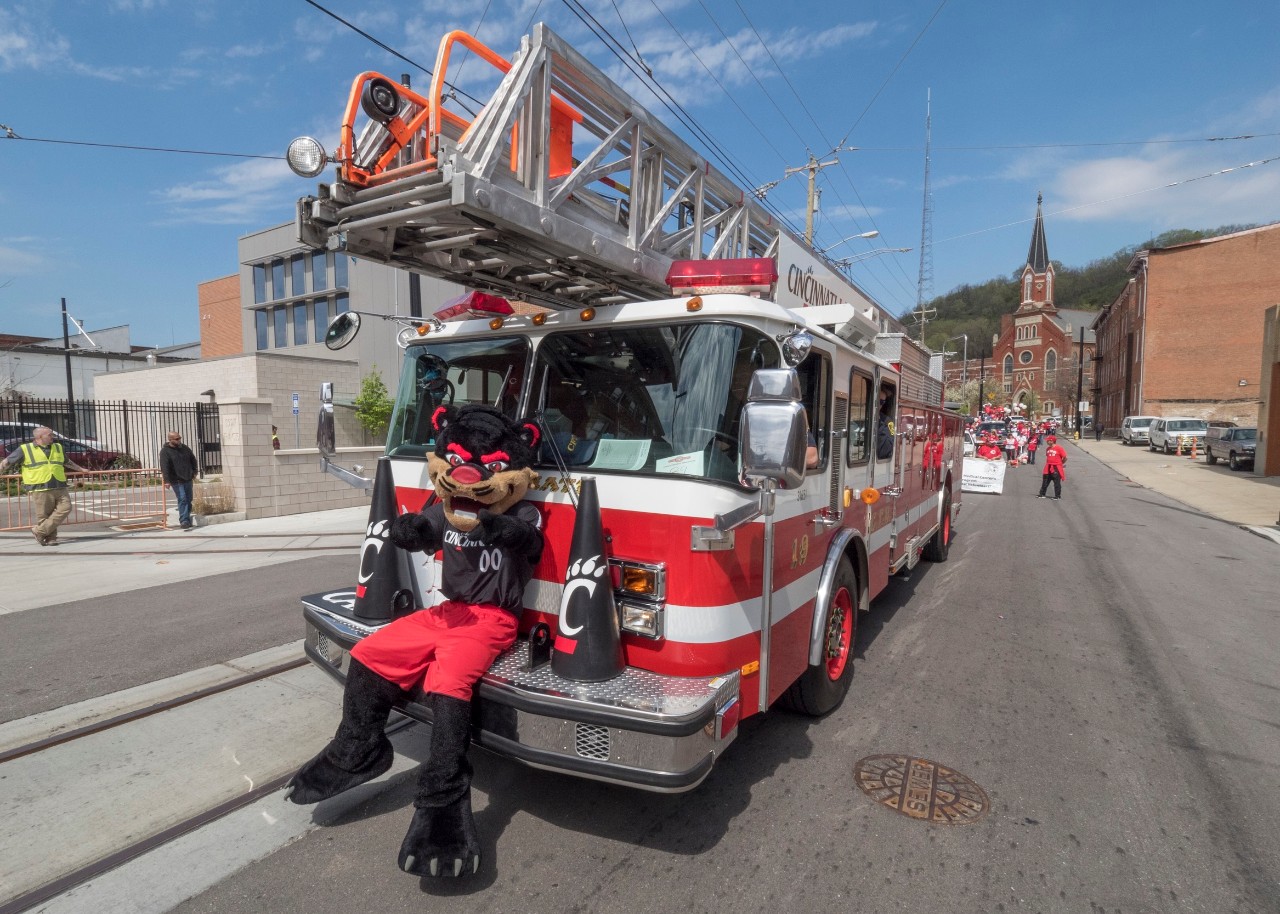
The Bearcat rides the front of a fire truck during the Findlay Market Opening Day Parade. Photo/Jay Yocis/UC Marketing + Brand

Olivier Parent, PhD, professor of economics
To study the effects of funding cuts, Brasington and Parent analyzed data of house sales in Ohio between 1995-2006, the most recent time frame that data was available.
They focused on communities that according to the U.S. Census Bureau share similar demographic and economic characteristics. The only discernible difference was that some of them narrowly voted to renew tax levies while others narrowly voted against renewing their levies.
In the year after communities narrowly voted to cut fire protection funding, house prices dropped between 6.7% and 15.1%. That translates to an average decrease in house values of $15,000 while the tax savings for the life of the house is only $1,500.
“Not renewing is kind of a shock to the community,” said Brasington, who added it’s rare for Ohio communities to vote against fire protection levies.

David Brasington, PhD, professor of economics
While housing prices decreased after a failed fire protection levy, Parent and Brasington found the prices returned to their normal levels in those communities within a few years.
“There might be some effect the second year after the vote but then normal levels return,” Brasington said. “You can’t tell a difference in house prices in cities that vote against the tax levies the third year, fourth year or fifth year after the vote. But there’s a temporary blip in house prices.
“Our guess is that a big factor in the drop of house prices initially is fear, fear of increased risk of fire. But what happens in Ohio is every fire department supports the other. If there’s a fire in [one area], the fire departments from [neighboring communities] and anywhere close by send fire trucks to help each other through mutual assistance agreements. The actual protection from fires is good, even if a tax levy fails probably because of these mutual assistance agreements.
“Our guess is people are afraid of the decrease in services at first then after a couple years they realize, ‘Well, there hasn’t been any big change in actual fire protection.’”
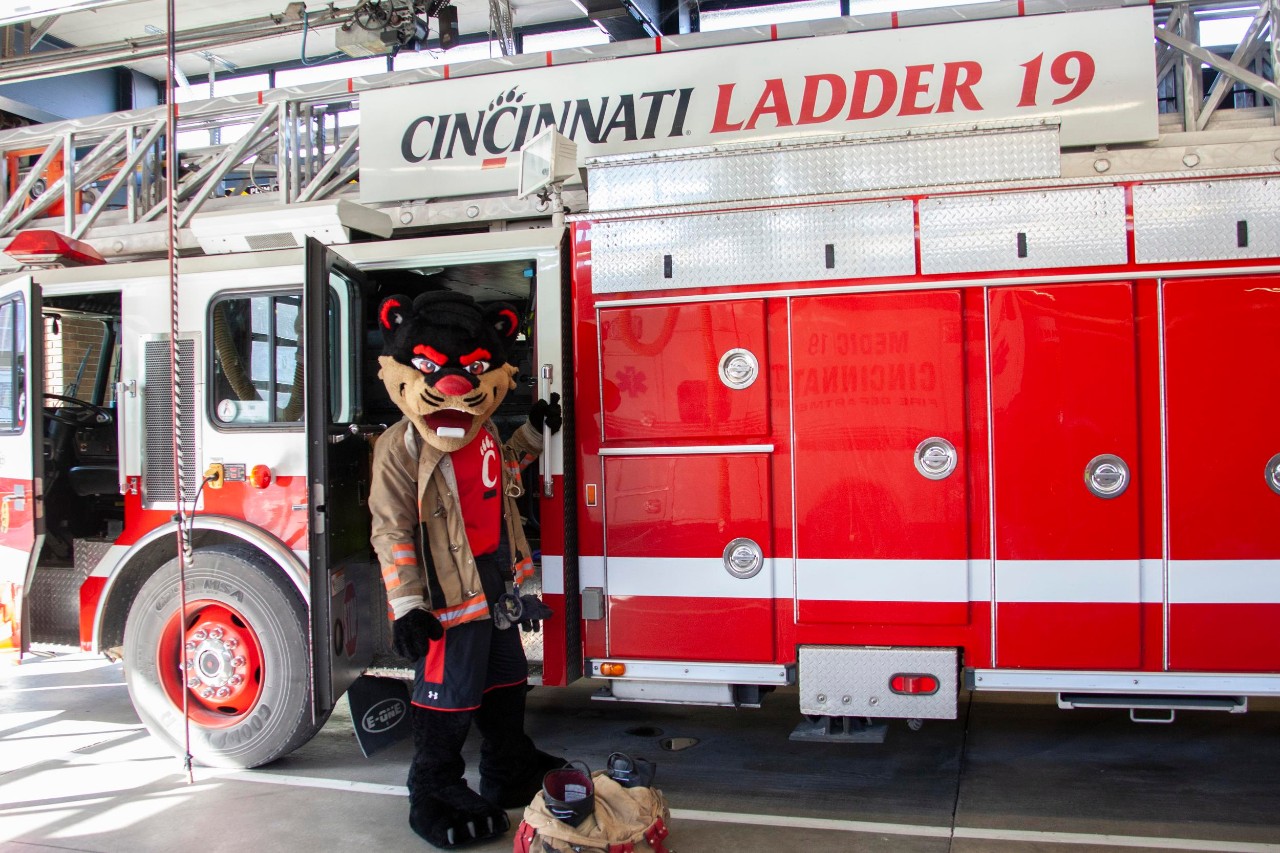
The Bearcat with a Cincinnati Fire Department truck. Photo/Ravenna Rutledge/UC Marketing + Brand
The effects of fire protection cuts are the opposite of cuts to park funding, which Brasington previously studied.
Brasington found Ohio communities that vote to renew parks and recreation spending see 13% higher home values three years after the vote than similar communities that voted against the tax renewals. While cuts to park funding initially didn’t have an effect on house prices, the effects grew in the following years.
“The parks and recreation cuts take a while to be noticeable whereas the fire protection failure drops house prices right away but doesn’t persist,” Brasington said. “They’re like the opposite sides of a coin.”
For both parks and fire protection, Brasington said, the studies show that those services matter to residents and are worth the investment.
Featured image at top: The Bearcat with a fire truck. Photo/Ravenna Rutledge/UC Marketing + Brand
Impact Lives Here
The University of Cincinnati is leading public urban universities into a new era of innovation and impact. Our faculty, staff and students are saving lives, changing outcomes and bending the future in our city's direction. Next Lives Here.
Related Stories
UC aerospace engineer leads global computational fluid dynamics taskforce
October 21, 2026
The American Institute of Aeronautics and Astronautics' CFD 2030 Integration Committee has announced the formation of the Computational Fluid Dynamics (CFD) Vision 2045 Team, a multi-institution working group tasked with defining where the field of computational fluid dynamics should be by 2045 to align with the changing and evolving needs of the aerospace industry. The University of Cincinnati's Prashant Khare, Bradley Jones professor and head of the Department of Aerospace Engineering, is leading this specialized group.
Still the top ‘cat
October 20, 2026

The University of Cincinnati Bearcat mascot was voted Cincinnati’s favorite mascot in a Cincinnati Enquirer reader poll, earning 45.1% of the vote and topping other local favorites.
How will Ohio's minimum wage bump impact businesses and their employees?
October 20, 2026

UC economist Michael Jones spoke to WVXU's "Cincinnati Edition" on if Ohio's latest minimum wage increase will actually impact employees and businesses as inflation continues to rise.