Healthline: UC expert discusses colorectal cancer

The University of Cincinnati's Carla Justiniano spoke with Healthline about colorectal cancer in an article about a woman diagnosed with the cancer when she was seven months pregnant.
Genetic testing for Amanda Webb's baby revealed abnormalities, but further testing found the baby was healthy and Webb had stage 4 colon cancer. She had previously been diagnosed with stage IA malignant melanoma.
Justiniano, MD, said a previous history of several cancers is associated with colon cancer, but malignant melanoma is not a common one. She noted rates in colorectal cancer are rising among young people.
“[This] is likely explained by a birth cohort effect where only persons born after the 1950s experienced the increasing rates of colorectal cancer, meaning these people have had different exposures to foods and environmental factors that impact the microbiome and inflammation in their colon, which are thereby thought to drive carcinogenesis,” said Justiniano, a colorectal surgeon at the University of Cincinnati Cancer Center and assistant professor in UC's College of Medicine.
It is recommended for healthy patients to begin getting colonoscopies at age 45. Those with a first-degree relative who has had colorectal cancer should begin screening 10 years earlier than their family member's diagnosis.
“Patients with a diagnosis, especially when caught at screening, are often in disbelief because they feel fine, but in fact, many colon cancer patients are caught early and have zero symptoms, which highlights the importance of a screening colonoscopy,” she said. “There are many cancers that we cannot screen for, but colorectal cancer is not one of those, and thus we should be appreciative of that and take advantage of it,” said Justiniano.
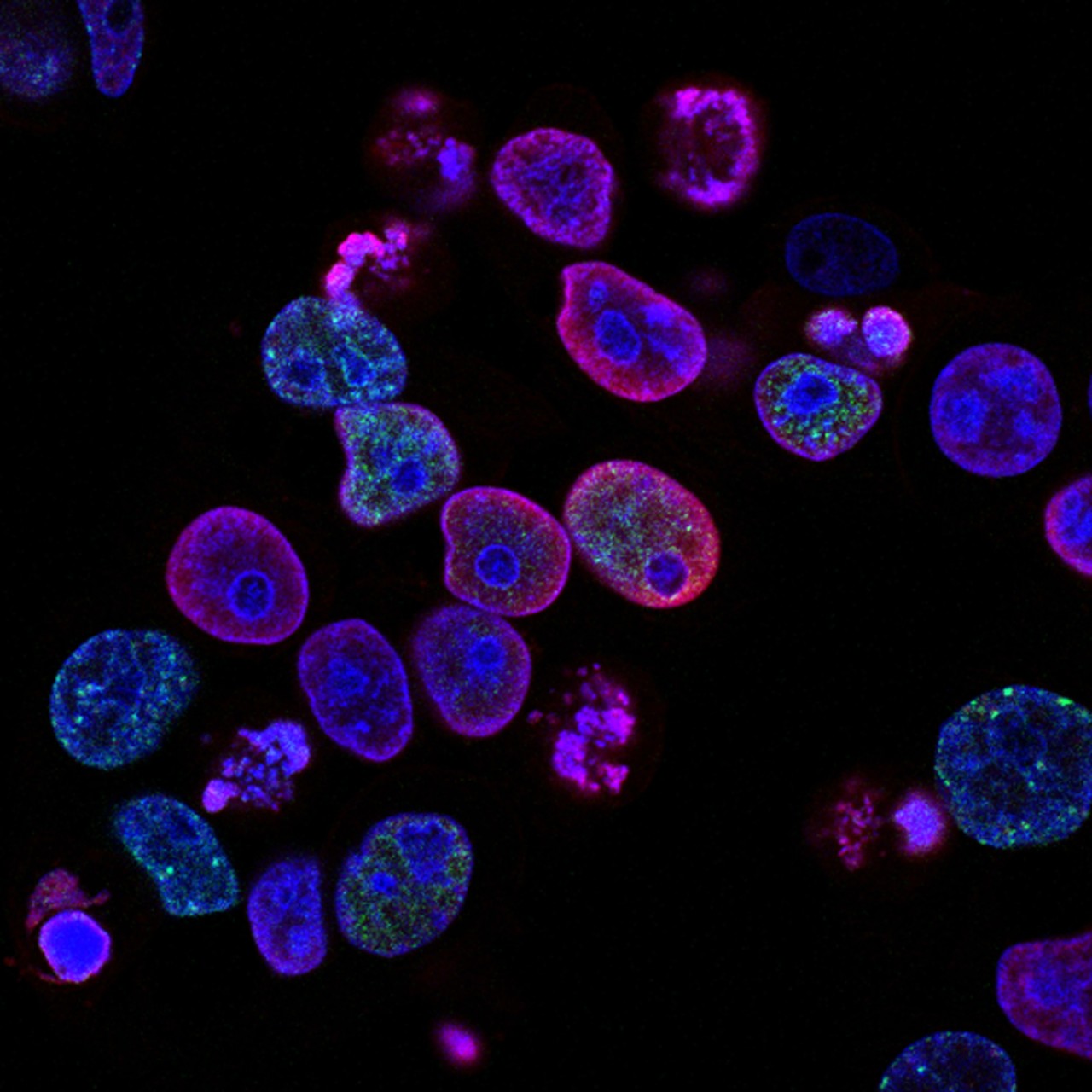
Featured photo at top of colorectal cancer cells.
Related Stories
How UC's co-op model can benefit small businesses
August 25, 2026

The Business of Home recently dove into how a Chicago-based interior design firm benefits from UC's co-op model.
Roman law expert pieces together ancient legal history
August 25, 2026
UC Classics scholar Matthijs Wibier reconstructed and translated a 1,600-year-old Latin legal text from Egyptian parchment fragments at the Penn Museum, revealing previously unknown Roman tax laws.
UC Blue Ash begins fall semester with more students and exciting new technology
August 24, 2026
The University of Cincinnati Blue Ash College is continuing its impressive growth, renovating its campus and adding innovative technology as it begins the fall semester. Enrollment is up approximately 3% from last year, bringing the total enrollment for the college to more than 5,000 students. This marks the fifth consecutive year that UC Blue Ash has increased its enrollment.