Inside the wild ways many creatures make milk
UC biologist Joshua Benoit tells Smithsonian that some cockroaches make an equivalent

Smithsonian magazine turned to a University of Cincinnati biologist to explain the weird and surprising ways that animals make milk for their young.
UC College of Arts and Sciences Professor Joshua Benoit told Smithsonian that it's not just goats, cows and other mammals that produce fat-rich milk for their babies.
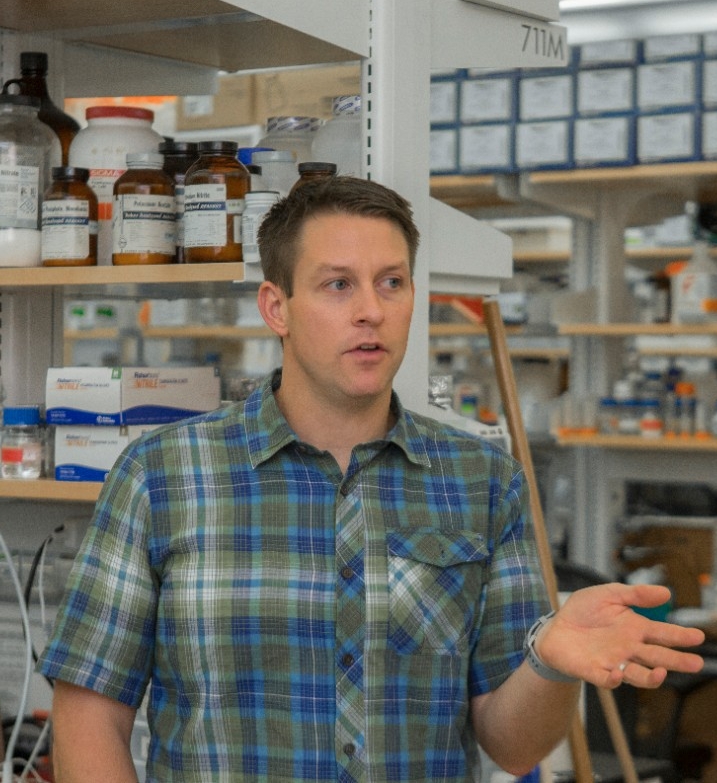
UC Professor Joshua Benoit spoke to Smithsonian about animals other than mammals that produce milk. Photo/Joseph Fuqua/UC
Scientists once thought that milk production was a characteristic exclusive to mammals. The name is derived from the Latin word for “breast.”
But Benoit said scientists are finding that this isn't necessarily the case.
Everything from jumping spiders to penguins to some amphibians produce a milky, protein-rich secretion to feed their young. And while it doesn't share the same evolutionary origin, it has a similar function, Benoit said.
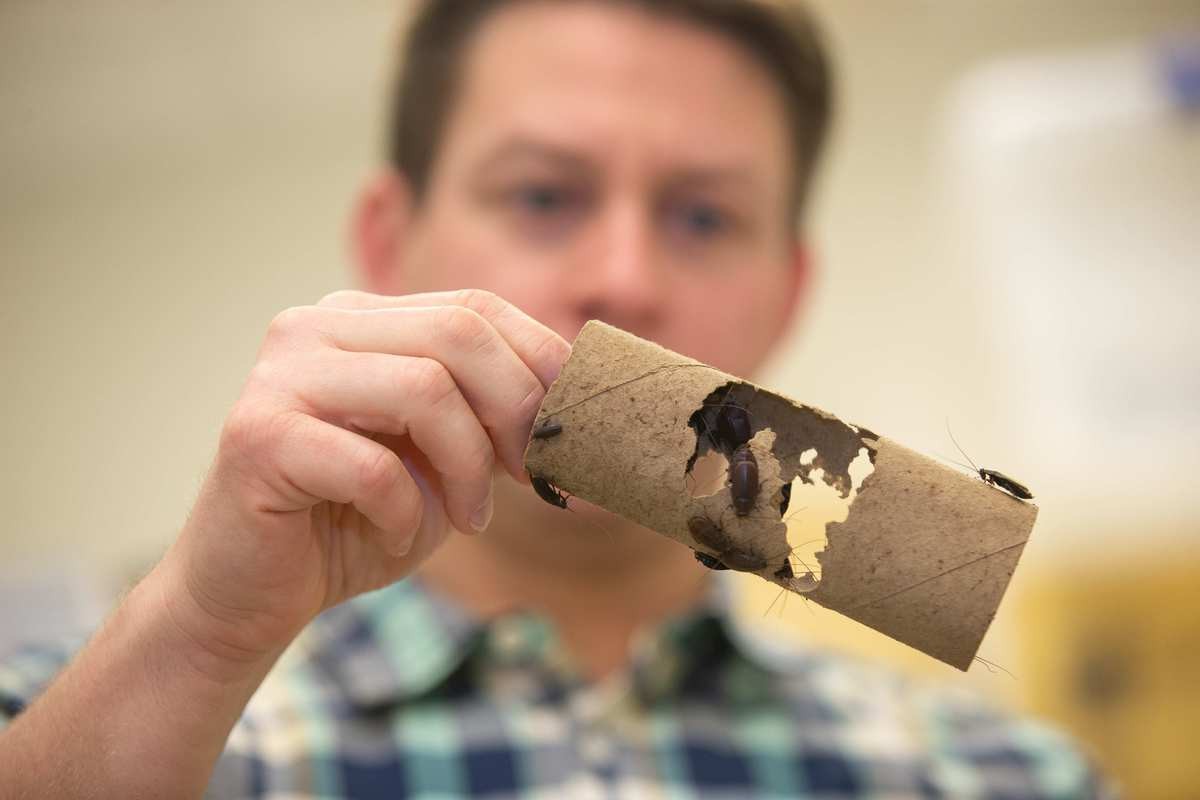
In his biology lab, he has studied insects such as beetle-mimic cockroaches that feed milk to their newborn babies.
“We usually call it a milk-like substance,” he told Smithsonian. “For all intents, it does the same thing, and even some of the proteins present are similar.”
Benoit said tsetse flies along with some ants and spiders, too, secrete a nourishing milk-like substance for their babies. And each species arrived at this survival strategy for raising babies independently, which demonstrates its benefits across the animal kingdom, he said.
Featured image at top: UC Professor Joshua Benoit holds up beetle-mimic cockroaches in his biology lab. Photo/Andrew Higley/UC Marketing + Brand
Related Stories
Cancer Center plays key role in lab research, clinical trials for new pancreatic cancer drug
September 1, 2026

WLWT and WCPO highlighted the contributions of University of Cincinnati Cancer Center researchers that helped lead to the recent FDA approval of daraxonrasib, a new treatment for pancreatic cancer.
An expert pieced together this Roman document like a puzzle
September 1, 2026

National media highlighted a new project by UC Classics Assistant Professor Matthijs Wibier to piece together and translate an ancient Roman text from fragments buried in the desert for more than 1,600 years.
Her book drive is changing literacy in Cincinnati
August 31, 2026

WCPO highlights a nonprofit dedicated to childhood literacy that has offers co-op positions to UC students.