Inside the wild ways many creatures make milk
UC biologist Joshua Benoit tells Smithsonian that some cockroaches make an equivalent

Smithsonian magazine turned to a University of Cincinnati biologist to explain the weird and surprising ways that animals make milk for their young.
UC College of Arts and Sciences Professor Joshua Benoit told Smithsonian that it's not just goats, cows and other mammals that produce fat-rich milk for their babies.
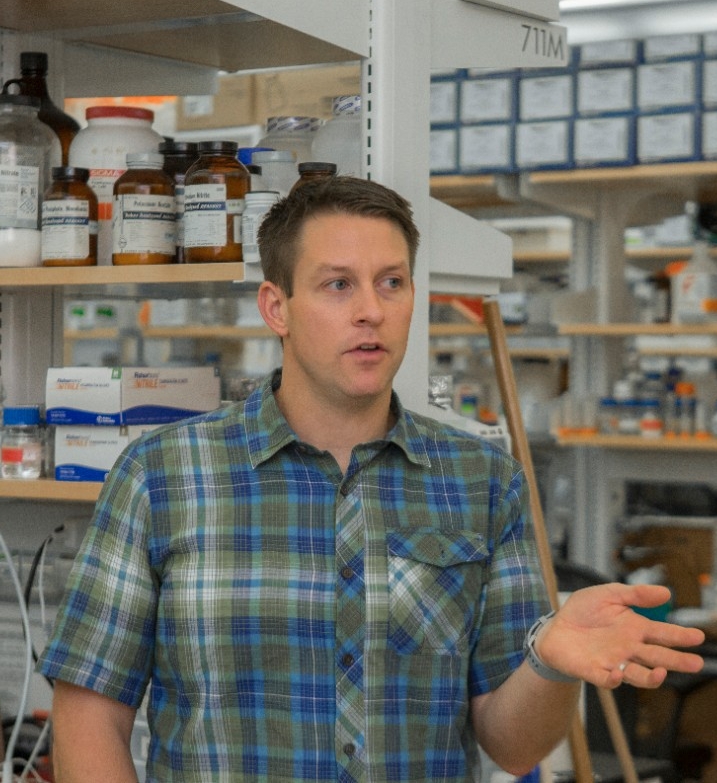
UC Professor Joshua Benoit spoke to Smithsonian about animals other than mammals that produce milk. Photo/Joseph Fuqua/UC
Scientists once thought that milk production was a characteristic exclusive to mammals. The name is derived from the Latin word for “breast.”
But Benoit said scientists are finding that this isn't necessarily the case.
Everything from jumping spiders to penguins to some amphibians produce a milky, protein-rich secretion to feed their young. And while it doesn't share the same evolutionary origin, it has a similar function, Benoit said.
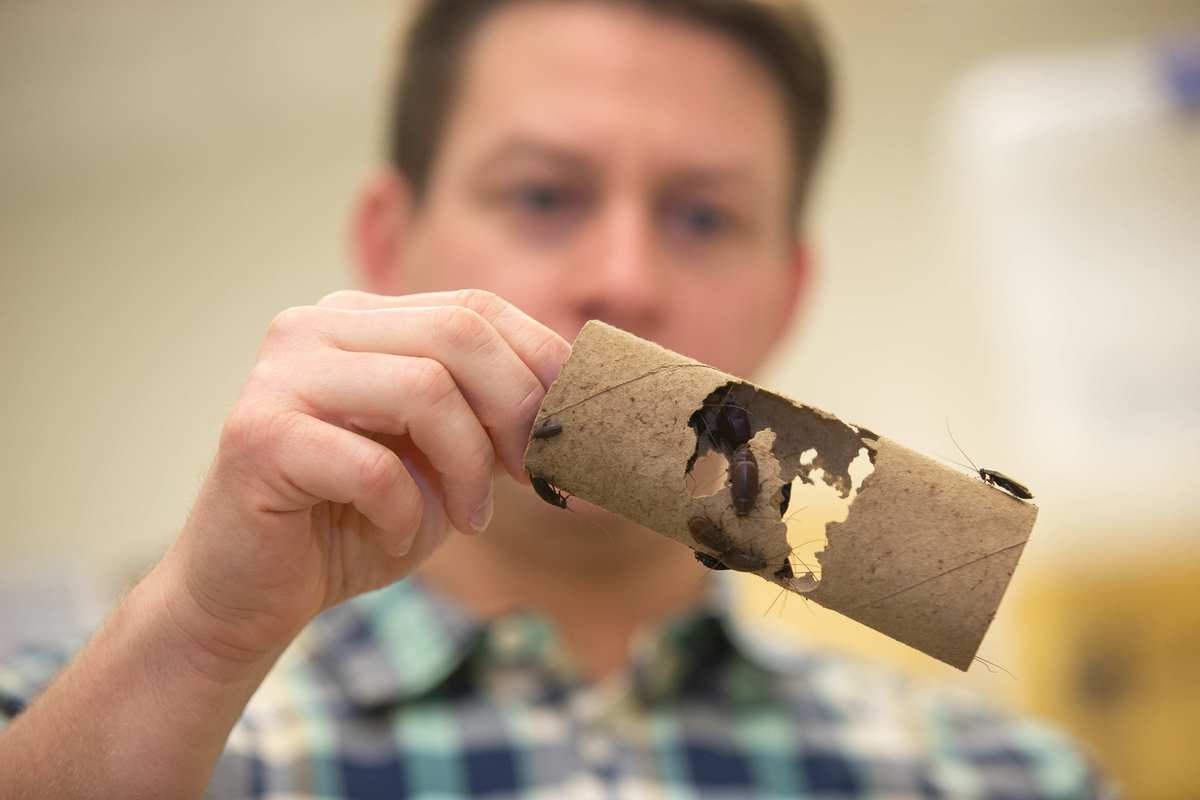
In his biology lab, he has studied insects such as beetle-mimic cockroaches that feed milk to their newborn babies.
“We usually call it a milk-like substance,” he told Smithsonian. “For all intents, it does the same thing, and even some of the proteins present are similar.”
Benoit said tsetse flies along with some ants and spiders, too, secrete a nourishing milk-like substance for their babies. And each species arrived at this survival strategy for raising babies independently, which demonstrates its benefits across the animal kingdom, he said.
Featured image at top: UC Professor Joshua Benoit holds up beetle-mimic cockroaches in his biology lab. Photo/Andrew Higley/UC Marketing + Brand
Related Stories
Will a gas tax help lower prices at the pump?
May 14, 2026

WCPO recently reported on Kentucky and Indiana’s steps to combat surging gas prices, cutting and suspending state gas taxes, respectively. UC economist Michael Jones explained the impact on Cincinnati.
Is a colonoscopy painful?
May 13, 2026

The University of Cincinnati's Susan Kais, MD, assistant professor of clinical medicine in the Division of Gastroenterology and Hepatology in the College of Medicine and UC Health gastroenterologist, recently appeared on the ARC Cincinnati morning program on Local 12/WKRC-TV to answer common questions from viewers about colonoscopies and to dispel myths.
Telescope captures information about lonely Jupiter-like gas giant
May 13, 2026

Science outlets highlight a University of Cincinnati student's collaborative discoveries about an exoplanet 901 light years away.