
Chemists develop easy test for plant viruses
Plant viruses cost US agriculture billions each year

Chemists at the University of Cincinnati are working on a simple way to diagnose viruses in plants before they infect entire crops.
It might be odd to think of a plant catching a cold, but viruses are a major problem in agriculture. Crop diseases cause more than $21 billion in losses each year in the United States.
Students in UC Assistant Professor Pietro Strobbia’s chemistry lab are examining efficient and accurate methods to detect plant viruses before they even show symptoms such as spotting or yellowing of leaves.
UC researchers working with the University of Kentucky developed hydrogel sensors that detect pathogens through contact with the leaf. Researchers abraid the leaf and apply a hydrogel sensor, which uses spectroscopy to “fingerprint” the chemicals found in the sample.
Any virus present has nowhere to hide, Strobbia said.
He and his students are refining the process now to use microneedles instead of the hydrogel for a simpler, easier test.
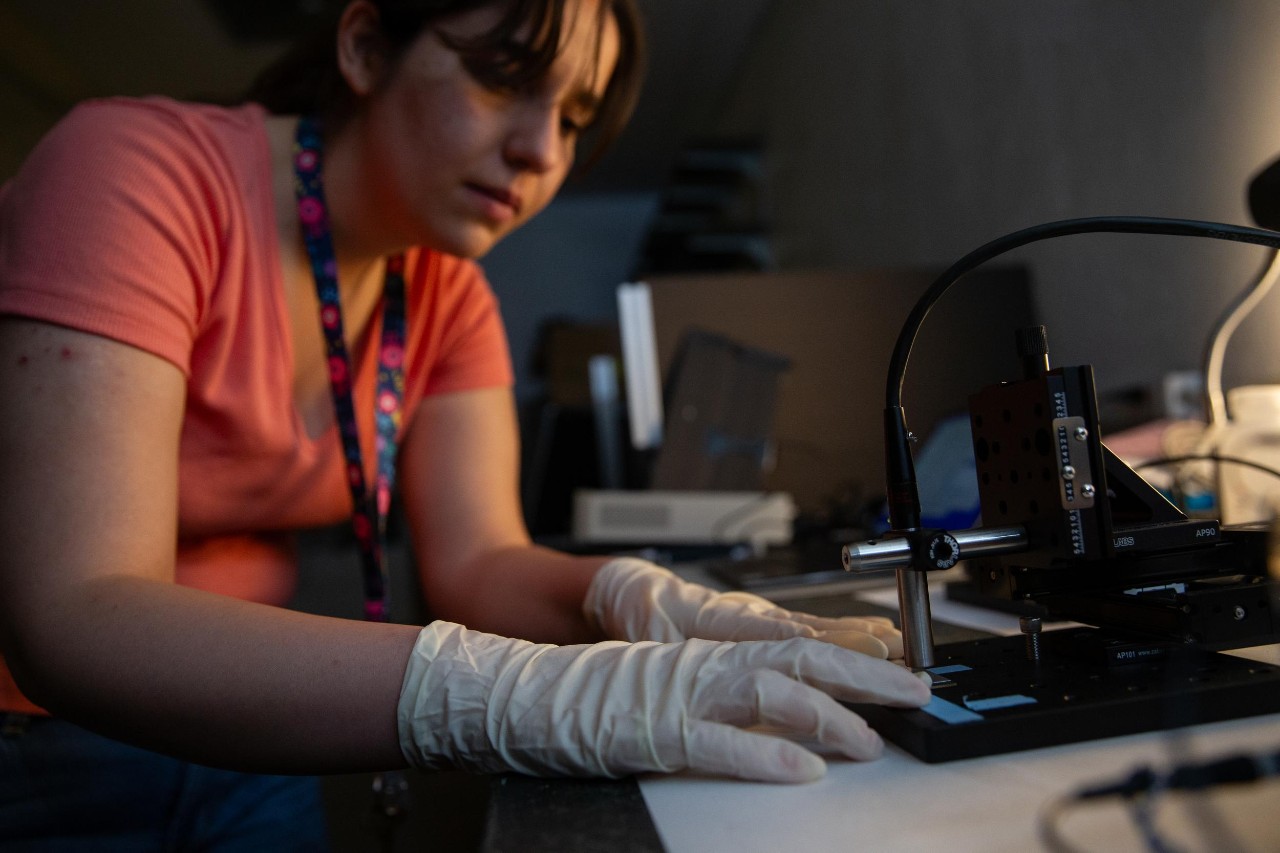
UC graduate student Niloufar Yavari is developing better ways to identify viruses in plants in Pietro Strobbia's chemistry lab. Photo/Andrew Higley/UC Marketing + Brand
In Strobbia’s lab, students are studying tobacco mosaic virus, which infects hundreds of different plant species. It spreads through direct contact with other plants as well as spreading by insects and agricultural workers. It is named for the mosaic pattern of light and dark colors on infected leaves. It also causes spotting and stunting of infected plants. There is no cure for tobacco mosaic virus so the only solution is to destroy infected plants.
And the virus can persist in dried sap where it can be spread to other plants by incidental contact, according to the Penn State Extension.
Strobbia said quick detection could prevent the spread of the disease across an entire crop. He and his research team published an article on their hydrogel work this year in the journal ACS Sensors.
If we can diagnose these infections sooner, then farmers would be able to isolate infected plants and remove them before infection spreads.
Lyndsay Kissell, UC visiting scholar
Identifying the virus often requires complicated molecular tests or visual inspection of diseased plants, which isn’t always accurate.
“The diagnosis of plant infection relies on visual cues,” said Lyndsay Kissell, a UC visiting scholar who worked as a postdoctoral researcher in Strobbia's lab. “That means the plants are already sick enough to show symptoms.
“If we can diagnose these infections sooner, then farmers would be able to isolate infected plants and remove them before infection spreads throughout a field,” she said.
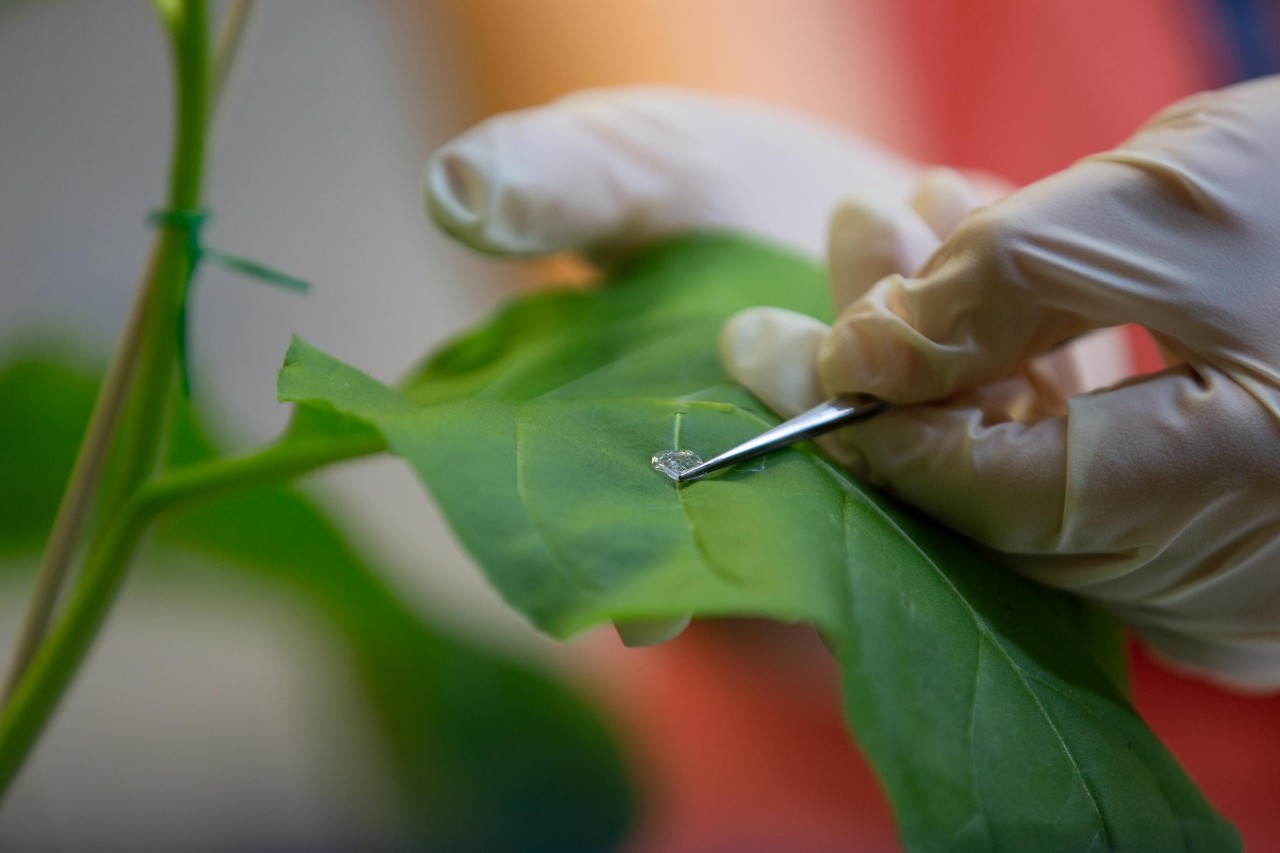
UC chemistry researchers are studying better ways to diagnose viruses in plants. Photo/Andrew Higley/UC Marketing + Brand
UC doctoral student Manisha Sheokand said the sensors they developed are inexpensive, accurate and easy to use.
“This approach is aimed to be field-deployable, cost-effective, reliable and allow real-time detection of plant viruses,” she said.
Scholar Kissell said the challenge is identifying the virus at the low concentrations required for early detection.
“Because we wanted to detect these infections early, we had to be able to sense even when the viral load was low. By using a hydrogel matrix, we were able to overcome both of those challenges,” she said.
Early detection could make a big difference for growers and their yields, she said.
“I grew up around farming communities and know what a poor yield year can mean. With early diagnosis, perhaps we can lessen that impact,” she said.
Featured image at top: UC Assistant Professor Pietro Strobbia is developing better sensors to detect plant viruses. Photo/Andrew Higley/UC Marketing + Brand
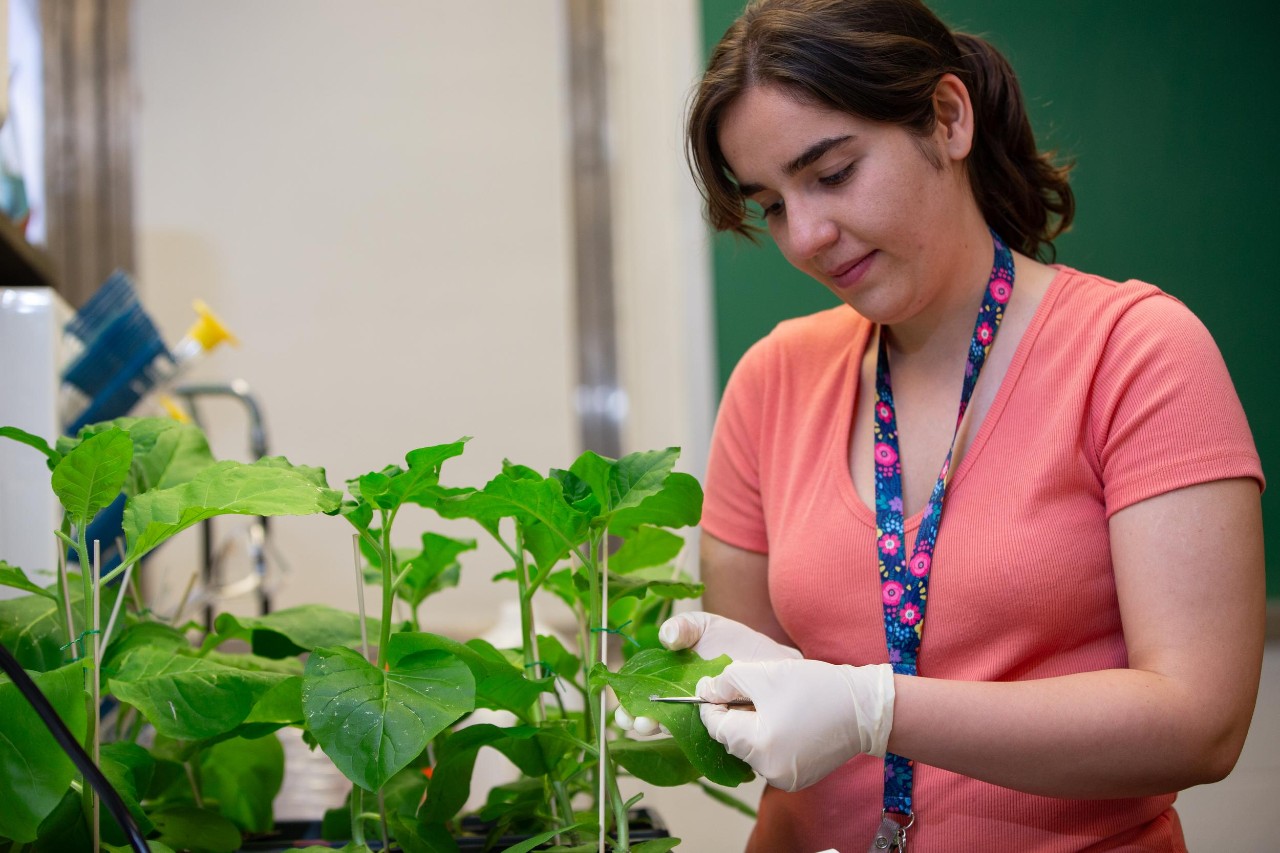
UC student Niloufar Yavari studies tobacco mosaic virus in a chemistry lab. Photo/Andrew Higley/UC Marketing + Brand
Next Lives Here
The University of Cincinnati is leading public urban universities into a new era of innovation and impact. Our faculty, staff and students are saving lives, changing outcomes and bending the future in our city's direction. Next Lives Here.
Related Stories
2026 Daniel Drake Medals awarded to three pioneering physician-scientists
October 12, 2026
The University of Cincinnati College of Medicine awards its highest honor, the 2026 Daniel Drake Medal, to three leaders in transplantation medicine, rare lung disease and heart health.
UC researcher to launch national study with $2.5 million NIH grant
October 9, 2026

A University of Cincinnati researcher has received a $2.5 million National Institutes of Health grant to conduct research during the next five years. Natalie Kreitzer, MD, a University of Cincinnati College of Medicine physician-researcher, received an R01 independent research grant from the NIH's Eunice Kennedy Shriver National Institute of Child Health and Human Development. The funding will support a test program for caregivers of patients with traumatic brain injury, as reported by the Cincinnati Business Courier.
Lighting up the skyline for Blink
October 9, 2026
A team of University of Cincinnati College-Conservatory of Music students designed “Echoes of Light,” a music-and-light installation on Ohio’s largest mural for BLINK, Cincinnati’s massive public light and art festival.