
Social media fuels extreme political rhetoric
UC journalism professor tells Local 12 that online algorithms lead to more polarization

Local 12 talked to a University of Cincinnati journalism professor about how social media is driving increasing polarization.
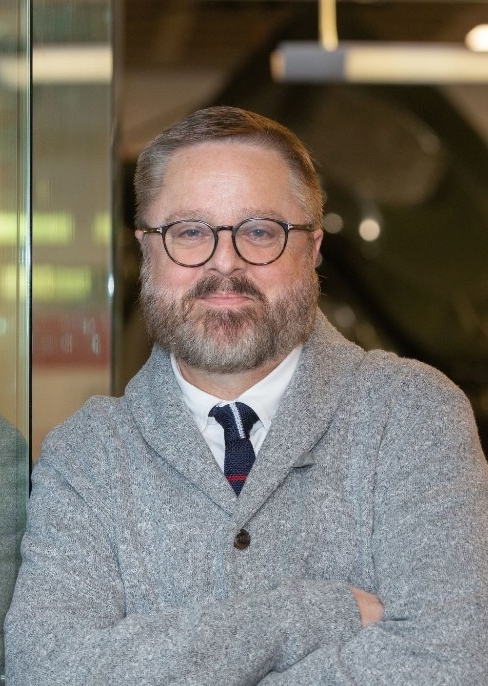
UC journalism Professor Jeffrey Blevins studies misinformation in mass media. Photo/Andrew Higley/UC Marketing + Brand
UC College of Arts and Sciences Professor Jeffrey Blevins told Local 12 that the goal of social media algorithms is to keep people engaged, measured by what people like, comment on and spend time watching. Blevins said this can have unintentional consequences.
People often share posts with which they strongly disagree or find offensive, he said.
“I'm likely to be fed that not necessarily by someone who disagrees with me but by someone on my side (politically),” Blevins told Local 12.
The algorithms can lead to a psychological effect called confirmation bias, he said.
“We tend to not seek out information that contradicts our world view,” Blevins said. “We’re more likely to seek out information that reassures us that what we believe is true.”
Blevins co-wrote the award-winning “Social Media, Social Justice and the Political Economy of Online Networks.” He also teaches in UC's School of Public and International Affairs.
Featured image at top: UC Professor Jeffrey Blevins says algorithms feed polarization on social media. Photo/Thomas Northcut
Related Stories
'There's a strong community here:' UC transfer student finds place in College of Arts and Sciences
October 23, 2026
This week marks National Transfer Students Week, and the College of Arts and Sciences celebrated those students Thursday. Olivia White, assistant director of recruitment, said around 13-15% of students at UC are transfer students, and with that comes its own set of challenges.
UC expert explains potential impact of Pennsylvania’s new vape product law
October 22, 2026

UC professor Ashley Merianos speaks to the Pittsburgh Post-Gazette about Pennsylvania’s new vape law, youth vaping prevention, enforcement challenges and possible unintended consequences.
Still the top ‘cat
October 20, 2026

The University of Cincinnati Bearcat mascot was voted Cincinnati’s favorite mascot in a Cincinnati Enquirer reader poll, earning 45.1% of the vote and topping other local favorites.