Dangers of forever chemicals
News report shows scientists are getting clearer picture of impact of PFAS

PFAS are known as forever chemicals. They are a large, complex group of synthetic chemicals that have been used in consumer products since the 1950s. Now scientists are getting a clearer picture of just how dangerous these chemicals are.
Per- and poly-fluoroalkyl substances, or PFAS, are used in the aerospace, automotive, construction and electronic industries. These chemicals keep food from sticking and clothes from burning, but scientists said they can also be life-threatening.
PFAS can leak into soil and water, and because they break down slowly, if at all, almost everyone is repeatedly exposed to them.
“They can be found in house dust,” explained Susan Pinney, PhD, professor of epidemiology in the Department of Environmental and Public Health Sciences at the University of Cincinnati College of Medicine. A report on her research recently aired on KPLC-TV in Lake Charles, La.
PFAS can cause increased cholesterol levels, lower immunity and some cancers. Now a new study out of UC shows that exposure to PFAS may impact young girls.
“We found that PFAS delayed the onset of puberty,” said Pinney.
85 percent of the young girls in the study had measurable levels of PFAS in their blood — impacting the same hormones that delay the onset of puberty, which could in turn make these girls more susceptible to breast cancer, infertility and endometriosis.
So, what can anyone do? Use a water filter that removes PFAS, and when possible, opt for products labeled as PFAS-free.
Pinney also suggests getting rid of any old Teflon cookware.
Click here to read the entire report from KPLC-TV.
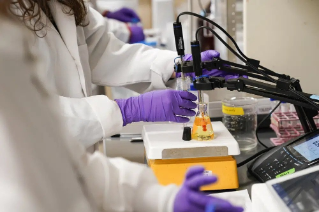
Featured image at top: Scientists wearing white lab coats and purple rubber gloves use lab equipment in their research. Photo/Provided
Related Stories
The subtle changes in hearing you should never ignore
July 24, 2026

It’s easy to dismiss changes in hearing as minor. But as The Washington Post recently reported, these symptoms could also signal a medical emergency that many people don’t recognize — known as sudden sensorineural hearing loss, a rapid decline in hearing that occurs suddenly or over a few days.
UC experts say proper produce washing is key defense against Cyclospora
July 24, 2026

Hamilton County Public Health reports confirmed cases of cyclosporiasis, as concerns persist. Cyclospora is a parasite that can cause a stomach illness lasting days — sometimes even weeks. University of Cincinnati medical experts say it is usually linked to contaminated water or food, often fresh produce.
What are the options for male birth control?
July 24, 2026
Despite major advances in contraception during the past several decades, responsibility for pregnancy prevention falls largely on women. As recently reported in Endocrinology Advisor, a new generation of male contraceptive candidates is advancing into early- and mid-stage clinical trials.