What is exoneration for individuals wrongly convicted of a crime?
The Ohio Innocence Project at UC Law is featured on Ohio's WYSO public radio station

The Ohio Innocence Project at UC Law was founded in 2003 and is continuing its initial purpose: working to free every person in Ohio who has been convicted of a crime they didn’t commit. OIP’s work also includes helping develop and advocate for lasting criminal justice reform through legislation, educating the public to be sensitive to systemic problems in justice and to rally for change.
It also launched OIP-u (Ohio Innocence Project University), an active network of student groups at colleges across the state. OIP has helped 42 people secure their freedom. The group of clients collectively spent more than 800 years behind bars for crimes they didn’t do.
Tara Rosnell, OIP’s Board of Advocates chair, spoke recently with WYSO, the Yellow Springs, Ohio-based public radio station, about how exoneration works for individuals wrongly convicted for crimes they did not commit.
“The first step in an exoneration, when you believe that a client is innocent, is that there has to be new evidence,” Rosnell told WYSO. “So, it has to be something beyond what was presented at trial or even what was available at trial. It can be difficult. Oftentimes, we're working many years after the crime has occurred. So it can be difficult just because of the passage of time. Then, if we prevail, we prevail in overturning the original verdict.
“So, if you have successfully overturned that verdict, then the state can retry that person,” explains Rosnell during her WYSO interview. “Then, that new evidence comes into play. So if you have found a new witness, or you have DNA evidence now, or you have found evidence of official misconduct, like maybe something was hidden and not turned over, then that new evidence would become part of the new case.
“They don't always retry the person, but sometimes they do,” adds Rosnell. “And again, it's a matter of going through another trial, which is very difficult for our clients to have to endure because they have such mistrust of the judicial system. And then, if they're cleared, then there's a separate step for actually declaring innocence and being able to get compensation. And so compensation is then just kind of the last phase.”
Listen to the full interview with OIP’s Tara Rosnell on WYSO online
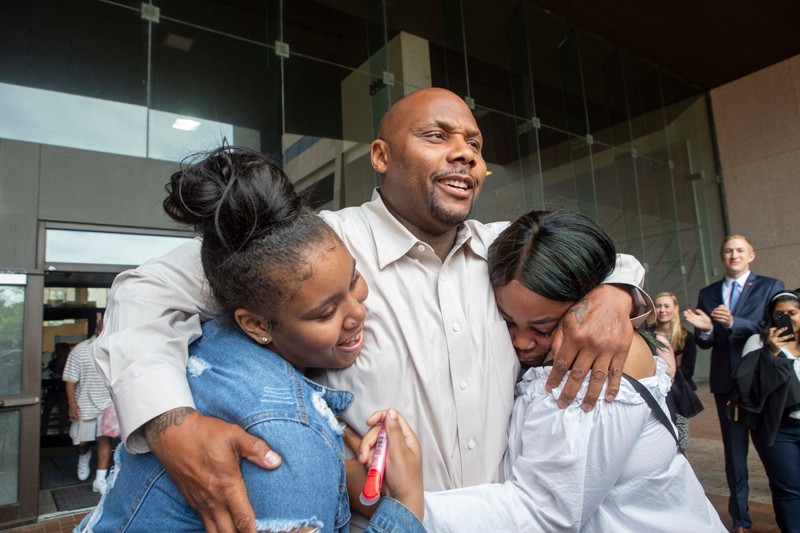
Featured top image of OIP Exoneree Chris Miller shown after his conviction was overturned. Photo provided.
Impact Lives Here
The University of Cincinnati is leading public urban universities into a new era of innovation and impact. Our faculty, staff and students are saving lives, changing outcomes and bending the future in our city's direction. Next Lives Here.
Related Stories
These teeny spiders are social media stars
August 28, 2026

The New York Times turned to a University of Cincinnati professor to explain the appeal of jumping spiders on social media.
An internal divide among unions on AI impacts the Wisconsin gubernatorial race
August 28, 2026

Anne Lofaso, a professor in the Donald P. Klekamp College of Law at UC, spoke with Wisconsin Public Radio, about the schism among unions over AI and whether it is a plus, a negative, or somewhere in between when looking at job creation.
Campus buzz returns as UC students experience their first week
August 27, 2026
Near-perfect weather, record first-year enrollment, Thrifty Move-In and a packed Involvement Fair mark the University of Cincinnati’s first week back as thousands of Bearcats move into campus housing.