Data can help prevent housing crises
Brick by Brick reports on efforts to reduce evictions, homelessness

A University of Cincinnati professor and others are using data to identify people at risk of evictions and homelessness in order to intervene before a housing crisis occurs, Brick by Brick: Solutions for a Thriving Community reported.
Statistics show that it’s more cost efficient to keep people in their residences than to rehouse them after they’re displaced. Evictions also can have other adverse effects on people that can be hard to recover from, said Gary Painter, PhD, the academic director of UC's Carl H. Lindner College of Business real estate program and a professor of real estate.
“We know if someone experiences an adverse event in their life, it’s very costly for them,” Painter said. “Things like if you get evicted, then your credit history gets dinged. It may be increasingly difficult to be stably housed in the future.”
Painter is using data to create algorithms that can assess risks of adverse events, such as evictions and homelessness. By identifying people who are at risk, organizations can intervene before a crisis.
To address housing shortages, other groups are repurposing old buildings, Brick by Brick reported in a podcast. Office buildings, hotels, schools, factories, malls and even a bowling alley have been converted into housing.
“Specifically, Cincinnati is ideal for this because we have a lot of older buildings here. Something else that is conducive to this is that we have a lot of tax credit funds,” said Marianne Taylor, a senior associate of CBRE, a commercial real estate services company, and adjunct instructor at the Lindner College of Business.
There are many more properties such as malls that could be converted for other uses locally and nationally, but it will take time, said Carl Goertemoeller, executive director of the UC Real Estate Center.
“You really haven’t seen wrecking balls starting to swing really at any of these locations just yet and that’s a function of the sheer amount of time it takes to bring a development plan to fruition,” Goertemoeller said.
See more from Brick by Brick.
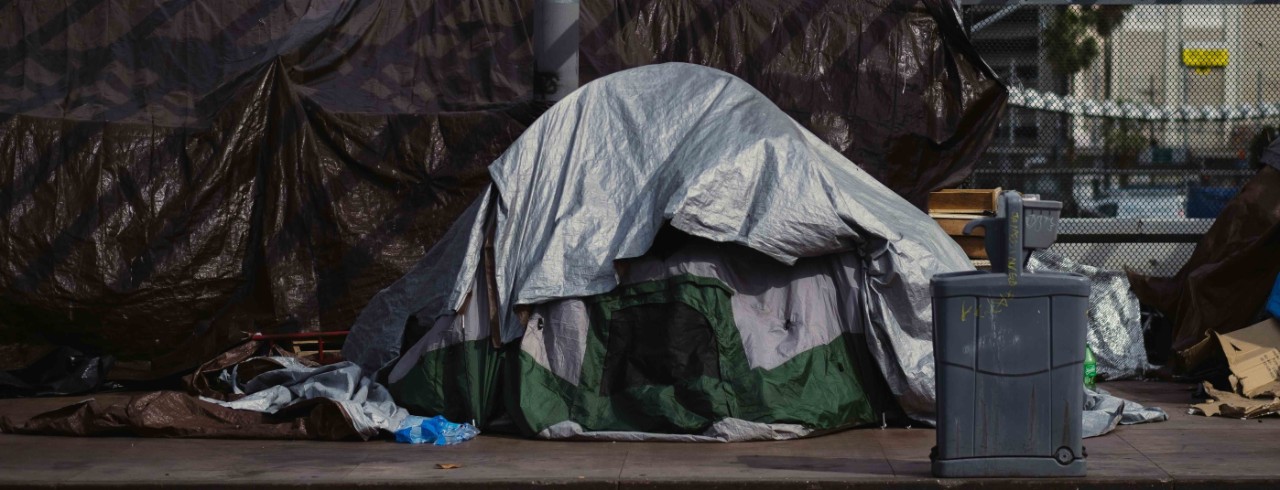
Featured image at top: A homeless encampment. Photo/Levi Meir Clancy via Unsplash
Impact Lives Here
The University of Cincinnati is leading public urban universities into a new era of innovation and impact. Our faculty, staff and students are saving lives, changing outcomes and bending the future in our city's direction. Next Lives Here.
Related Stories
CCM Hollywood alumna reminisces on her Cincinnati roots over Skyline
July 28, 2026

Hollywood actress Diana Maria Riva recently sat down with the Cincinnati Enquirer to discuss her career over a Cincinnati staple — Skyline chili. The CCM Acting alumna has worked in Hollywood since the '90s, but she grew up on Cincinnati's West Side.
UC doctoral student shares his journey with Spectrum News
July 27, 2026

UC doctoral student Amota Ataneka spoke with Spectrum News about his educational journey. Ataneka, a native of the Pacific island nation of Kiribati, is one of 35 emerging scholars across the United States to win the National Academy of Education/Spencer Dissertation Fellowship.
How scammers can persuade you with AI
July 27, 2026
Spectrum News recently dove into how cloning voices with artificial intelligence is making it easier to scam people over the phone. The news outlet spoke with Kimberly Hyun, assistant professor of marketing at UC’s Lindner College of Business, to examine why AI is making it so much easier to trick people.