Chia enchanted long before the pet
UC biologist will talk about herb’s role in ancient Aztec society

The Metropolitan Museum of Art invited a University of Cincinnati biologist to give a talk about the nutritional and cultural importance of an ancient Aztec herb that is still used today.
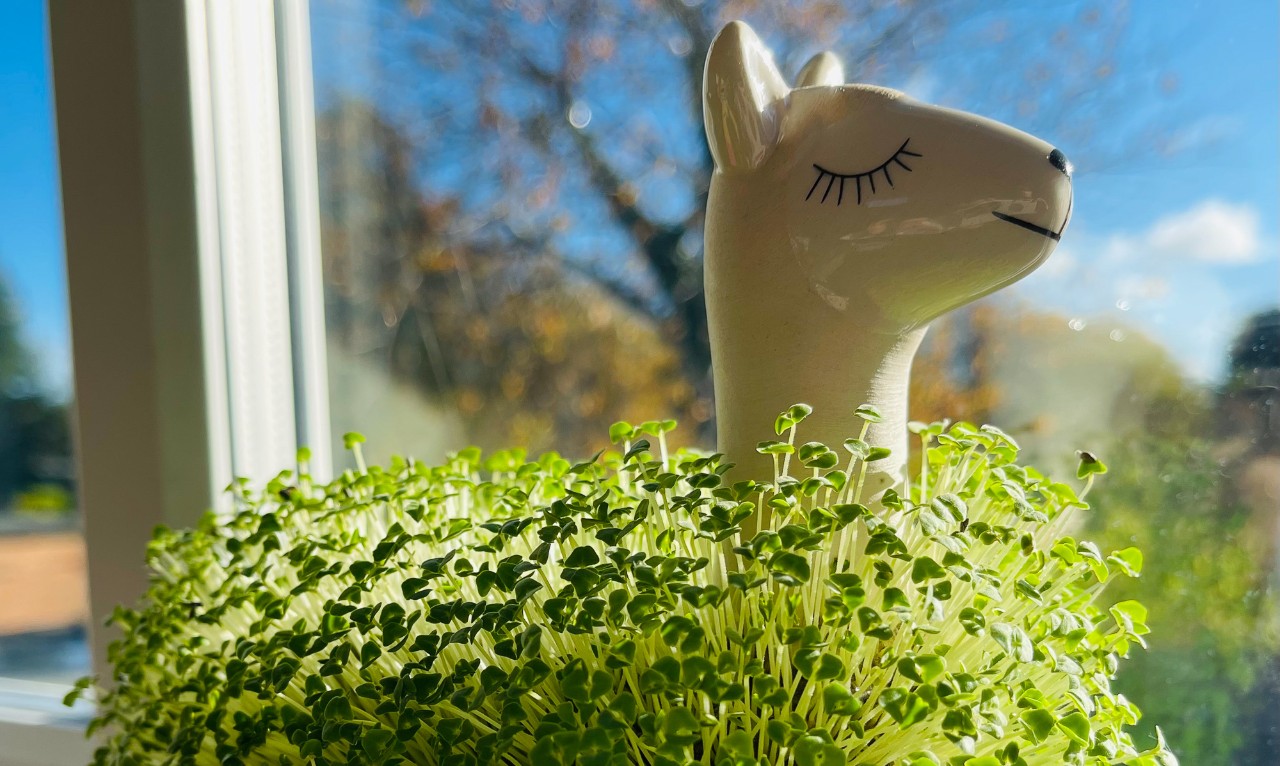
Many people know chia — or musically “chi-chi-chi-chia” — for its association with campy ceramic figurines covered in green sprouts. But Salvia hispanica, as chia is scientifically known, was an important crop for ancient civilizations in Mexico.
And the seeds also provided oil for paints and lacquers dating back centuries.
UC College of Arts and Sciences Professor David Lentz, an ethnobotanist, will share how the Aztecs depended on chia for food and medicine at a symposium in New York.
“Chia was very important to the people of Mesoamerica, particularly the people in southern Mexico, the Tarascans, the Zapotecs and other people who lived around the ancient city Teotihuacan,” Lentz said.
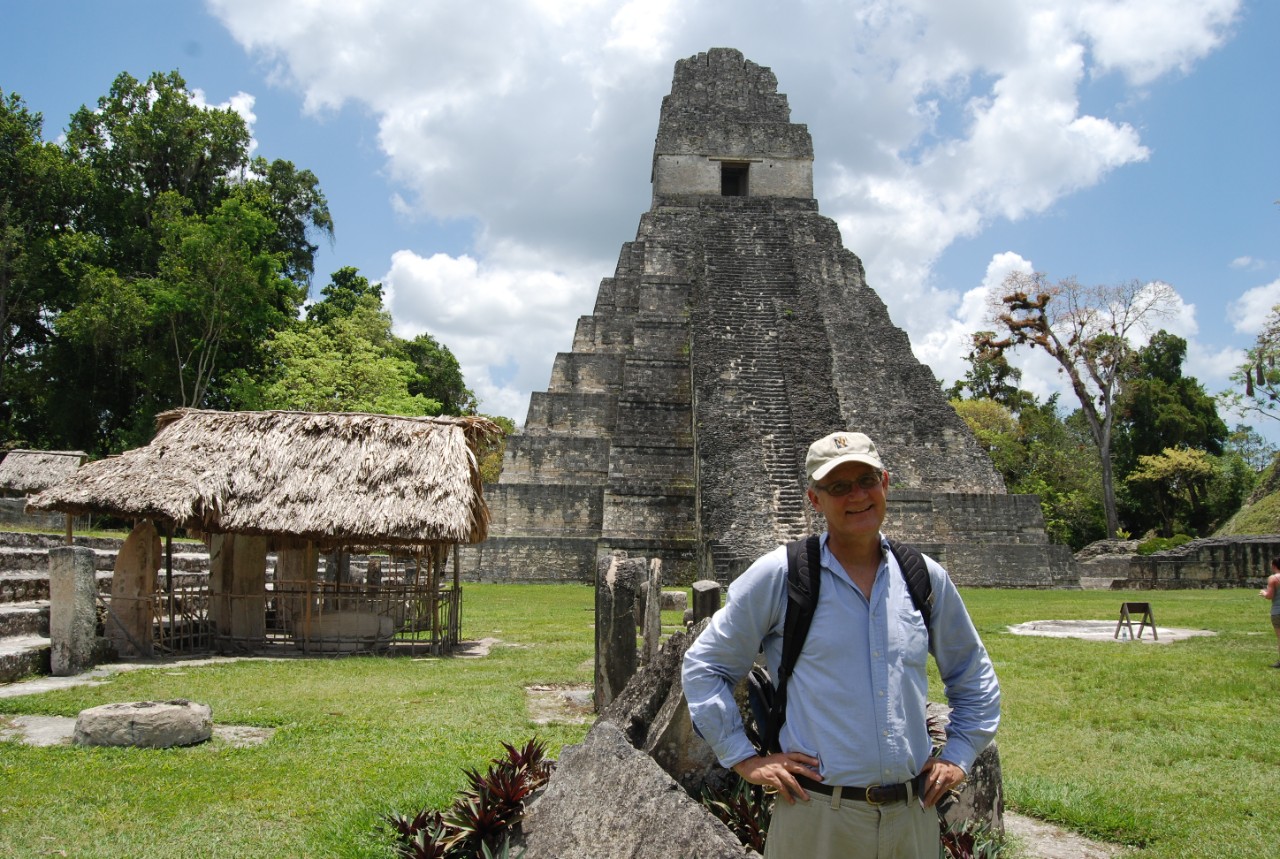
Professor David Lentz studies ancient civilizations in UC's College of Arts and Sciences. Here he is pictured at Tikal. Photo/Provided
Between A.D. 1 and 500, this city about 25 miles northeast of what is now Mexico City was the largest city in the Americas and one of the largest cities on Earth at the time. The Mesoamericans did not have draft animals to transport goods, so residents in the cities had to grow most of their own food, Lentz said.
“They didn’t have a lot of good sources of fat in their diet. The only domesticated animals they had were ducks and turkeys,” he said.
But chia is comparatively high in fat, Lentz said. And it would have grown well in wet, marshy conditions found in the valleys of central Mexico.
“People say fats are terrible for you, but this is not really so,” Lentz said. “A lot of vitamins are fat soluble so if you don’t have fats in your diet, you’ll be malnourished.”
If you go to health-food stores, you’ll find chia in different forms on the shelves.
David Lentz, UC Ethnobotanist
The ancient Aztecs, who came after the Teotihuacans, processed the seeds for beverages and extracted its oils for use in medicines and many other applications. Chia was used to relieve gastrointestinal distress and to treat eye infections. And it was an ingredient in an amaranth-based confection called tzoalli.
Chia is still grown for food today. There is even a cold-weather variety in the United States. An herb, chia is full of omega-3 fatty acids, which benefit heart and brain health and relieve joint pain.
Martha Stewart has a recipe for vanilla chia pudding. It’s also used in smoothies, yogurts and salad dressings.
Chia fell into disfavor as a food staple when Spaniards arrived in the 1500s. Lentz said Spanish clerics discouraged the planting and use of chia and introduced preferred imported crops.
Nevertheless, chia is becoming more popular today.
“People can be very conservative about their food choices,” Lentz said. “But chia is nutritionally valuable. If you go to health-food stores, you’ll find chia in different forms on the shelves.”
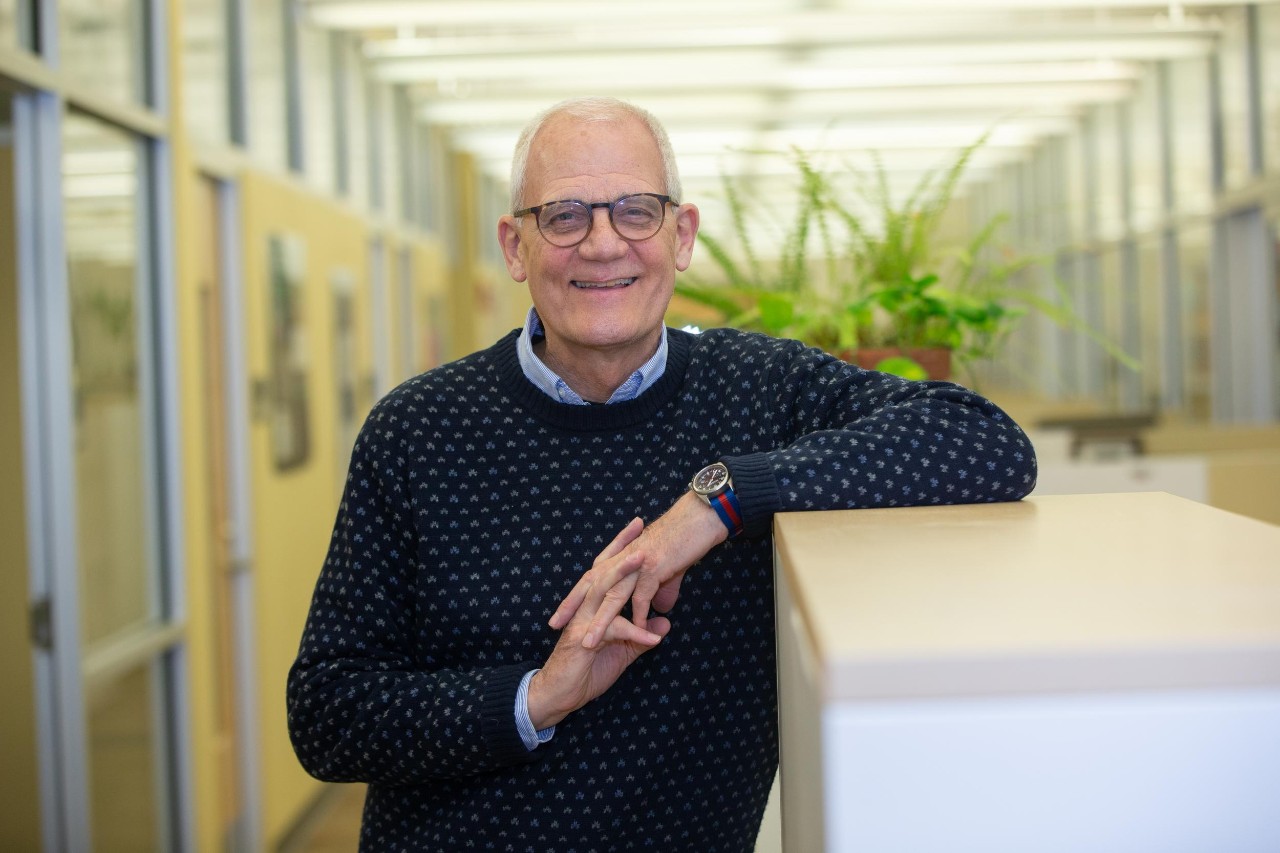
UC Professor David Lentz studies how ancient civilizations cultivated and used plants. Photo/Andrew Higley/UC Marketing + Brand
The Metropolitan Museum of Art says the symposium will explore the scientific, historical and cultural implications of the use of chia oil in colonial Mexican artworks and hear about exciting advancements in the study of this versatile plant material.
Lentz’s research partners include UC Professor Nicholas Dunning and doctoral student Stephanie Meyers. They have used new sources of evidence, such as environmental DNA, to learn more about how ancient civilizations cultivated and used plants. They plan to look for chia remains by employing these new techniques when the UC team resumes its archaeological work at Calakmul, an ancient Maya city in southern Mexico.
“It wouldn’t surprise me if we found evidence of chia in the irrigated agricultural complexes there,” Lentz said.
Featured image at top: Most people today know chia as a health food or a quirky gift, but it served as a food staple for the ancient Aztecs. Photo/Scott Thompson/iStockPhoto
Impact Lives Here
The University of Cincinnati is leading public urban universities into a new era of innovation and impact. Our faculty, staff and students are saving lives, changing outcomes and bending the future in our city's direction. Next Lives Here.
Related Stories
Is Cincinnati building new homes fast enough?
September 22, 2026

Gary Painter, professor and academic director of the Real Estate Center at UC's Lindner College of Business, offers comments on affordability issues in Cincinnati.
UC climbs to No. 3 in the nation for co-ops and internships in 2027 U.S. News rankings
September 22, 2026
In U.S. News & World Report’s 2027 Best Colleges rankings, the University of Cincinnati rises to No. 3 in the nation for co-ops and internships — No. 1 among public institutions — and posts gains in undergraduate business, computer science and psychology.
'Discovery, mentorship, momentum': UC College of Medicine's graduate programs celebrate year of success
September 22, 2026
From new mentorship honors to a growing research pipeline, see how the University of Cincinnati College of Medicine's graduate programs made this a standout year.