Study finds microRNA target to combat breast cancer treatment resistance
MSN highlights UC research published in the journal Cancers

MSN highlighted new University of Cincinnati Cancer Center research that has identified a particular strand of microRNA as a promising new target for overcoming breast cancer treatment resistance and improving outcomes. The research was recently published in the journal Cancers.
The Cancer Center's Xiaoting Zhang, PhD, and his colleagues previously identified a protein called MED1 that is produced in much higher levels in 40% to 60% of breast cancers. MED1 plays key roles in mediating treatment resistance with estrogen receptors (ERs) and the protein HER2, but researchers did not know how it was produced at such a high level to cause treatment resistance.
The team found that a strand of microRNA called miR-205 has a sequence that can regulate the production of MED1. They further analyzed the human breast cancer database to confirms an inverse correlation between miR-205 and MED1 levels.
“So if MED1 is high, miR-205 is actually low. Essentially, this microRNA will block the production of MED1,” Zhang said. “Then we found they also correlate with treatment outcomes. So if you have low miR-205, now you have high MED1, and the cancer can actually be resistant to the treatment, and you have poor treatment outcomes.”
While more research is needed, Zhang said boosting levels of miR-205 could be a different and potentially more effective way to overcome treatment-resistant breast cancers by blocking MED1 production and activity.
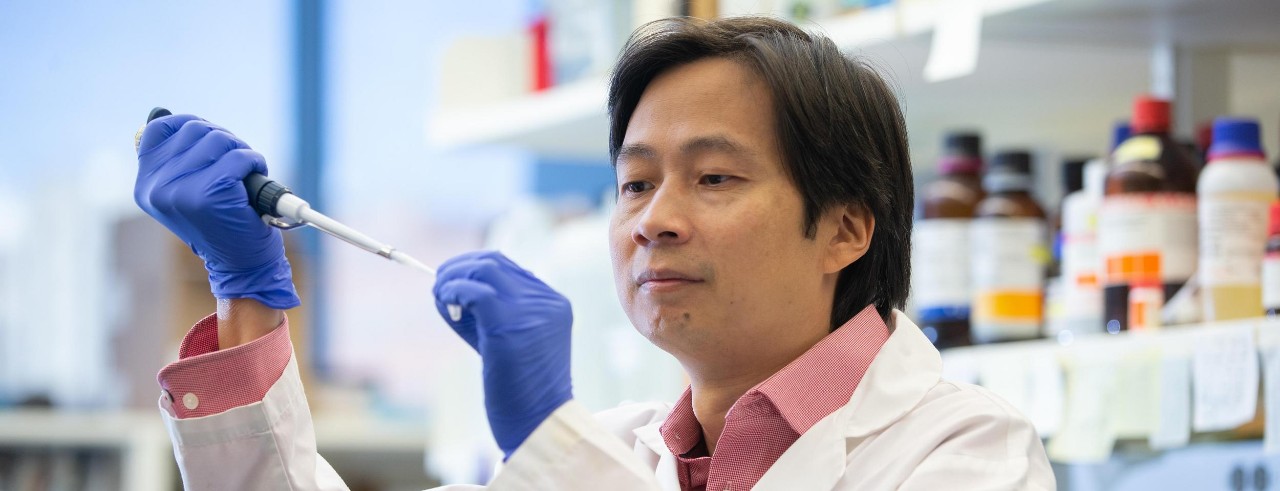
Featured photo at top of Zhang working in his laboratory. All photos/Andrew Higley/UC Marketing + Brand.
Related Stories
These teeny spiders are social media stars
August 28, 2026

The New York Times turned to a University of Cincinnati professor to explain the appeal of jumping spiders on social media.
An internal divide among unions on AI impacts the Wisconsin gubernatorial race
August 28, 2026

Anne Lofaso, a professor in the Donald P. Klekamp College of Law at UC, spoke with Wisconsin Public Radio, about the schism among unions over AI and whether it is a plus, a negative, or somewhere in between when looking at job creation.
On-site training in Speech & Hearing Clinic sets UC’s programs apart
August 27, 2026
At the University of Cincinnati’s Speech & Hearing Clinic, Doctor of Audiology and Speech-Language Pathology graduate students gain real-world experience while providing free speech and hearing services to the community.