
Study examines blood vessels’ role in neuropathic spontaneous pain, potential treatments
UC researcher receives NINDS grant award

Everyone experiences pain, but nearly one in every 10 adult Americans over age 30 will experience neuropathic pain. This pain can stem from complications from diabetes or infections, a side effect of chemotherapy treatment, or other traumatic injury to nerves.
“Neuropathic spontaneous pain is much more difficult to treat, and it’s a pain condition that lasts a long time,” said the University of Cincinnati’s Jun-Ming Zhang. “All of a sudden, you will feel shooting, stabbing or what feels like an electric shock. So in some patients, the pain is unpredictable, it comes quickly, and also it goes away very quickly.”
Zhang has received a five-year grant of more than $3 million from the National Institute of Neurological Disorders and Stroke to learn more about the effect of blood vessel movement on neuropathic spontaneous pain and potential treatments.
Study background
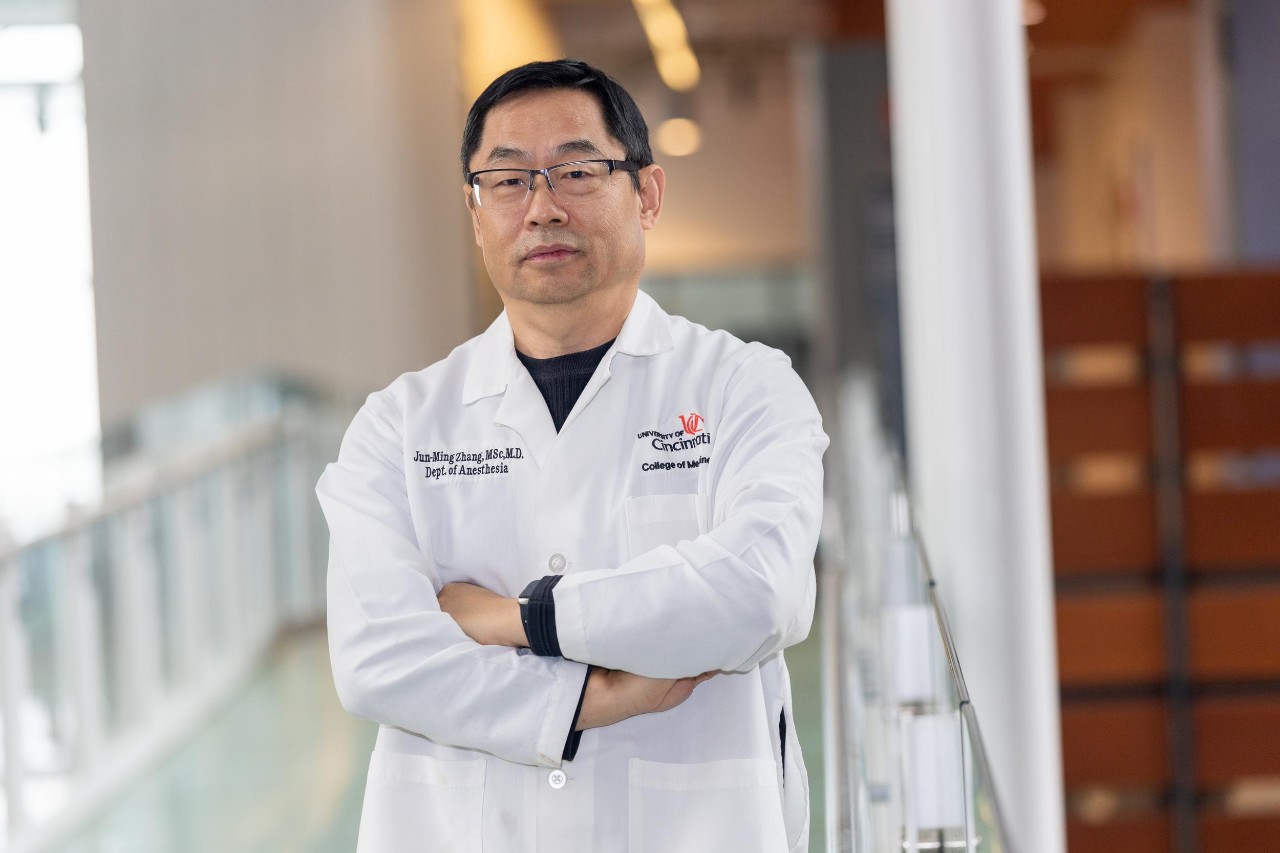
Jun-Ming Zhang, MD.
Spontaneous pain has historically been both hard to research and overlooked, but Zhang’s colleagues at Johns Hopkins University, led by Xinzhong Dong, developed a new technique that allows researchers to visualize individual neuron activity within the body.
Using this technique, they focused on neuron activity within the dorsal root ganglion (DRG). DRGs are located on both sides of each vertebra and act as a signal station, transmitting sensory information from throughout the body back to the spinal cord and brain.
“After nerve injury, we found the sensory neurons do not fire as individual incidents, but they fire as a group in the DRG. We call it a clustered firing,” said Zhang, MD, professor and vice chair for research and endowed chair in Anesthesia Research and Education in the Department of Anesthesiology in UC’s College of Medicine. “It’s not continuous, and we observed this group of neurons firing as episodes, just like the neuropathic spontaneous pain observed in human patients.”
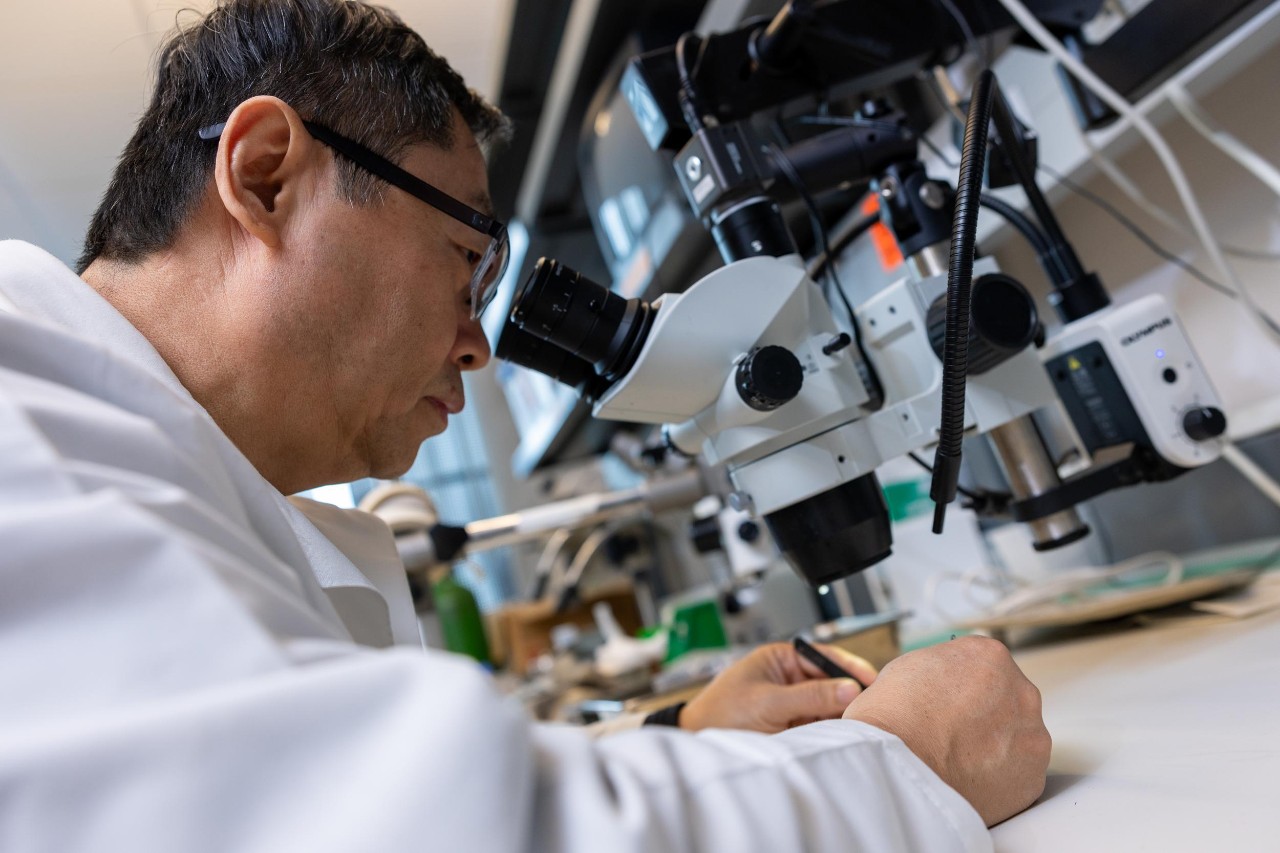
Zhang and his colleagues will use a new technique that allows visualization of individual neuron activity to examine how blood vessel movement triggers cluster firing and neuropathic spontaneous pain.
Study focus
In addition to having thousands of sensory neurons, DRGs have a high density of blood vessels, and the team found blood vessel movement appears to trigger the cluster firing of neurons. Zhang said migraines have a similar close relation to blood vessel movement, so the cluster firing can almost be thought of as a migraine happening in the arms, legs or other parts of the body instead of in the brain.
The grant will fund further research into the specific mechanisms of how blood vessel movement triggers cluster firing and neuropathic spontaneous pain.
“By understanding the blood vessel-neuron interactions and understanding the underlying mechanisms, we hope to develop new drugs or strategies to manage the neuropathic pain,” Zhang said. “The goal is to identify some of the risk factors and effectively manage pain by lowering the risk for patients.”
Zhang said lifestyle changes such as exercise and managing blood pressure and heart rate may be effective tools to manage neuropathic spontaneous pain. While not officially part of the National Institutes of Health’s (NIH) HEAL Initiative, this research has a similar goal of effectively managing the pain through nonaddictive/non-opioid methods.
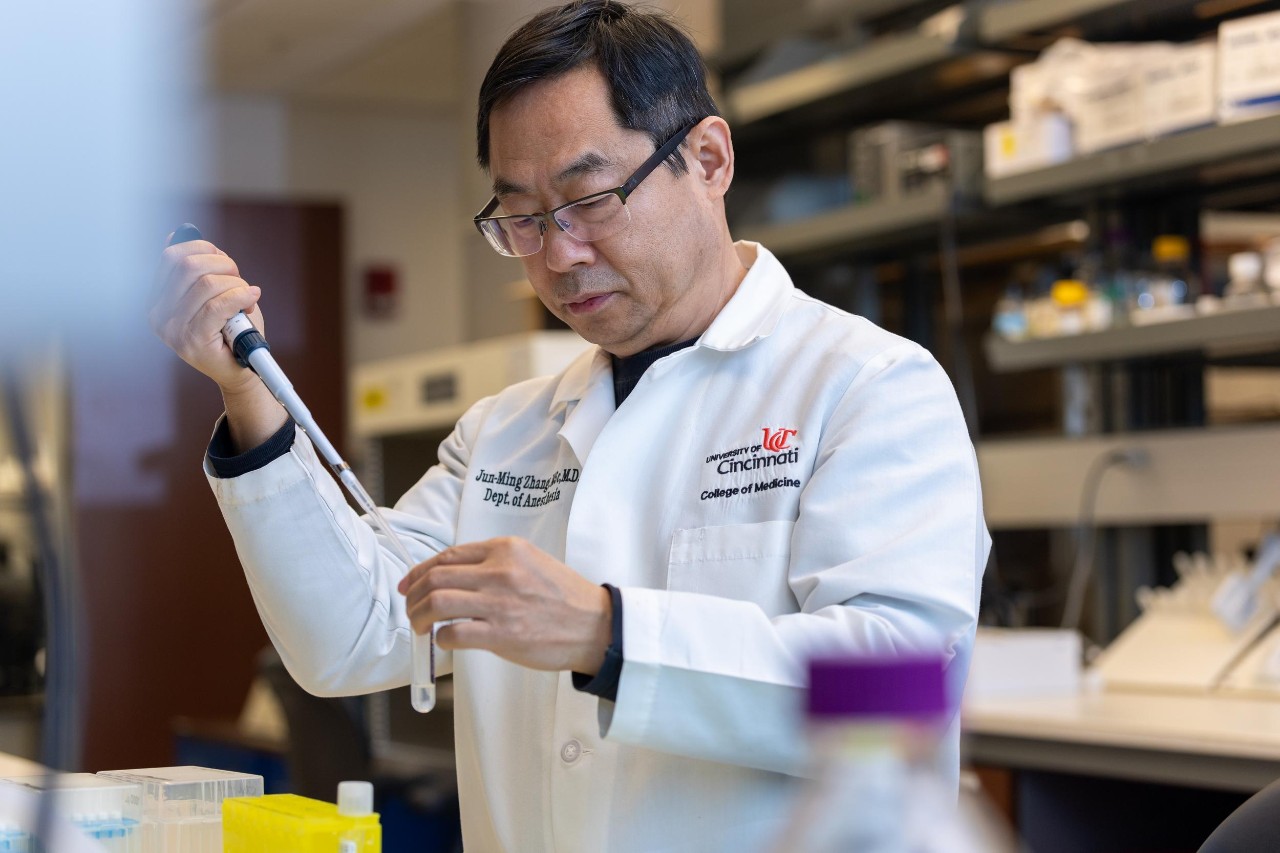
The new knowledge of how blood vessels and neurons interact could identify new drugs or lifestyle changes to manage neuropathic spontaneous pain.
Impact Lives Here
The University of Cincinnati is leading public urban universities into a new era of innovation and impact. Our faculty, staff and students are saving lives, changing outcomes and bending the future in our city's direction. Next Lives Here.
Featured photo at top of Zhang looking at a sample in his laboratory. All photos/Andrew Higley/UC Marketing + Brand.
Research reported in this publication was supported by the National Institute of Neurological Disorders and Stroke of the National Institutes of Health under Award Number 1R01NS135157. The content is solely the responsibility of the authors and does not necessarily represent the official views of the National Institutes of Health.
Related Stories
UC Foundation celebrates 2026 philanthropy winners
October 23, 2026
The University of Cincinnati Foundation recognized its Outstanding Philanthropic Volunteer Award honorees at the George Rieveschl Recognition Dinner on October 22, 2026.
AI breast cancer survival model from Cancer Center could improve accuracy and personalize care
October 23, 2026
UC Cancer Center researchers, including lead author Wedad Alatebi, developed a deep learning survival model for breast cancer that combines detailed clinical and genetic information, potentially offering physicians a more accurate tool to guide treatment decisions.
UC expert explains potential impact of Pennsylvania’s new vape product law
October 22, 2026

UC professor Ashley Merianos speaks to the Pittsburgh Post-Gazette about Pennsylvania’s new vape law, youth vaping prevention, enforcement challenges and possible unintended consequences.