
A toothy debate
UC mosasaur expert discusses new species discovered in Morocco

The Globe and Mail turned to a University of Cincinnati expert on mosasaurs to explain how researchers study teeth for clues about prehistoric species new to science.
UC College of Arts and Sciences Associate Professor Takuya Konishi studies ancient marine reptiles called mosasaurs that ruled the oceans more than 66 million years ago.
The Canadian news outlet reached out to Konishi to discuss a scientific debate over the fossils of a mosasaur discovered in Morocco that some researchers say is a species never before documented. The specimen features bladelike teeth like a shark's that differ from the conical teeth often associated with other mosasaurs.
Konishi was not a member of the team that made the discovery but studies ancient marine reptiles in his UC biology lab.
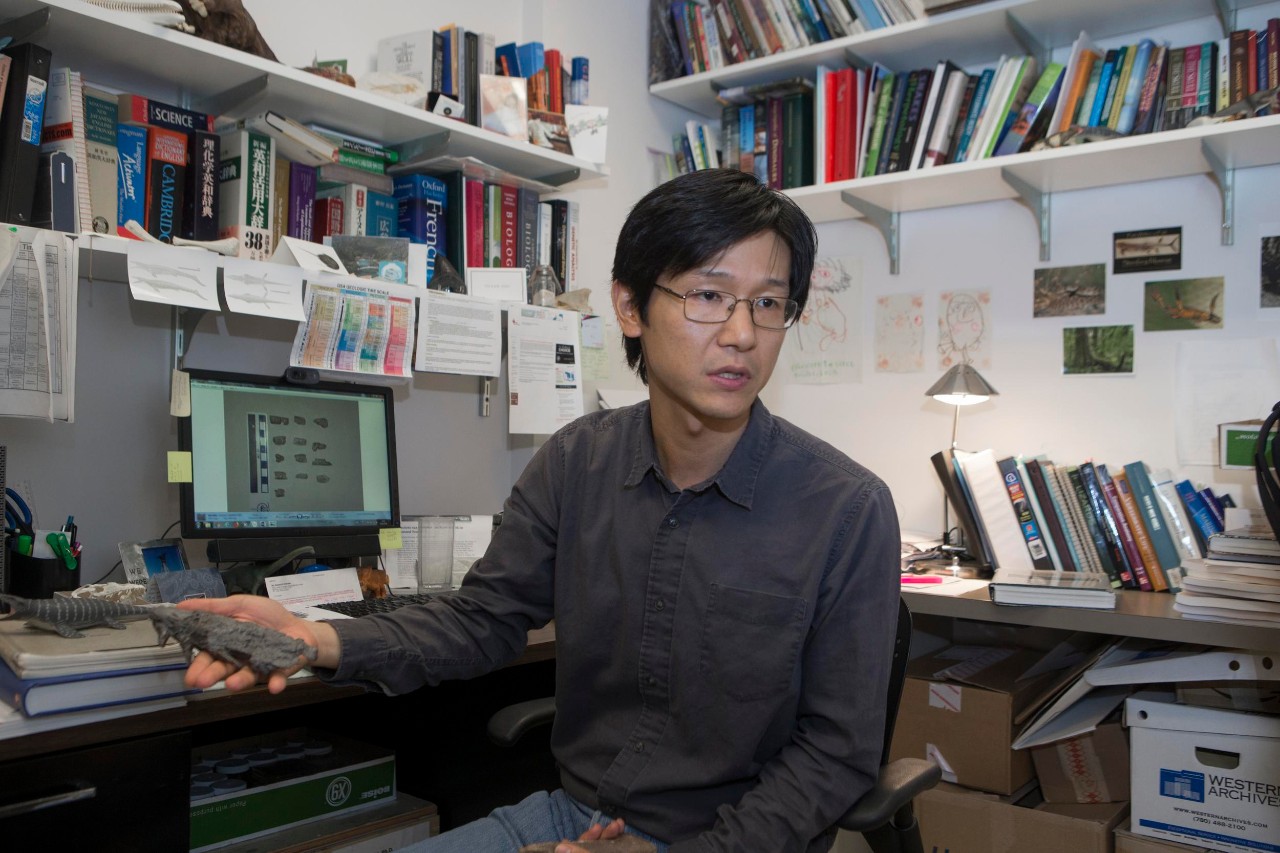
UC Associate Professor Takuya Konishi studies mosasaurs in his biology lab. Photo/Joseph Fuqua II/UC
Now a group of scientists from Alberta is asking if the specimen uncovered by phosphate miners could have been altered like some fossils sold in Morocco's lucrative private fossil trade to make them more appealing to collectors.
Natural history has myriad examples of specimens new to science that were the subject of scientific controversy. Paleontology, in particular, has seen a dramatic evolution in our understanding of what these ancient animals looked like, what they ate and how they moved because there are no living comparisons. Researchers often must make inferences and calculations based on a scant fossil record.
Konishi told the Globe and Mail that he thinks experts who study ancient reptilian teeth could help shed light on the new discovery.
In the meantime, researchers told the news outlet they plan to conduct a CT scan on the specimen.
Konishi was part of a team of scientists who described a new species of Japanese mosasaur in 2023 that he and his colleagues called the Wakayama Soryu, which means blue dragon. Dragons are creatures of legend in Japanese folklore, Konishi said.
Read the Globe and Mail story.
Featured image at top: A view from within the toothy jaws of a mosasaur reproduction in UC's Department of Biological Sciences. Photo/Ravenna Rutledge/UC Marketing + Brand
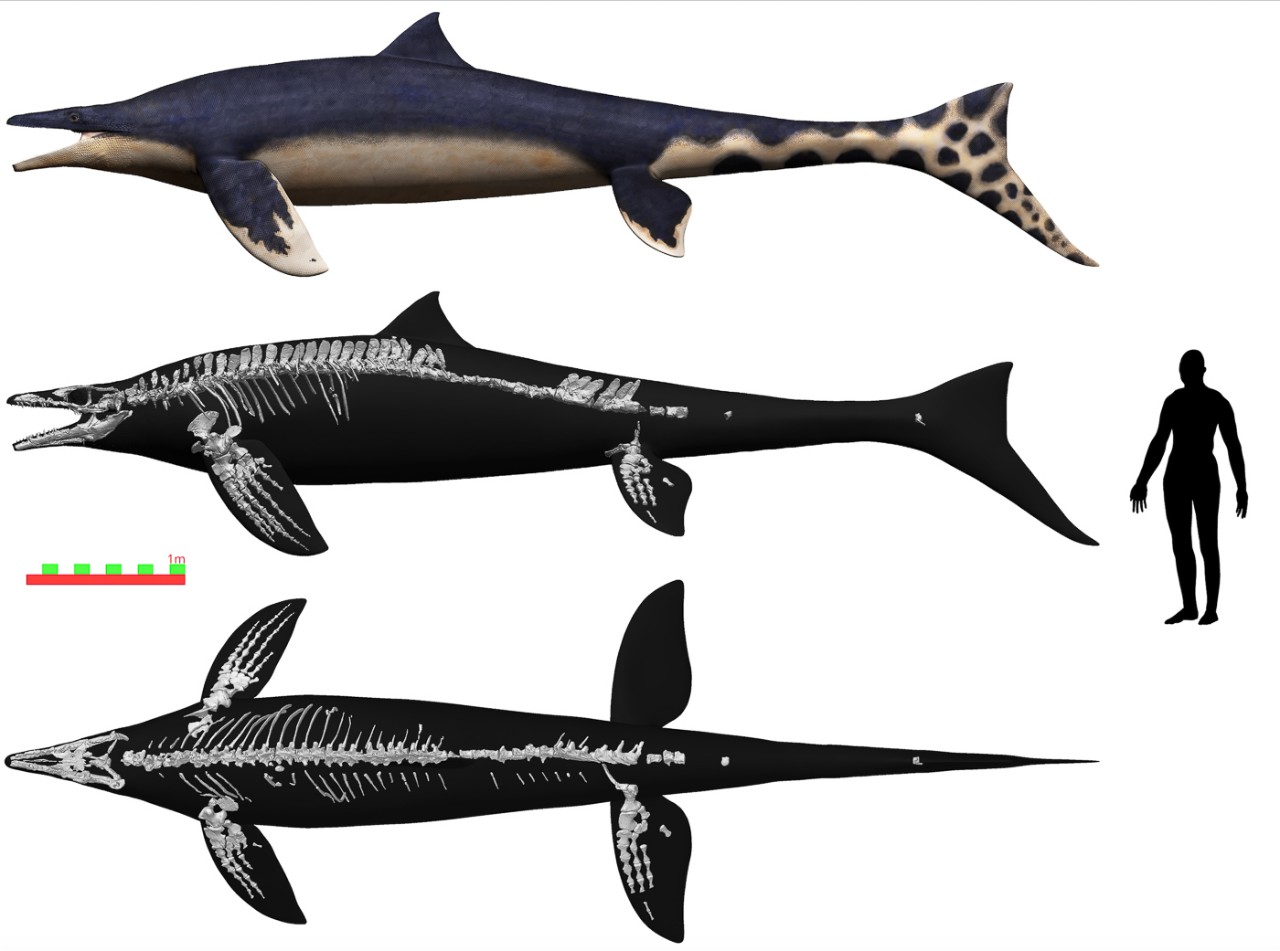
UC Associate Professor Takuya Konishi was lead author of a 2023 paper in the Journal of Systematic Paleontology describing a new species of Japanese mosasaur called the "blue dragon." Graphic/Provided
Related Stories
UC Speech & Hearing Clinic serves patients while acting as training site
September 30, 2026

The University of Cincinnati's Speech & Hearing Clinic provides graduate students in audiology and speech-language pathology with hands-on experience while delivering care to patients across the region. Located on the university's medical campus, the clinic serves patients of all ages and was recently featured on Spectrum News 1 Ohio.
UC economist warns of higher heating costs this winter
September 30, 2026

David Brasington explains why home heating will cost so much this winter and how to save money.
Former mistress of convicted pastor and former American Idol contestant likely won’t face criminal charges
September 30, 2026

Mark Godsey, a criminal law professor in the Donald P. Klekamp College of Law at the University of Cincinnati spoke with NBC News about a criminal case that has attracted national attention.