UC student research targets tick-borne illness
Nigerian student works to address Lyme disease

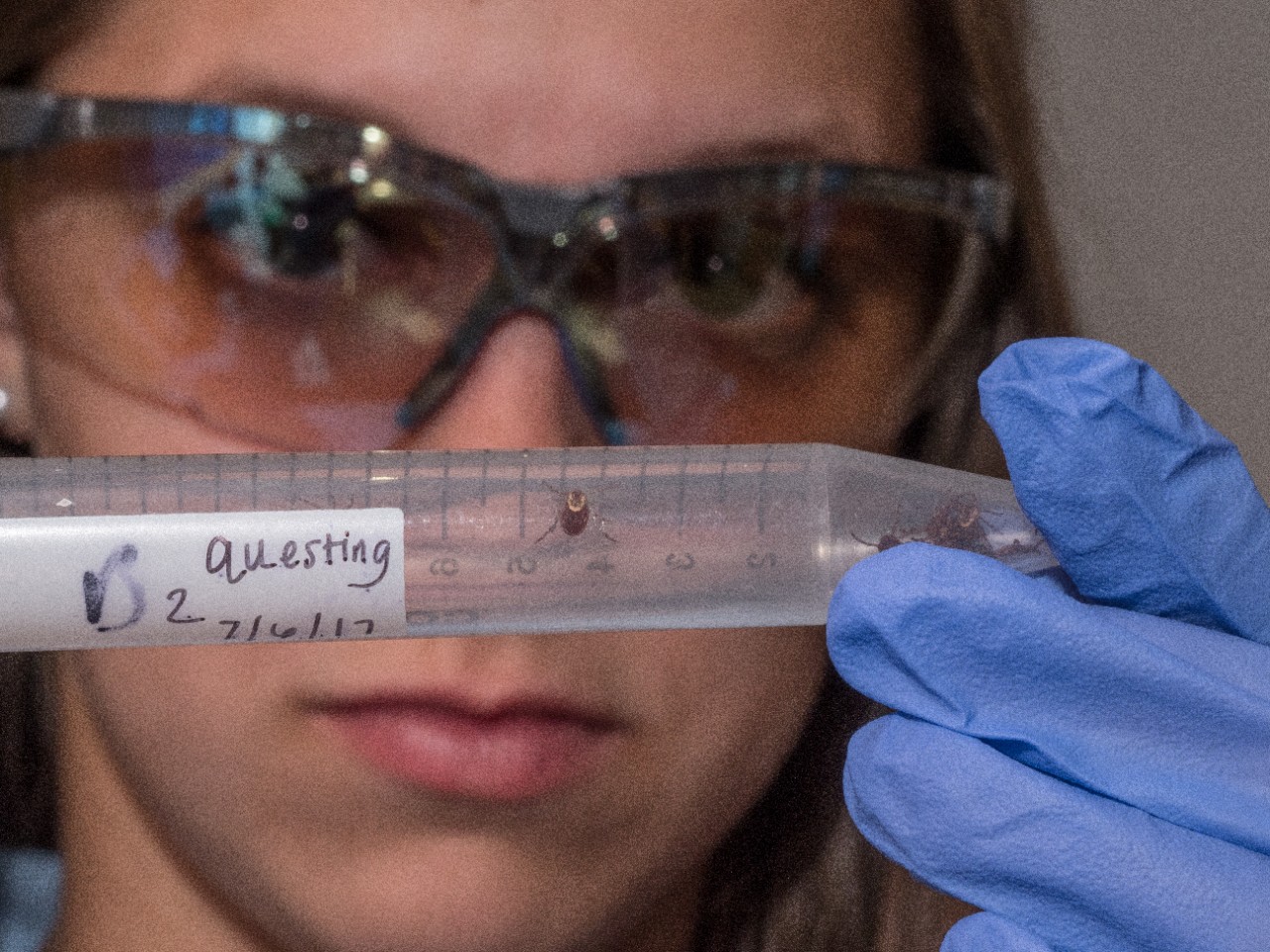
The Guardian highlighted student biology research that is pursuing pesticide-free ways of preventing tick-borne illness.

A dog tick in a UC biology lab. UC is studying ways to address tick-borne illness. Photo/Jay Yocis/UC
In UC College of Arts and Sciences Professor Joshua Benoit's lab, doctoral student Kosisochukwu Onyeagba is studying how to exploit a tick's ability to sense humidity to kill them. Ticks use a specialized organ to find refuge to survive dry conditions.
But if researchers find a way to disrupt the organ, the tick will die from dehydration.
“The idea is to outsmart them, not just eliminate them,” Onyeagba told the Guardian. “We’re targeting behavior, not biology. No toxicity. No resistance.”
Nearly a half-million people in the United States contract Lyme disease each year, according to the Centers for Disease Control and Prevention. The disease is most prevalent in the Northeast but it has been reported in all 50 states.
Onyeagba was a co-author on a study published in BioRxix, a pre-print server that allows researchers to share results and solicit feedback before pursuing publication in a peer-reviewed journal.
Featured image at top: UC biology students are studying ways to prevent tick-borne illness. Photo/Joseph Fuqua II/UC
Related Stories
UC climbs to No. 3 in the nation for co-ops and internships in 2027 U.S. News rankings
September 22, 2026
In U.S. News & World Report’s 2027 Best Colleges rankings, the University of Cincinnati rises to No. 3 in the nation for co-ops and internships — No. 1 among public institutions — and posts gains in undergraduate business, computer science and psychology.
AI is going to change all our lives
September 21, 2026

UC College of Arts and Sciences Assistant Professor Kelly Merrill Jr. tells the Columbus Dispatch that AI is becoming engrained in every aspect of health care.
President Pinto’s 2nd glow party brings first-year Bearcats together
September 20, 2026
UC President Neville Pinto and team hosted the second annual Bright Beginnings glow party for first-year students