
UC students to study advanced microchips in Taiwan
Program demonstrates UC's close ties to Taiwan universities

Students at the University of Cincinnati will have the opportunity to travel to Taiwan to learn more about semiconductors in the world capital of microchip manufacturing.
UC College of Engineering and Applied Science Professor Ying Sun received a National Science Foundation grant that will sponsor travel to Taiwan for 40 students over the next five years.
Sun said the International Research Experiences for Students grant will allow UC to give both undergraduates and graduate students firsthand experience in semiconductor manufacturing, including the latest research at four Taiwanese universities.
“It’s a brand-new program. It’s very exciting,” Sun said. “More than half of the world’s microchips are made in Taiwan, so they’re a world leader.”
She is the Herman Schneider Professor of Mechanical Engineering and serves as director of the college’s research and strategic initiatives. In her lab, she studies the acoustic signatures created when liquids turn into gases and back, which could lead to more efficient cooling systems.
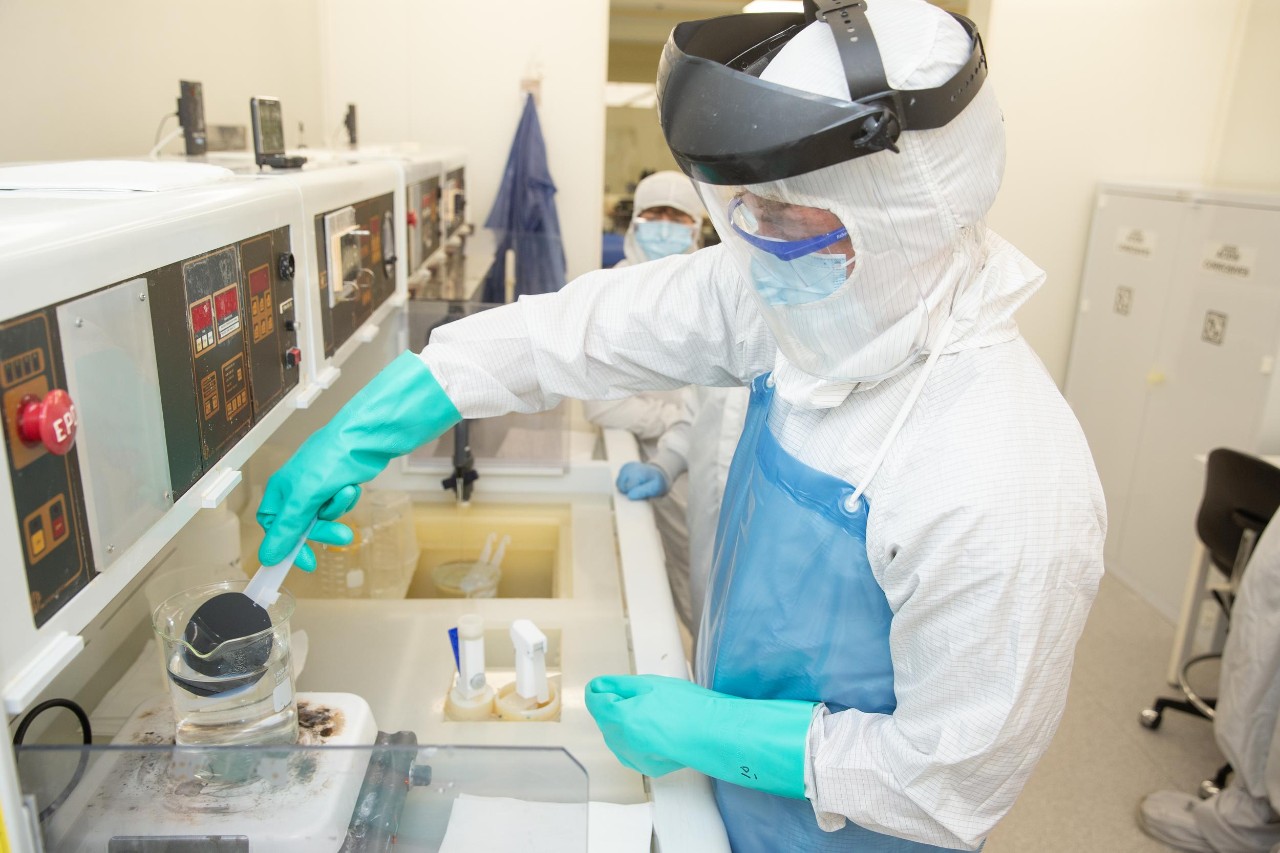
UC students learn about microchip manufacturing in the Mantei Center's Cleanroom. Photo/Andrew Higley/UC Marketing + Brand
UC students will spend two months in Taiwan learning about the latest research in semiconductor devices and manufacturing. The semiconductor industry is expected to continue to grow rapidly to meet demand, according to analysts such as Deloitte.
“Under this NSF grant, UC students will be exposed to various aspects of the most advanced ecosystem of semiconductor manufacturing in the world, particularly through hands-on research training under joint supervision of world-class faculty at UC and partner Taiwanese universities,” UC Professor Jing Shi said.
He is the program chair of Industrial & Systems Engineering in UC’s College of Engineering and Applied Science.
“Obtaining such an international experience will strengthen the competitiveness of our students in this fiercely contested field globally,” he said.
Sun said the Taiwan Semiconductor Manufacturing Company, which dominates the industry for high-end chips used in artificial intelligence applications, has one of the most highly educated workforces in the industry.
“They pay for the best to drive innovation. Most of their workers have at least a master’s degree,” she said. “It’s a different philosophy.”
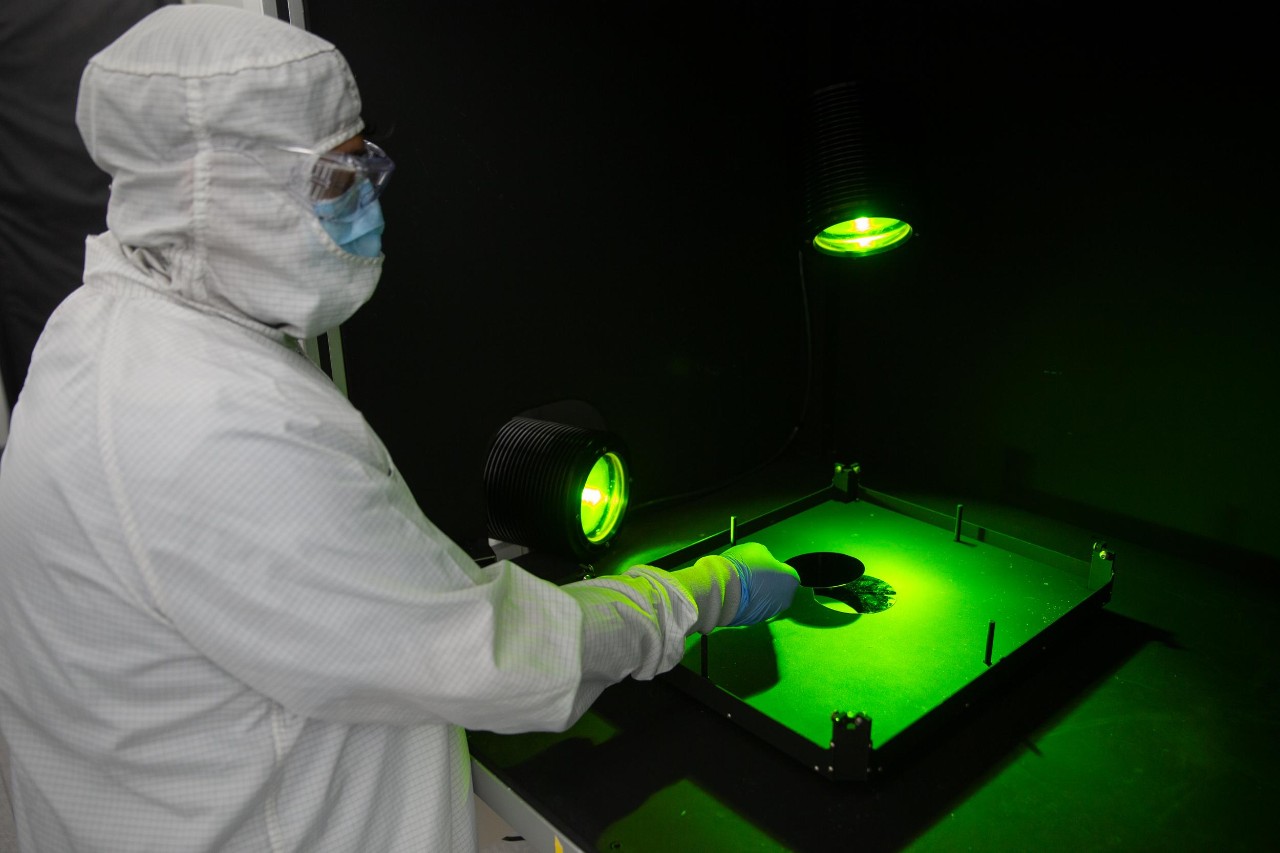
UC students work with microchips in the Mantei Center Cleanroom. Photo/Andrew Higley/UC Marketing + Brand
Besides introducing students to the latest innovations, Sun said the program is likely to spur research partnerships among participating UC graduate students.
“We hope to cultivate future research collaborations,” Sun said. “It’s important to make those connections.”
UC already has several longstanding ties to universities in Taiwan, including a dual-degree program in which Taiwanese students come to Cincinnati and earn dual master’s degrees at UC and at their sponsor university.
“We have an exchange of students all the time,” Sun said.
Ohio has seen growing interest in microchip manufacturing because of Intel Corp.’s 2023 groundbreaking for a new fabrication plant in Columbus. But Sun said UC is preparing students for a variety of the latest industries, including advanced manufacturing and flexible electronics to name a few.
“The future of semiconductor manufacturing is very bright for U.S. students,” UC professor Shi said.
“Advanced chips are the foundation of new technologies such as artificial intelligence and autonomous driving,” Shi said. “For the United States, continuous innovations and investments are being made to maintain our competitive advantages.”
Featured image at top: UC students learn about microchip manufacturing in the Mantei Center Cleanroom. Photo/Corrie Mayer/CEAS Marketing + Communications

UC students will spend two months in Taiwan learning about advanced microchip manufacturing over the next five years. Photo/Unsplash
Innovation Lives Here
The University of Cincinnati is leading public urban universities into a new era of innovation and impact. Our faculty, staff and students are saving lives, changing outcomes and bending the future in our city's direction. Next live here.
Related Stories
UC study correlates increased physical activity with slower Parkinson’s progression
October 7, 2026
Higher levels of physical activity were associated with slower declines in thinking and memory as well as slower worsening of movement symptoms for people with Parkinson’s disease, according to a new study led by University of Cincinnati researchers published Oct. 7, 2026, in Neurology.
Defying the demographic cliff
October 7, 2026

Despite the looming demographic cliff, the University of Cincinnati and five other major Greater Cincinnati universities grew enrollment this fall, with UC reaching a record 54,437 students, helped by strong first-year demand.
Rooted in Tahlequah: UC Nursing alumnae expand women's health care in rural Oklahoma
October 6, 2026
Tahlequah, Oklahoma, is more than a place where University of Cincinnati College of Nursing alumnae practice. For Brandy Ponder, APRN, WHNP-BC, and Leonda Reese, MSN, APRN, WHNP-BC, it is home. Both are Cherokee Nation citizens. Both built their healthcare careers in northeastern Oklahoma. And both chose UC College of Nursing Women's Health Nurse Practitioner program to expand what they could offer the women and families in their communities. Their paths to advanced practice clinicians were different, but they eventually intersected in a way that illustrates the ripple effect of nursing education: Ponder became a mentor and preceptor to Reese, who recently graduated from UC and is now taking her expertise into an even broader network of rural communities.