Neurorehabilitation: Can the US fill gaps?
UC expert featured in MedCentral article

The University of Cincinnati's Oluwole Awosika was featured in a MedCentral article discussing the need to focus on and improve access to neurorehabilitation services following strokes and traumatic brain injuries.
A recent editorial published in The Lancet Neurology said neurorehabilitation services "are often neglected in healthcare systems across the globe.
“The ripple effects of this burden extend beyond patients and carers, leading to increased demand for health and social care services, loss of productivity, and financial strain,” the editorial continued.
Awosika, MD, recently coauthored an American Heart Association policy statement on improving access to stroke rehabilitation and recovery. He told MedCentral the editorial and a new neurorehabilitation draft guideline from the United Kingdom's National Health Service "are welcome additions to the global effort to improve post-acute care for individuals after neurologic injury.
"With the aging population and growing rates of younger individuals diagnosed with debilitating chronic neurologic conditions, it is critical that the commitment to providing patients with quality, standardized, and evidence-based care extend to the post-acute and outpatient settings,” said Awosika, associate professor in the Department of Neurology & Rehabilitation Medicine in UC’s College of Medicine and a UC Gardner Neuroscience Institute physician.
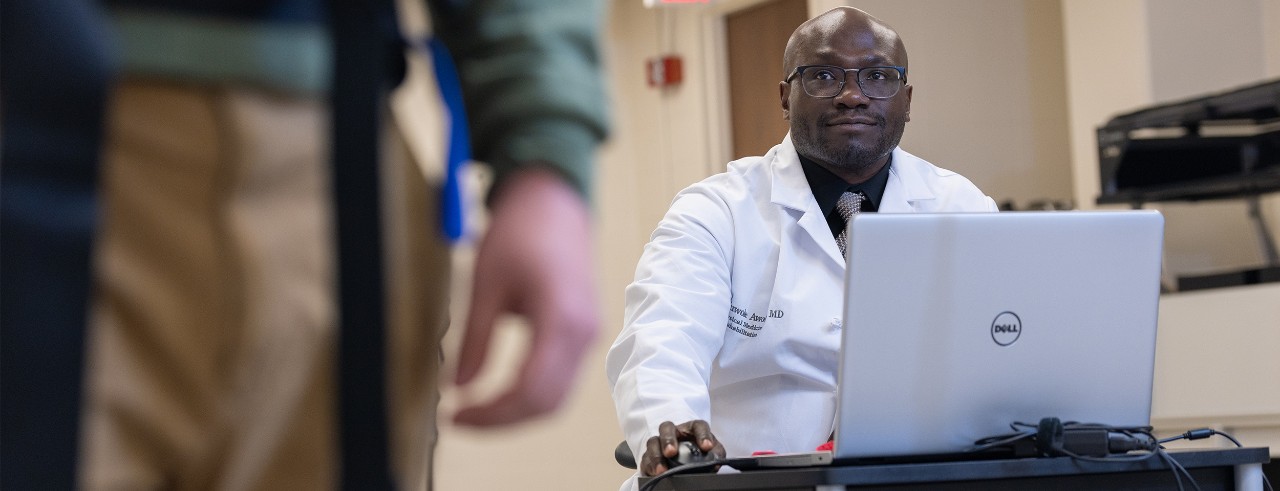
Featured photo at top of Awosika observing a person using the posturography machine. Photo/Andrew Higley/UC Marketing + Brand.
Related Stories
University of Cincinnati and Hamilton County work to lower overdose deaths
September 17, 2026

University of Cincinnati researchers and Hamilton County officials are using overdose data to identify Cincinnati hot spots and place free NaloxBoxes and fentanyl test strip dispensers where they are needed most to help prevent opioid overdose deaths.
You're probably not getting that $5,000 presidential check
September 17, 2026

Michael Jones, associate professor of economics at the University of Cincinnati's Lindner College of Business, spoke with Marketplace on why President Trump's $5,000 check proposal probably won't happen from a numbers perspective.
UC Blue Ash continues enrollment growth
September 14, 2026
The University of Cincinnati Blue Ash College is welcoming its largest incoming class as it continues a growth trend that spans the past four years.