Kissing bug disease should be declared endemic to U.S.
UC researcher talks about health risks from Chagas disease

WVXU turned to a researcher at the University of Cincinnati to explain why Chagas disease is becoming more commonly diagnosed in the United States.
UC College of Arts and Sciences Assistant Professor Noelia Lander studies the parasite responsible for Chagas, a disease that can cause long-term cardiovascular and digestive issues.
The parasite is spread through the feces of kissing bugs, insects that are found across North and South America. The insects bite people and the parasites enter the bloodstream when the insect's poop gets into the wound, eyes or mouth.
They get their name because kissing bugs typically bite people around their exposed faces when they are sleeping.
Chagas is found in many countries in Central and South America. Now researchers say it should be considered endemic to the United States as well.
Initially, people infected with Chagas have mild or even no symptoms, Lander said. But decades later, infected patients can develop life-threatening cardiovascular issues.
“At that point after when symptoms appear, it's probably too late to treat the disease,“ she told WVXU.
In her lab, she and her research team are working on developing interventions to kill the parasite in infected people by targeting its lifecycle before it can damage heart cells.
The disease has been identified in people living in at least eight states. Lander said declaring the disease endemic to the United States will make doctors and patients more aware of the risks from the disease.
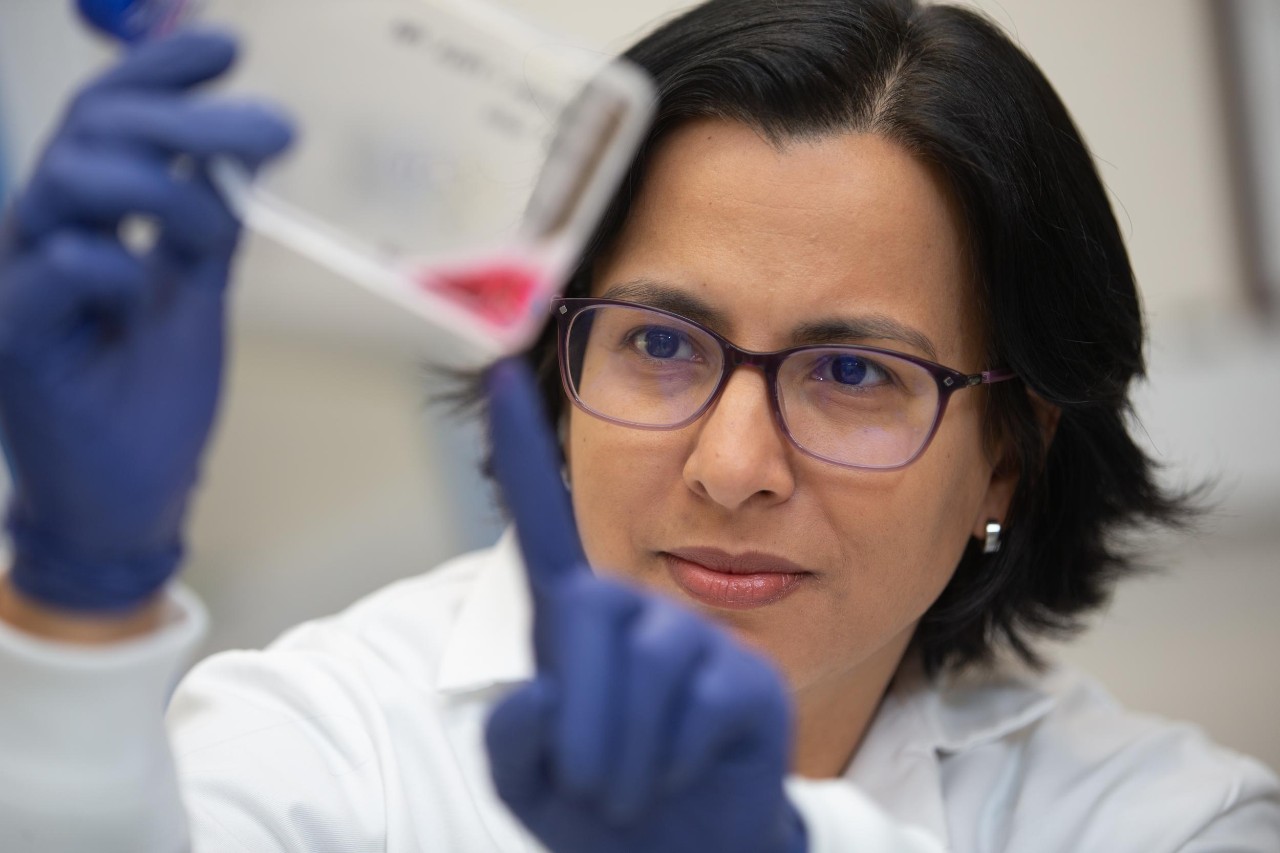
Featured image at top: UC Assistant Professor Noelia Lander is researching ways to prevent Chagas disease in her lab. Photo/Andrew Higley/UC

UC College of Arts and Sciences Assistant Professor Noelia Lander spoke to WVXU public radio about her research into Chagas disease. Photo/Andrew Higley/UC
Related Stories
Is Cincinnati building new homes fast enough?
September 22, 2026

Gary Painter, professor and academic director of the Real Estate Center at UC's Lindner College of Business, offers comments on affordability issues in Cincinnati.
UC climbs to No. 3 in the nation for co-ops and internships in 2027 U.S. News rankings
September 22, 2026
In U.S. News & World Report’s 2027 Best Colleges rankings, the University of Cincinnati rises to No. 3 in the nation for co-ops and internships — No. 1 among public institutions — and posts gains in undergraduate business, computer science and psychology.
Tina Cheng, MD, receives American Academy of Pediatrics’ highest honor
September 22, 2026
UC Pediatrics chair Tina Cheng, MD, has received the American Academy of Pediatrics' highest honor for her decades of advancing child health.