
UC 1819 Hub robotics partner wins $1.25M Air Force funding
Sensory Robotics builds 3D safety into aircraft robots

Robots are the newest neighbors inside the University of Cincinnati's 1819 Innovation Hub, where Sensory Robotics has set up shop.
The rapidly growing startup transforms industrial safety through 3D-sensing technology.
According to the Cincinnati Business Courier, Sensory Robotics received a federal research award that will accelerate its work on next-generation robotics. The company secured a $1.25 million Small Business Innovation Research grant from the U.S. Department of Defense. The funding supports a two-year project, set to launch in October, that will adapt the company’s safety-focused robotics technology into a mobile system for use in Air Force hangars.


Chris Edwards is the co-founder and CEO of Sensory Robotics. He demonstrates on the monitor how the robotic software uses multiple redundant 3D cameras to create a safety zone for people and objects. Photos/Mia Roher
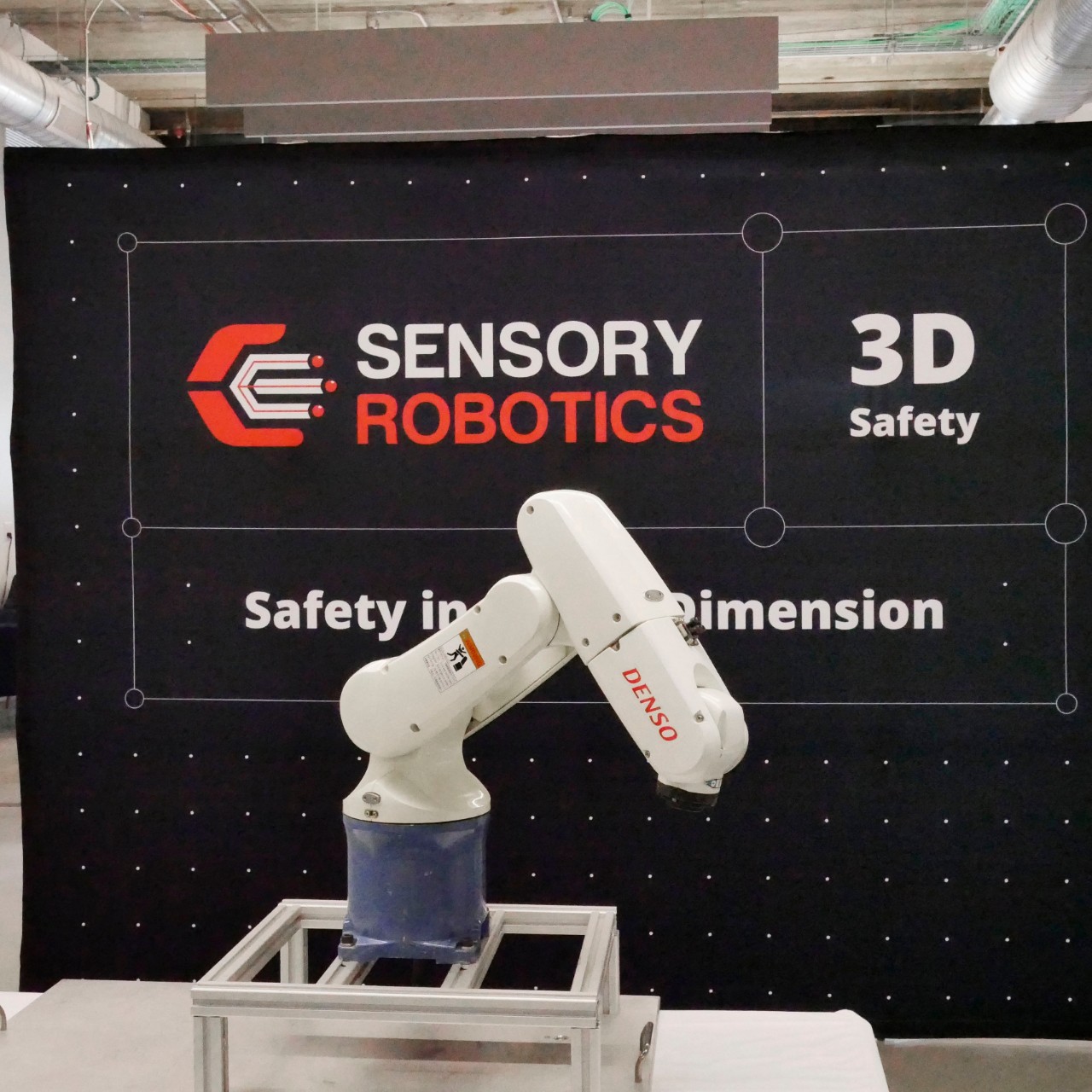
Sensory Robotics robots on display. Photo/Sensory Robotics
Sensory Robotics' is the only system capable of ensuring the safety of mobile and arm-integrated robots, enabling humans and heavy robots to work safely and efficiently side by side, CEO and co-founder Chris Edwards said.
The technology of its flagship product, the SR-1, combines a multidisciplinary approach in real time to detect people and objects, creating a safety zone that replaces outdated, restrictive technologies.
Edwards said Sensory Robotics’ approach addresses a longstanding gap in the industry: reactive safety systems that are ineffective when robots operate in fast-changing environments. He notes that the company’s system is built to recognize people and objects in real time to avoid accidents.
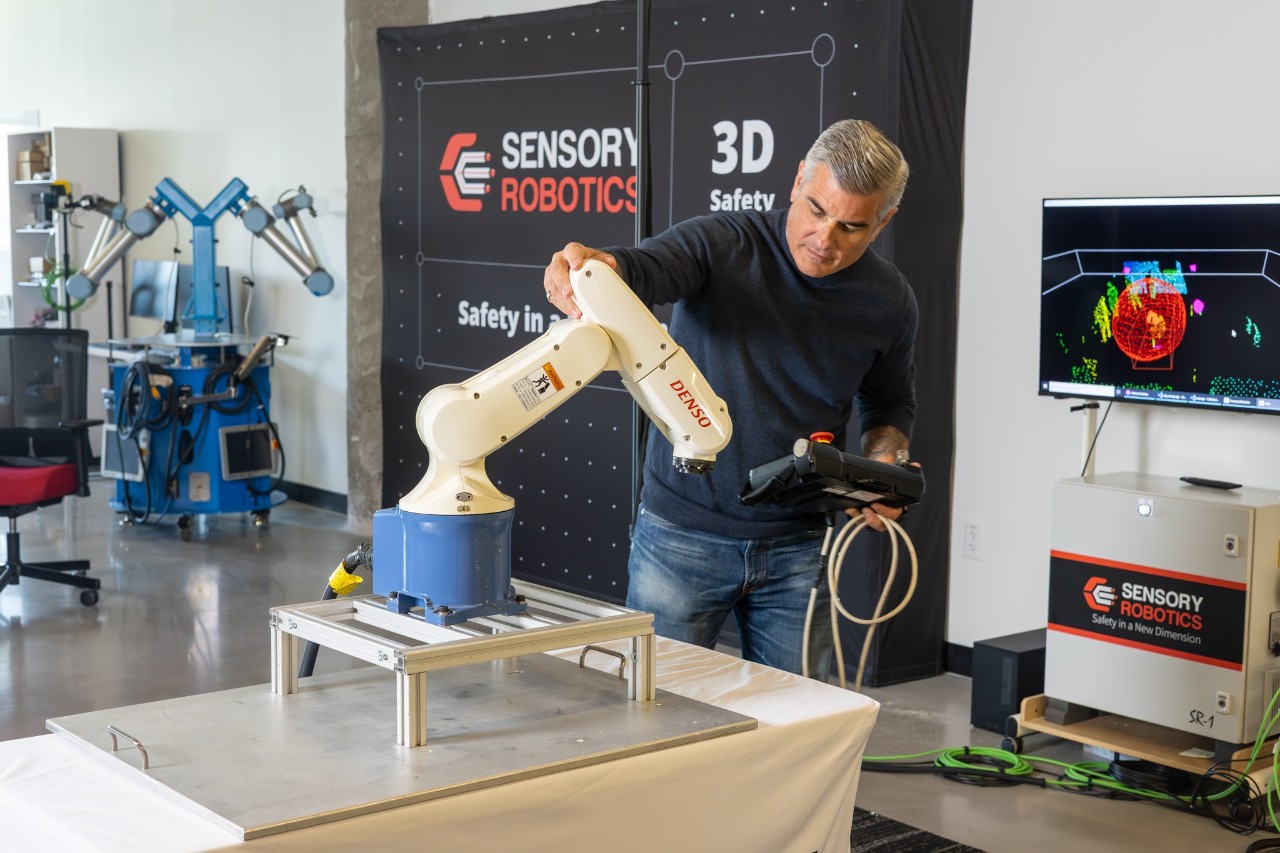
Mark Gagas, COO Sensory Robotics, inspects the robot prior to some testing. Photo/Mia Roher
The award is a direct-to-phase-II grant, a highly sought-after designation for projects with demonstrated technical strength and clear commercial potential. Sensory Robotics’ chief operating officer Mark Gagas is excited by the opportunity to enter a new market and says the award is likely to enable the company to expand its team by several new hires. He also spoke about Sensory Robotics’ decision to move to the 1819 Innovation Hub, reflecting on its plan to tap into UC's deep bench of engineering, information technology and industrial design talent as potential future employees.
Founded in 2018, Sensory Robotics already works with major corporations including Toyota, Boeing, Walmart and General Motors.
Looking ahead, the company sees potential for a Phase III award, which could enable its research to transition from the lab to real-world deployment.
Cover image/Greg Glevicky
Innovation Lives Here
The University of Cincinnati is leading public urban universities into a new era of innovation and impact. Our faculty, staff and students are saving lives, changing outcomes and bending the future in our city's direction. Next Lives Here.
Related Stories
UC researcher to launch national study with $2.5 million NIH grant
October 9, 2026

A University of Cincinnati researcher has received a $2.5 million National Institutes of Health grant to conduct research during the next five years. Natalie Kreitzer, MD, a University of Cincinnati College of Medicine physician-researcher, received an R01 independent research grant from the NIH's Eunice Kennedy Shriver National Institute of Child Health and Human Development. The funding will support a test program for caregivers of patients with traumatic brain injury, as reported by the Cincinnati Business Courier.
Grad Career Week to Help Graduate Students Prepare for What’s Next
October 6, 2026
Grad Career Week is a week-long professional development series designed to help graduate students build the skills, confidence and connections they need to navigate their careers and prepare for the job search.
UC emergency physician receives $2.5 million NIH research grant
October 6, 2026
University of Cincinnati emergency medicine physician Natalie Kreitzer, MD, received a $2.5 million National Institutes of Health R01 grant to lead a clinical trial testing a wellness program for family caregivers of traumatic brain injury patients.