Is menstrual fluid ‘the most overlooked opportunity’ in women’s health?
UC researcher featured in The Guardian

The Guardian recently reported that period blood has long been thought of as ‘stinky and useless’, but startups are exploring using the fluid to test for a wide range of health conditions — including endometriosis.
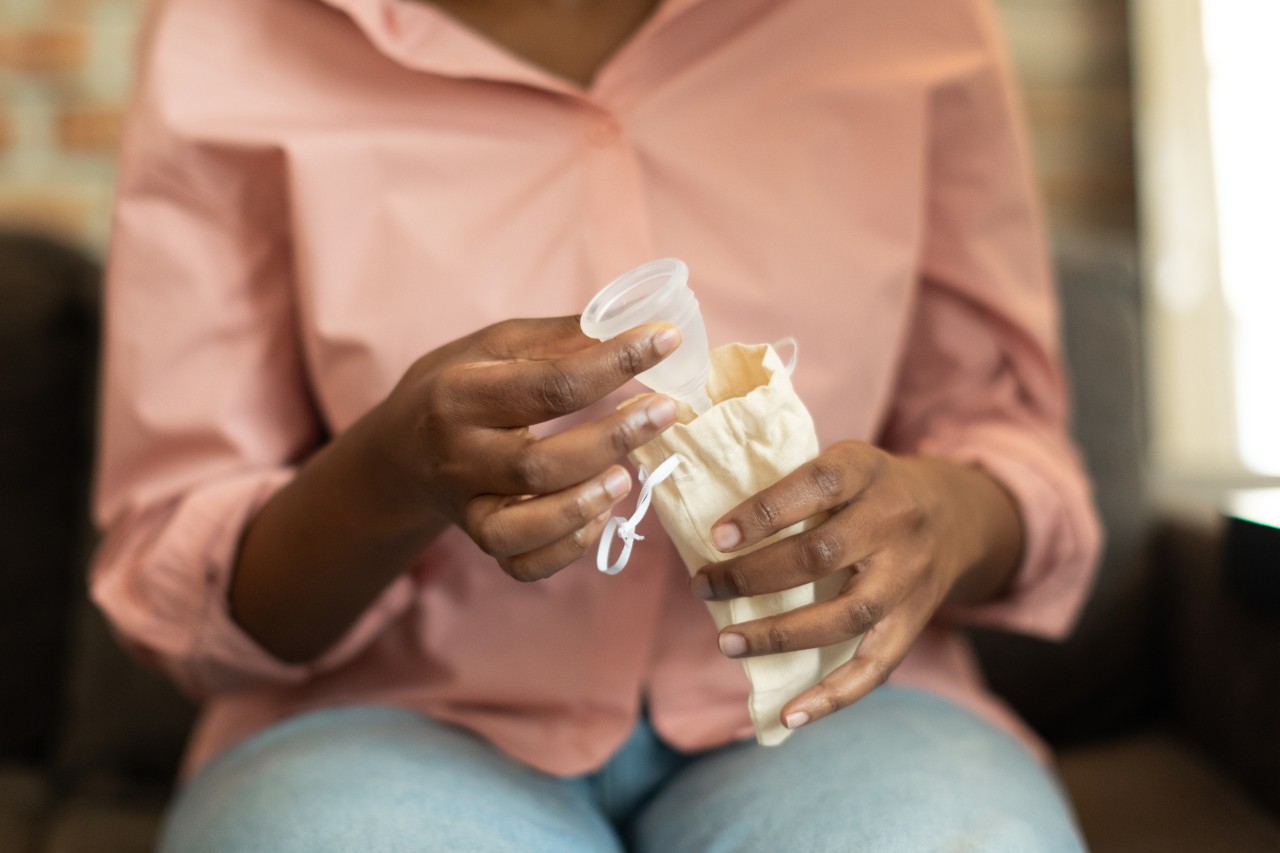
Katherine Burns, an associate professor in the Department of Environmental and Public Health Sciences at the University of Cincinnati's College of Medicine, lives with endometriosis. Her lab is working on a diagnostic test for the condition based on a set of cellular abnormalities. Her lab collects menstrual fluid samples using menstrual cups for further analysis.
Yet menstrual cup collection, as it stands, could be a barrier. The cups can be messy, prone to spills and difficult to insert and remove, particularly for someone who has pelvic pain or for teenagers. Other researchers say developing a more comfortable and less spillable cup is a goal.
Nonetheless, the good news for those with endometriosis, Burns notes, is that there are multiple irons in the fire. “We are all working towards the same goal to help diagnose endometriosis without surgery,” she said. “Do I hope and wish and pray that any of them are correct? You bet.”
Burns had to pause development on her diagnostic test because it was unfunded. See below to give to her research fund.
Innovation Lives Here
Featured image at top: A woman holds a menstrual cup and storage pouch in her hands. Photo/iStock/Prostock-Studio.
Related Stories
Phenols, found in many products, could upset heart's rhythms
October 7, 2024

Chemicals called environmental phenols include food preservatives, plastics ingredients such as BPA and the parabens in shampoos, so they are ubiquitous in everyday life. Now, University of Cincinnati research suggests that higher exposure to phenols might trigger changes in the heart's electrical system and rhythms.
UC researchers work to understand how extreme heat impacts older adults
June 1, 2026

University of Cincinnati College of Medicine researchers are working to understand how extreme summer heat affects older adults’ health, as reported by 91.7 WXVU News recently. George Leikauf, PhD, co-director of UC's Center for Collaboration on Climate and Community for Health (C4H) and a professor in the Division of Pulmonary, Critical Care and Sleep Medicine within the Department of Internal Medicine, is leading a study to track the health of older Cincinnatians who live without air conditioning during heat waves.
Nephrologists miss opportunities to discuss contraceptive use with women with chronic kidney disease
November 7, 2025

Discussions about contraceptive use for women with chronic kidney disease are often avoided by nephrologists, according to University of Cincinnati data presented this week at the American Society of Nephrology's Kidney Week global. meeting in Houston. Nephrologists reported that they see the importance of reproductive health but feel ill-equipped to discuss it with patients. Discomfort, limited training and confusing guidance were among the key barriers to discussions.