
The life science industry is hitting its stride in Cincinnati
A high-paying, fast-growing industry is rising fast in Southwest Ohio

Greater Cincinnati is quickly emerging as a core pillar of America’s life science industry, according to a report by the Cincinnati Business Courier.
The region’s fastest-growing sector pays well, is rapidly expanding worldwide and has the potential to ignite decades of regional growth. Recent statistics by commercial real estate developer CBRE and consulting firm Chmura Economics prove Cincinnati’s life sciences growth:
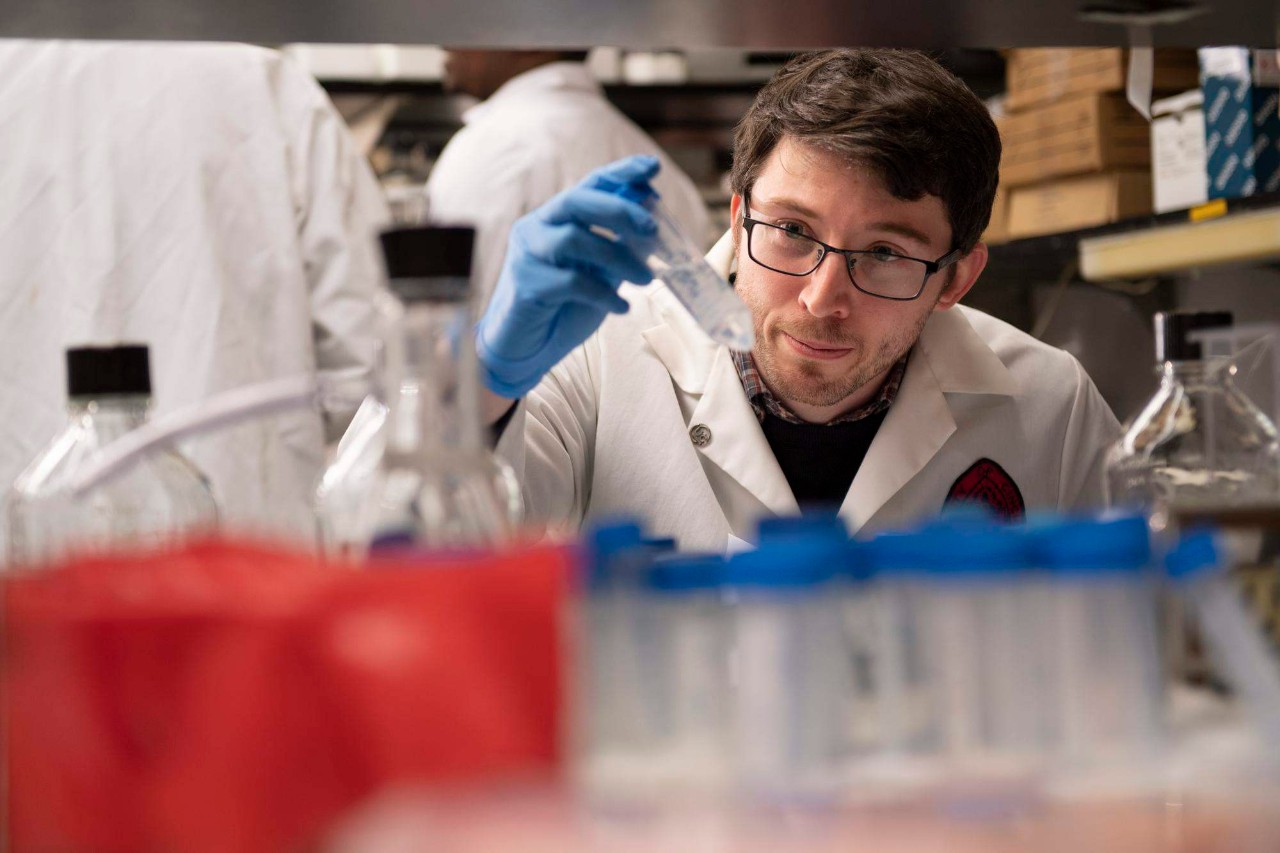
Medical research being performed at the University of Cincinnati. Photo/Colleen Kelley
- Our region is home to 53 life science companies
- There are 68 life science facilities in the area
- They account for over $125 billion in investments
- Life science employment stood at 11,218 in 2024
- Local employment has grown 21% since 2020
The Business Courier mentions the various advantages – and challenges – faced by businesses in the Cincinnati life sciences sector. The University of Cincinnati’s 1819 Innovation Hub plays a key role in furthering the Queen City’s life science momentum through the Technology Transfer office, which transforms groundbreaking scientific research into real-world impact.
Cincinnati is just getting started as it emerges as a life science leader. Here are examples of how the region is pushing toward the forefront of this fast-growing field.
All the pieces in place
Life science companies perform research and develop products that serve living beings, with major advances occurring in the pharmaceutical, biotechnology, diagnostics and therapeutics spaces. The sector is rapidly expanding; CBRE found that life science employment reached its highest level ever in late 2024 as venture capital funding soared 10% year over year.
Cincinnati is at the forefront of the life science industry’s breakneck growth, according to the Business Courier. “When a person in a position to know says Greater Cincinnati could become the nation’s next big life sciences hub, you smile and nod,” the publication says. “When 10 of them say it, you start to wonder whether they’re on to something.”
UC – not only is it a world-class institution, but the co-op program ... that's how you're developing your future leaders.
Matt Huddleston Chief commercial officer, Enable Injections
As it turns out, life science leaders have already targeted the Queen City as the field’s new home. They attribute the region’s attractiveness to its robust corporate and startup presence along with renowned health care powerhouses like the UC College of Medicine, which pioneered breakthroughs such as Benadryl and the polio vaccine. Other elite health care facilities in the area include Cincinnati Children’s Hospital Medical Center and UC Health.
“I think we’re spoiled,” Matt Huddeston, chief commercial officer of drug delivery company Enable Injections, told the Business Courier. “How many people can say they’ve got the number one children’s hospital in the world? And UC – not only is it a world-class institution, but the co-op program … that’s how you’re developing your future leaders.”
Resources at your fingertips
Cincinnati also has the robust support system required to nurture a growing life science industry. Below are a few positives of our region as it races toward the top:

Look into the 1819 Ground Floor Makerspace. Photo/Mary Dwyer
- Enviable talent pool: The University of Cincinnati conferred 7,637 degrees to students in 2025, and 48% were for science, technology, engineering, math or medicine (STEMM). This gives local life science companies a significant number of potential hires – especially since approximately 50% of UC graduates stay in the region.
- Low cost of doing business: While firms in Boston, San Francisco and other life science hubs face stiff competition in worker recruitment and high costs of running a business, firms in Cincinnati have it easy. CNBC ranked Ohio as having America’s second-lowest cost of doing business, allowing you to advance your research instead of paying steep bills.
- Built-in research infrastructure: Cincinnati’s innovation infrastructure was custom-built with the life science industry in mind. That’s why you’ll find room for prototyping in the 1819 Innovation Hub’s 12,000-square-foot Ground Floor Makerspace, a 15,000-square-foot wet lab in the OneNKY Center and various other resources spread across the region.
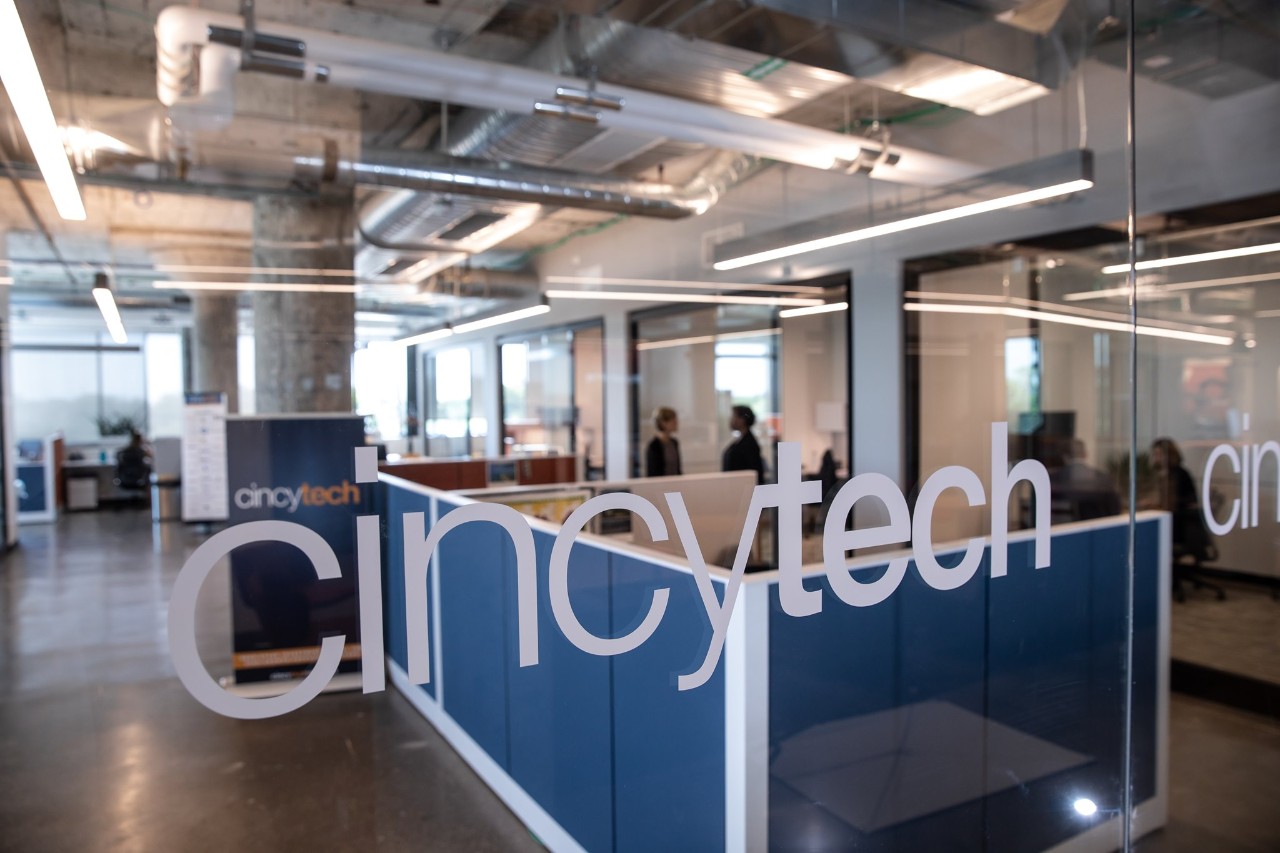
View into CincyTech's office at 1819. Photo/UC Marketing + Communications
- Intellectual property help: UC’s Tech Transfer office is leading the way on IP development, catapulting the school to the top 100 in the U.S. for patents produced. Cincinnati is also second in the Midwest for patent output with 31,181 in four years, trailing only Chicago.
- Venture capital options: Entrepreneurs enjoy access to various funding sources in Greater Cincinnati, with CincyTech – based at 1819 – ranking as the region’s undisputed leader for life science investments.
With Ohio ranked by CNBC as America’s fifth-best state for business and first in the Midwest, there’s good reason life science leaders are turning to the Buckeye State. And among those considering Ohio, the Cincinnati region consistently earns top billing.
Leading in life sciences
Examples of successful life science firms aren’t difficult to find in the Queen City. From major firms like Medpace and CTI Clinical Trial and Consulting Services to small-scale startups, local life science companies are transforming Cincinnati’s innovation landscape.
Below are a few life science breakthroughs that have moved through UC’s Tech Transfer team:
- Endometriosis diagnostic test: Research that could lead to the development of a noninvasive, at-home test for endometriosis to replace surgical procedures.
- MetaMol Theranostics: Business working on a breast cancer diagnostic device that boosts detection rates and could increase chances of survival.
- Rapid biopsy research: Technology with the potential to dramatically reduce the amount of time and resources that go into biopsies.
- Sense Neuro Diagnostics: Startup with a rapid brain-scanning system that can monitor and detect strokes and traumatic brain injuries in under four minutes.
Cincinnati’s life science scene moves far beyond these four technologies, but they offer a glimpse at the pioneering research happening in the region. By combining patenting expertise, state-of-the-art facilities and top talent with an affordable and top-ranked business environment, Cincinnati is quickly emerging as America’s next life science hub.
Featured image at top: University of Cincinnati student performing medical research. Photo/Colleen Kelley
Impact Lives Here
The University of Cincinnati is leading public urban universities into a new era of innovation and impact. Our faculty, staff and students are saving lives, changing outcomes and bending the future in our city's direction. Next Lives Here.
Related Stories
New vending machine helps people with addiction
October 8, 2026

The University of Cincinnati's Daniel Arendt was featured in a Spectrum News report on a new harm reduction vending machine installed at the IPM Food Pantry in partnership with the Hamilton County Mental Health and Recovery Services Board.
UC study correlates increased physical activity with slower Parkinson’s progression
October 7, 2026
Higher levels of physical activity were associated with slower declines in thinking and memory as well as slower worsening of movement symptoms for people with Parkinson’s disease, according to a new study led by University of Cincinnati researchers published Oct. 7, 2026, in Neurology.
UC Clermont's Valentine Johns expands student support through AI
October 6, 2026
Valentine Johns, PhD, associate director of the UC Clermont College Learning Commons, was inspired to champion artificial intelligence through its potential to make academic support more accessible and responsive to students’ needs.