
Cincinnati teams blast off to global stage in NASA Space Apps Challenge
Innovation ignites at UC’s 1819 Hub as local talent takes Cincinnati galactic

Cincinnati’s innovators are rocketing to the world stage.
Team Celara and Team Space_Cats have been named 2025 Global Award Nominees in the NASA International Space Apps Challenge, earning the chance to compete against top teams from around the globe.

Students working during a hackathon. Photo/Andrew Higley
Their standout projects were launched in early October as the world’s largest hackathon, the NASA 2025 International Space Apps Challenge, touched down at the University of Cincinnati’s 1819 Innovation Hub. Over 48 hours, local innovators and problem-solvers tackled real-world data from NASA and other space agencies, transforming complex challenges into creative solutions and showcasing Cincinnati as a rising hub for tech and ingenuity.
The event was one of many hosted at 1819, which has become Cincinnati’s leading hub for hackathons. Attendees shot for the stars during NASA’s challenge, leading to meaningful tech progress and an array of dazzling results.
Out-of-this-world event
The NASA International Space Apps Challenge wasn’t just another technical competition – it was a high-stakes playground for real-world problem solving. Teams dove into NASA’s latest datasets and global space research, racing the clock and each other to turn complex challenges into bold, workable solutions.
The result: a global showcase of innovation right here in Cincinnati, with 12 teams hacking their way to breakthrough ideas.
Two local teams chosen to orbit
A pair of Cincinnati innovators soared in NASA’s global challenge, earning their spots as 2025 Global Award Nominees. Their standout performances propel them beyond UC’s 1819 Hub to the international spotlight, where they’ll compete against the brightest minds from around the world.
Cincinnati’s Global Award Nominees:
Team Celara

Kareem Ahmed headshot. Photo/Kareem Ahmed
- Project name: Celara Celestial Clarity With Deep Learning
- Team member: Kareem Ahmed
Celara is an exoplanet discovery system that joins together two valuable data streams: the faint dip of a planet’s transit and the physical properties of its host star. It analyzes each of these datasets simultaneously, eliminating false positives that trick common models using a single input.
Team Space_Cats
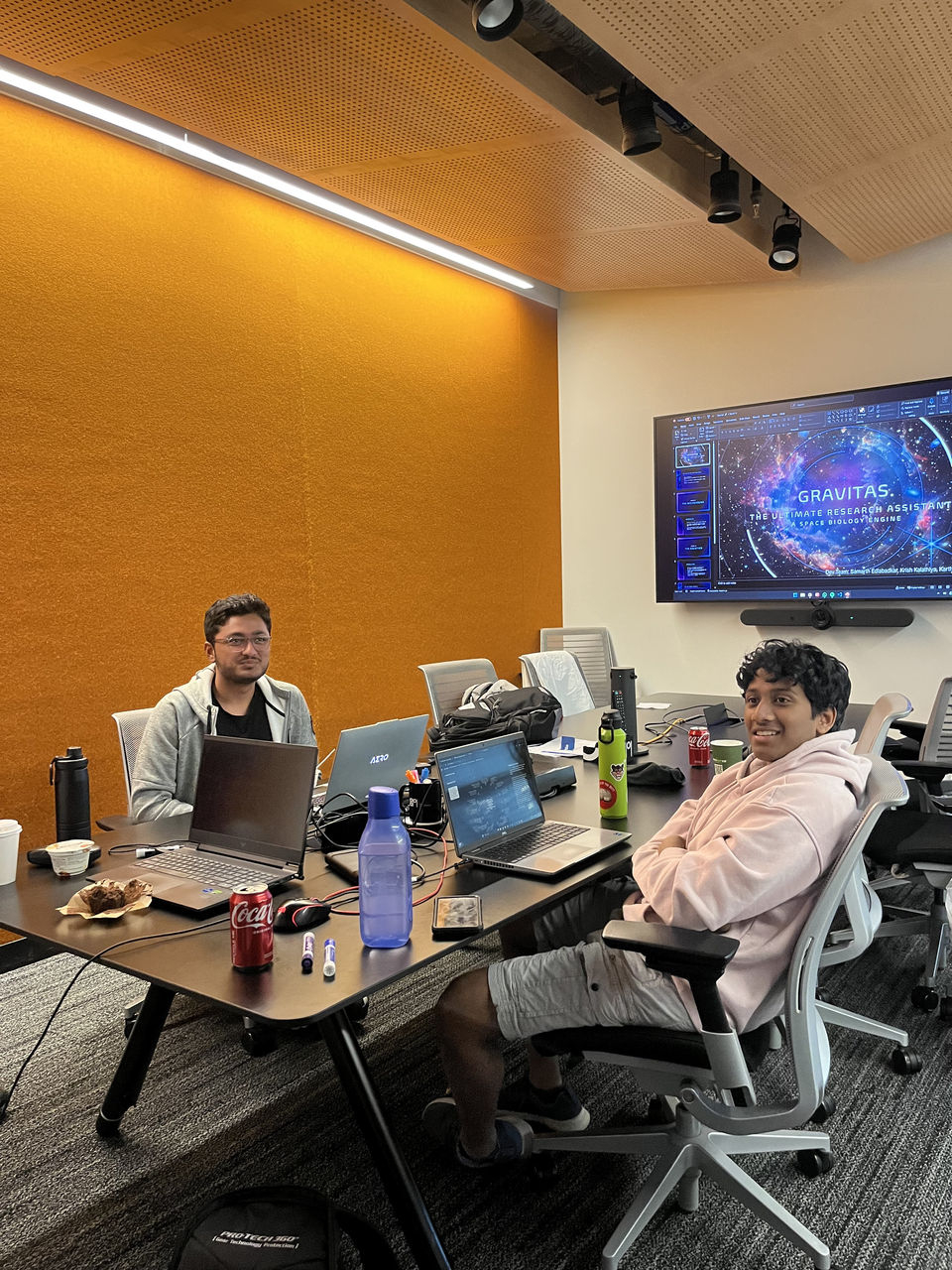
Team Space_Cats picture. Photo/Amy Sauden
- Project name: Gravitas
- Team Members: Samarth Edlabadkar, Krish Kalathiya and Karthik Rachamolla
Gravitas is an innovative web platform that streamlines research in space biology. It offers scientists an intuitive, searchable database to locate materials, assess how each source aligns with their hypotheses and uncover related studies, accelerating discovery and collaboration. Gravitas was also the local award winner for “Most Inspirational Project.”
Additional rising stars
Space Apps 2025 drew more than 15,000 teams worldwide with 9,996 projects, and 66 of those innovators were in Cincinnati. While all local teams displayed remarkable talent during NASA's hackathon, the following regional winners rose above the rest:
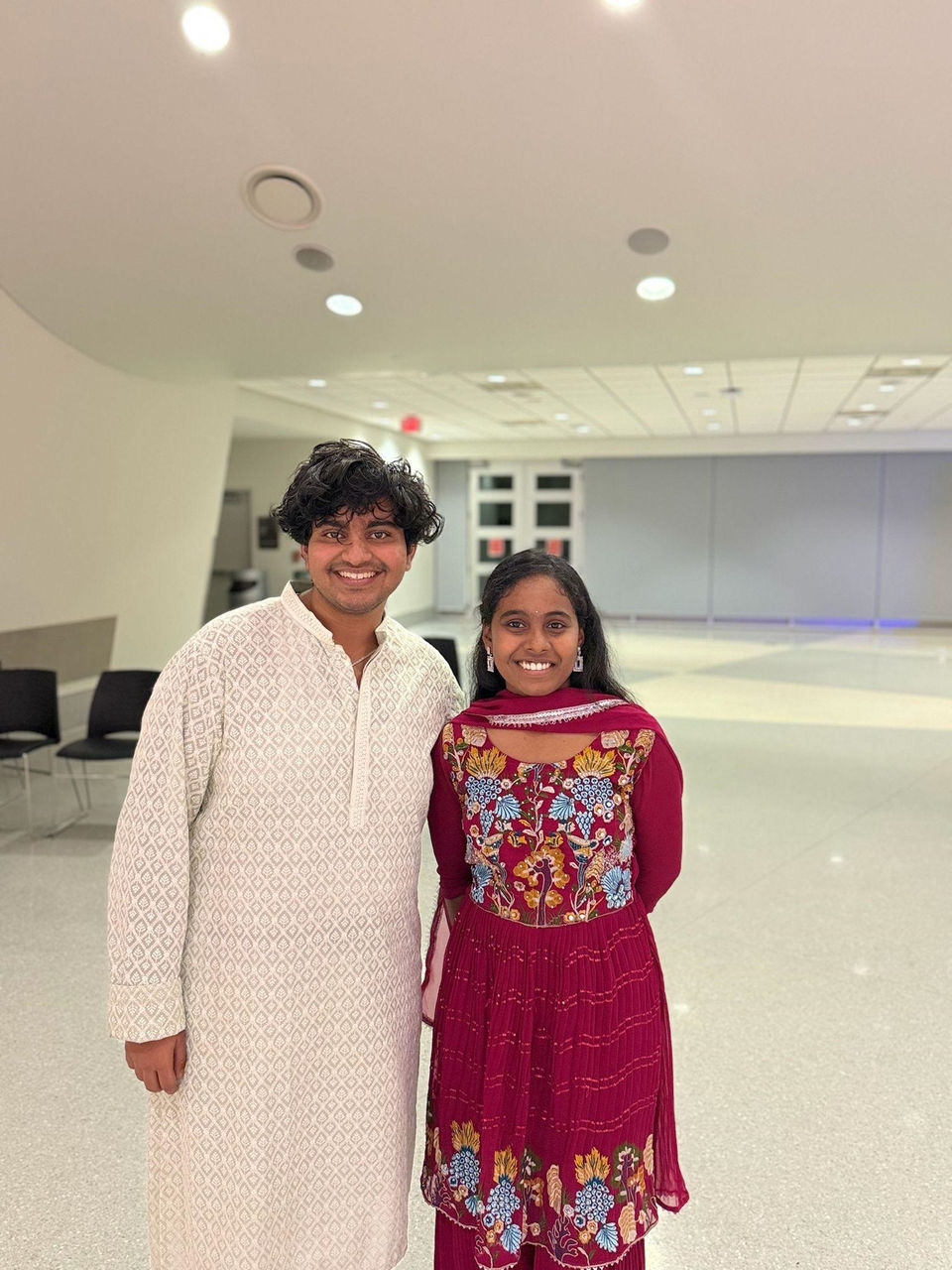
Team GoldPlatedSilver picture. Photo/Amy Sauden
- Winner, Excellence in Innovation and Execution
- Project name: NASA Bioscience Knowledge Explorer
- Team members: Tanuj Ithesh Kumar Hemalatha and Jyothirmayee Tanubuddi
The NASA Bioscience Knowledge Explorer is an AI-powered research companion that allows users to explore and summarize bioscience publications in mere seconds. The project stood out for its ability to make complex NASA data readily accessible to the broader scientific community.
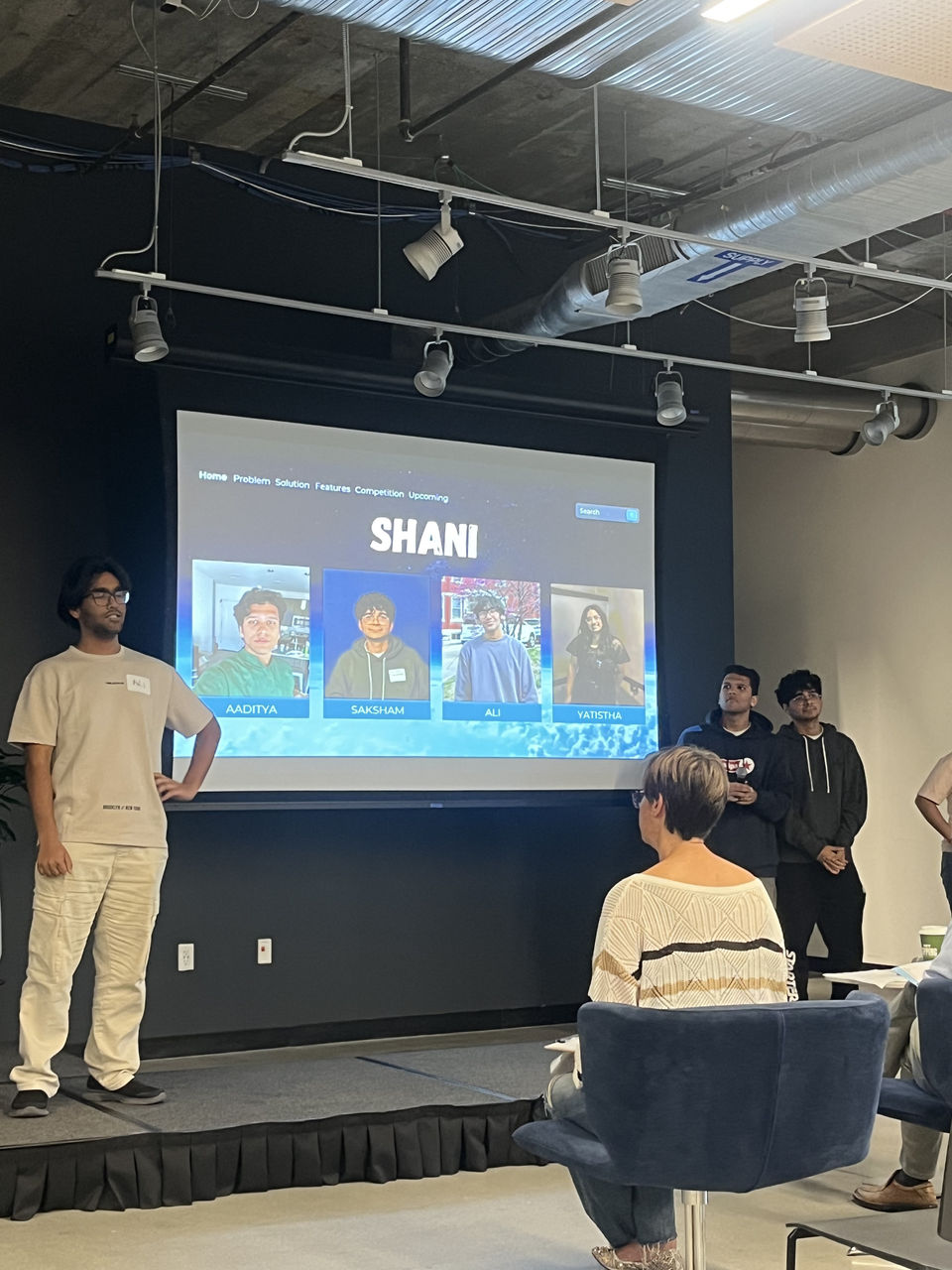
Team Shani picture. Photo/Amy Sauden
- Winner, Best Mission Concept
- Project name: Shani Space Bio Science Explorer
- Team members: Yatistha Agarwal, Ali Ansari, Saksham Malhotra and Aaditya Sawant
Shani is a question-to-evidence engine for space biology allowing researchers to ask basic queries and instantly receive the five most relevant papers with plain-language takeaways. It uses a hybrid retrieval-augmented generation (RAG) system that combines semantic embeddings, keyword search and metadata from scholarly sources.
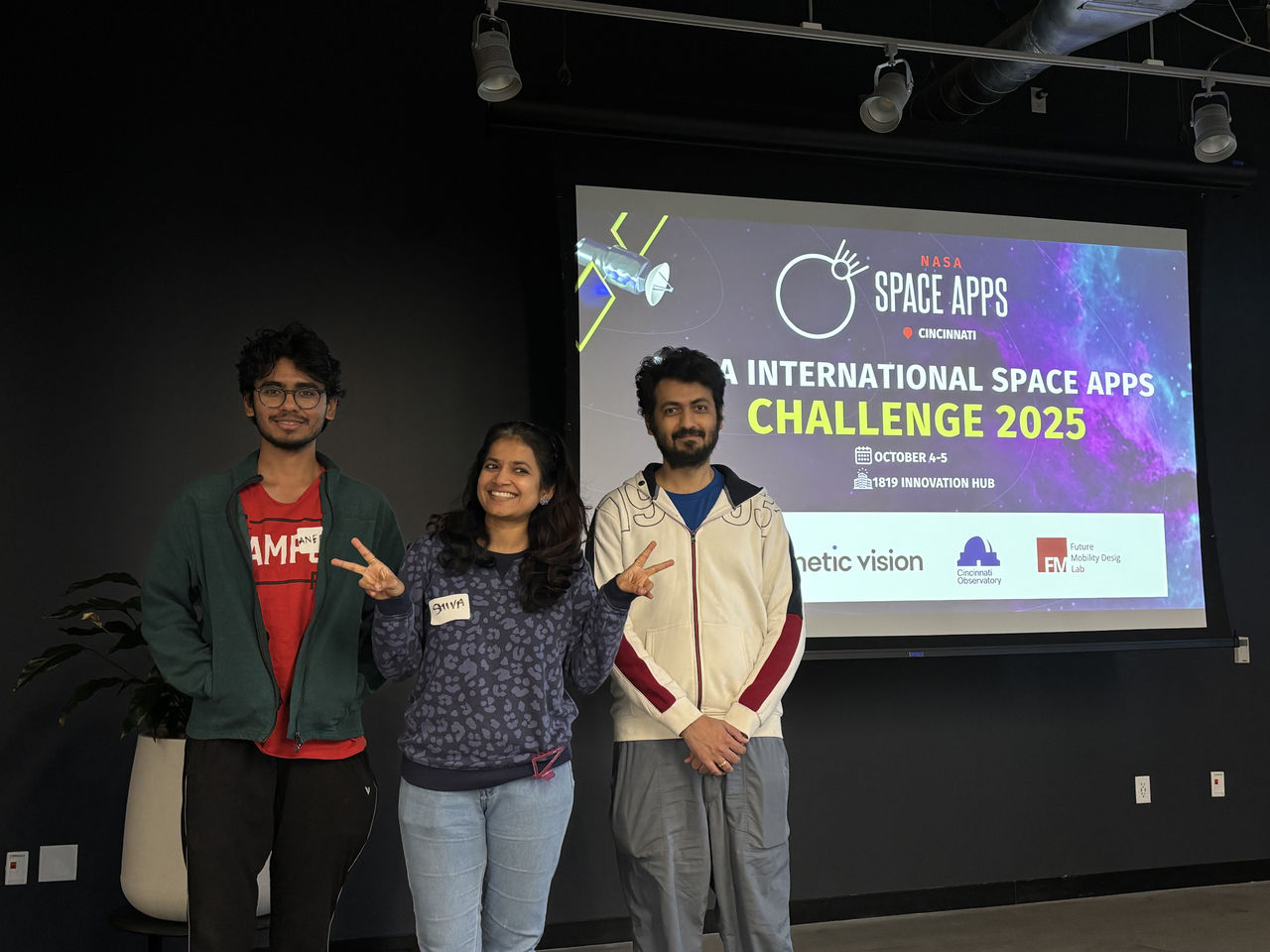
Team 42 picture. Photo/Amy Sauden
- Winner, Best Storytelling and Presentation
- Project name: Exploratory Analysis of Exoplanet Data
- Team members: Vihang Bhosekar, Aneesh Deshmukh and Shivanjali Vijaykumar Ranashing
Team 42’s project involved creating an AI-powered tool that uses data preprocessing, feature selection and model training to automate the discovery of distant exoplanets. Key factors considered include data quality, model accuracy, computational efficiency and scalability.
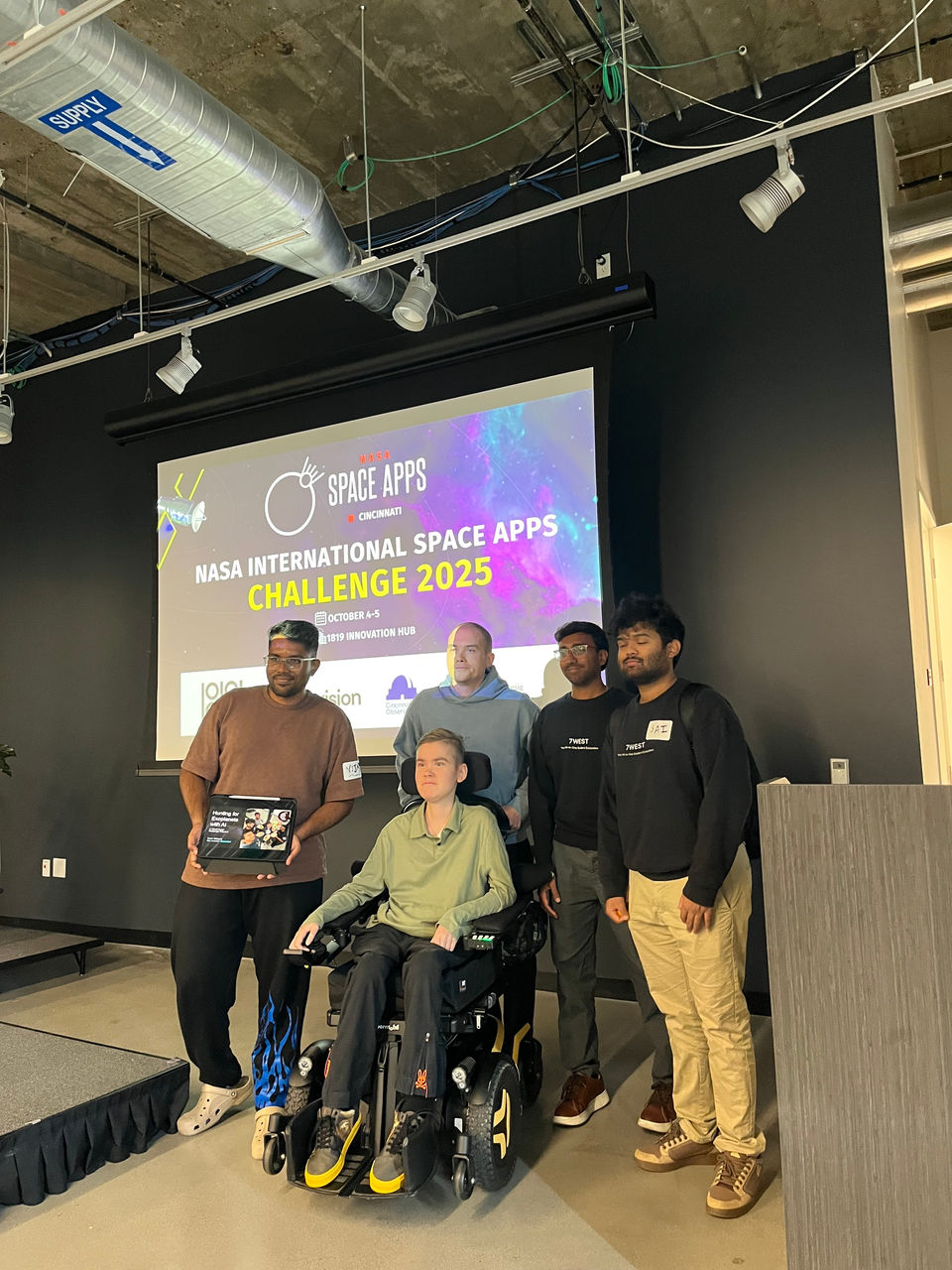
Team Chipotle picture. Photo/Amy Sauden
- Winner, Best Use of NASA Data
- Project name: Star Explorer Vision
- Team members: Aditya Chandraker, Aleksei Nechaev, Rohit Ramesh, Sai Anirudh Siddi and Vijay Viknesh
Star Explorer Vision is an interactive web platform that democratizes exoplanet discovery using authentic data and advanced AI models. It makes analyzing far-off planets simpler for experts, educators and newcomers alike.
The hackathon hub
As the Center for the Silicon Heartland and the focal point for the emerging Cincinnati Innovation District, UC’s 1819 Innovation Hub served as the perfect place to connect regional leaders.
We had strong support from ... local collaborators including the 1819 Innovation Hub.
Amy Sauden Organizer, NASA Space Apps Challenge Cincinnati
Amy Sauden, who organized and managed Cincinnati’s event, is grateful for the support from both global and local partners. “We had strong support from our global collaborators Google, GoDaddy, Meteomatics, Microsoft and Miro,” she says, “and local collaborators including the 1819 Innovation Hub, Kinetic Vision and the Cincinnati Observatory.”
It’s easy to see why so many hackathons choose 1819: spacious, tech-ready facilities, supportive leadership and direct access to UC talent and partner companies. Missed Space Apps this year? Hackathons happen throughout the year at 1819, so you’ll have plenty of chances to launch your own ideas.
Featured image at top: Teams lined up during Cincinnati's NASA Space Apps hackathon. Photo/Amy Sauden
Innovation Lives Here
The University of Cincinnati is leading public urban universities into a new era of innovation and impact. Our faculty, staff and students are saving lives, changing outcomes and bending the future in our city's direction. Next Lives Here.
Related Stories
UC among national top 100 universities for patents
May 1, 2026
The University of Cincinnati earned 61st place among U.S. universities for its number of patents produced in 2025, having risen 19 places from the National Academy of Inventors’ prior list.
A jolly good trip: Bearcats take on London for fragrance company
May 18, 2026
Six NEXT Innovation Scholars at the University of Cincinnati traveled to London to transform field research into actionable recommendations for British luxury bath, body and fragrance brand Molton Brown.
Cincinnati crowned ‘America’s Smartland’
November 6, 2025
Inc. Magazine and Fast Company recently named Cincinnati and UC’s 1819 Innovation Hub as centers for “America’s Smartland” due to their innovative partnerships and business-friendly infrastructure.