
UC herbarium research offers peek at past
WVXU highlights student work at newly relocated herbarium

WVXU profiled the University of Cincinnati's herbarium, which features plant specimens from around the world.
UC relocated the collection to Rieveschl Hall to make way for the demolition of Crosley Tower. The herbarium features Ohio's third-largest collection of plant specimens from all seven continents.
“My favorite specimen is a cacti,“ UC student and collections manager Olivia Leek told WVXU.
The herbarium, named after the renowned botanist Margaret Fulford, has lab space and storage for 125,000 specimens of flowering plants, ferns, moss, lichens and liverworts from around the world. The new home was made possible in part by a grant from the National Science Foundation. The collection is maintained in rows of climate-controlled state-of-the-art cabinets that slide on tracks to maximize storage capacity.
Associate Professor Eric Tepe, curator of the herbarium, told WVXU that the collection includes many species once common in Cincinnati that were obliterated by development.
“There were vast fields of pink ladyslipper orchids in Northside. And they don't occur in Hamilton County anymore,“ he told WVXU. “We've paved over their habitat and dried up the wetlands.“
UC is working to digitize its vast collection to share with botanists around the world.
Featured image at top: UC student Olivia Leek, collections manager of the herbarium, holds a pinecone from the collection. Photo/Michael Miller
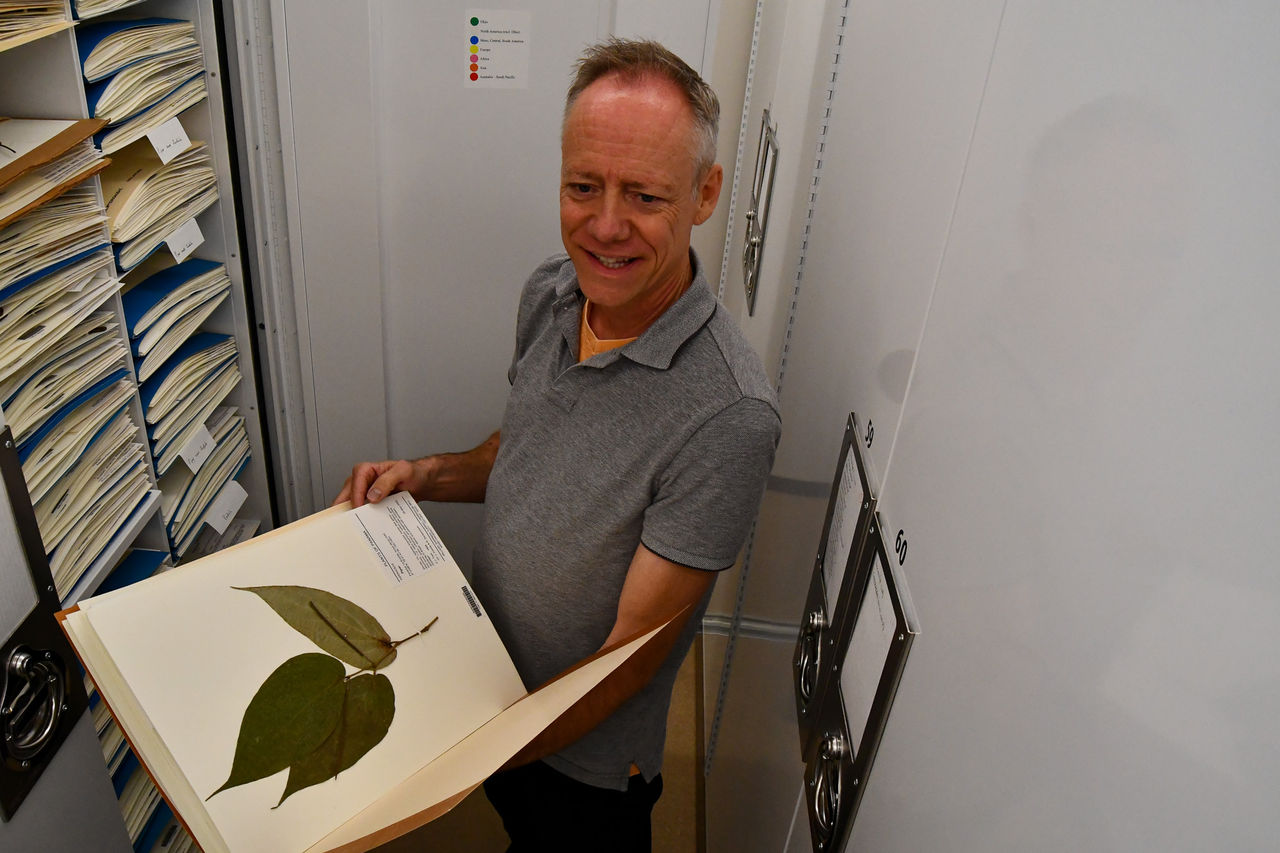
Associate Professor Eric Tepe examines a mounted specimen from UC's Margaret H. Fulford Herbarium. Photo/Michael Miller
Related Stories
These teeny spiders are social media stars
August 28, 2026

The New York Times turned to a University of Cincinnati professor to explain the appeal of jumping spiders on social media.
Scientists discover how snakes stand upright without limbs
April 3, 2026

Smithsonian magazine highlights a study co-authored by UC Professor Bruce Jayne, an expert in snake locomotion, about how snakes stand upright without arms or legs.
A robot bat sheds light on how they hunt in the dark
January 20, 2026

Popular Science and other outlets highlight an engineering-inspired biology study examining how bats find hidden prey in thick foliage at night.