
UC to launch first student-led satellite with NASA
CubeCats make history blasting into space

Building on decades of aerospace engineering and space-related research, the University of Cincinnati is launching its first student-led satellite in partnership with NASA, marking a new chapter in the university’s expanding role in space exploration.
UC's student-run aerospace organization, CubeCats, celebrated a historic milestone with the completion and handoff of the university’s first satellite, LEOPARDSat-1, the first-ever fully student-led satellite mission from Ohio. It has been transferred to NASA and Voyager and is fully integrated and cleared for launch from the International Space Station, according to MSN.
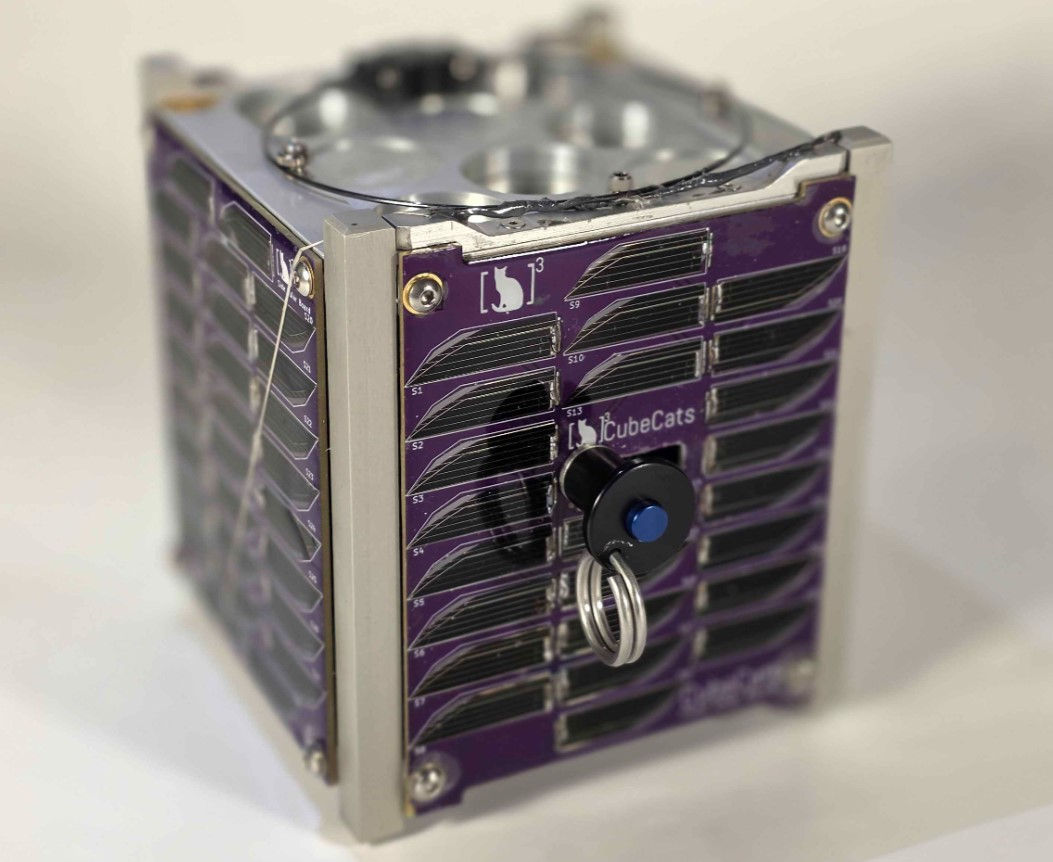
A close look at the completed LeopardSat-1 satellite.
Designed, built and tested by generations of UC undergraduates, the satellite includes an antenna manufactured at the Ground Floor Makerspace in UC’s 1819 Innovation Hub. CubeCats leaders Nathan Nguyen (president), Samuel Kohls (program manager) and Matthew Verbryke (chief engineer), guided by faculty advisor Donghoon Kim, led the project’s final phase. Executive team member, Mike Carovillano, currently pursuing his MBA at UC’s Lindner College of Business, and others were also recognized for their contributions during the celebration.
“Successful projects like LEOPARDSat-1 aren’t improvised,” notes Carovillano. “They’re engineered, managed and delivered from start to finish. And that’s what we did.”
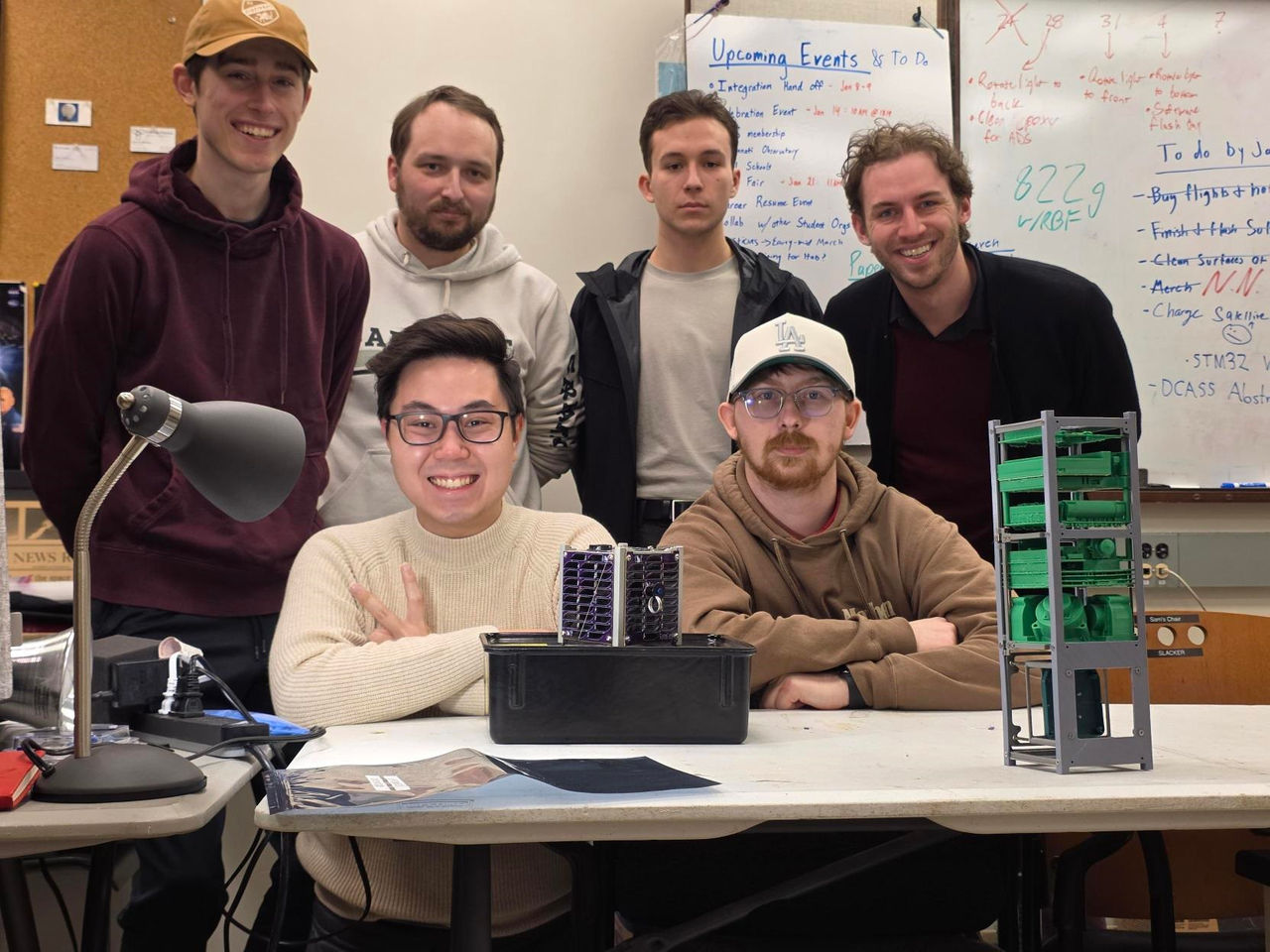
CubeCats team Left to Right: Top Row: Sam Kohls, Matthew Verbryke, Ezra Wolf, Mike Carovillano. Bottom row: Nathan Nguyen, Evan Heidenreich. Photo/CubeCats
One giant leap for UC
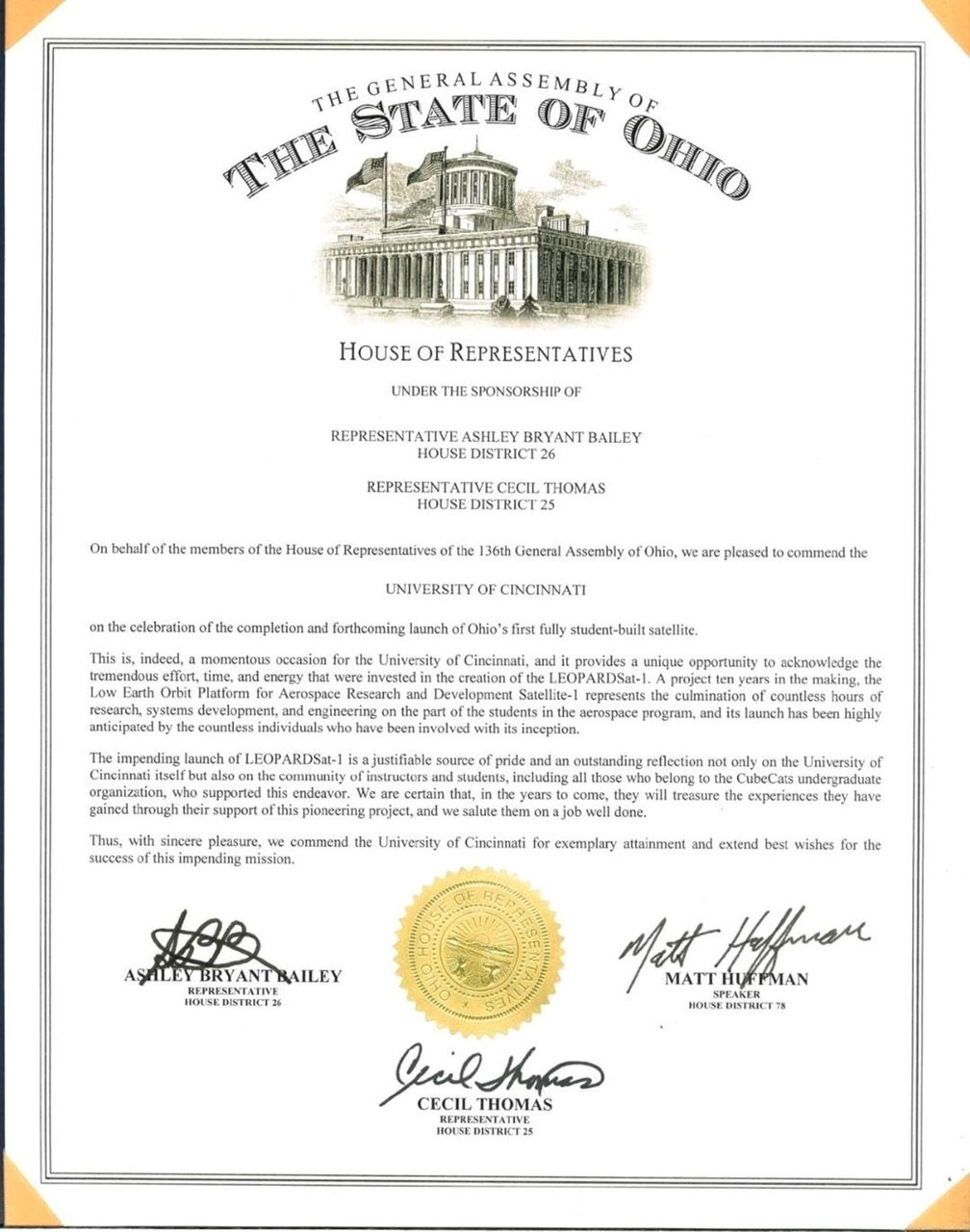
Ohio House of Representatives officially recognizes UC CubeCats accomplishment with a house resolution. Photo/Greg Glevicky
The milestone was celebrated at the UC 1819 Innovation Hub with an appreciation event bringing together students, faculty, alumni, industry partners, sponsors, community leaders and media. Attendees viewed an exact replica of the satellite and participated in a digital “time capsule,” leaving messages to be transmitted once LEOPARDSat-1 goes into orbit. The Cincinnati Observatory is featuring the mission in its exhibit on Ohio’s aerospace legacy, connecting the satellite to state icons like Neil Armstrong and John Glenn.
LEOPARDSat-1, short for “Low Earth Orbit Platform for Aerospace Research and Development Satellite-1,” will test a lightweight material designed to shield humans from space radiation, providing an alternative to heavy shielding materials like water and lead. After completing full system validation in December 2025, it’s flight-certified for NASA’s NG-24 resupply mission, with launch from Cape Canaveral and deployment from the International Space Station planned for spring 2026.
“This moment represents years of engineering, persistence, redesigns, testing cycles and unwavering belief from generations of students, faculty and partners,” Nguyen says. “The mission also highlights UC’s growing aerospace and innovation ecosystem. What began as a student-driven vision has become a flight-ready spacecraft.”
The students were “over the moon“ with excitement when the Ohio House of Representatives officially recognized the students’ work on LEOPARDSat-1 as a momentous occasion.
“We’re honored to carry the spirit of Ohio’s deep legacy of aerospace innovation forward and prove what’s possible when students are trusted and empowered to build something meaningful,” Kohls said.
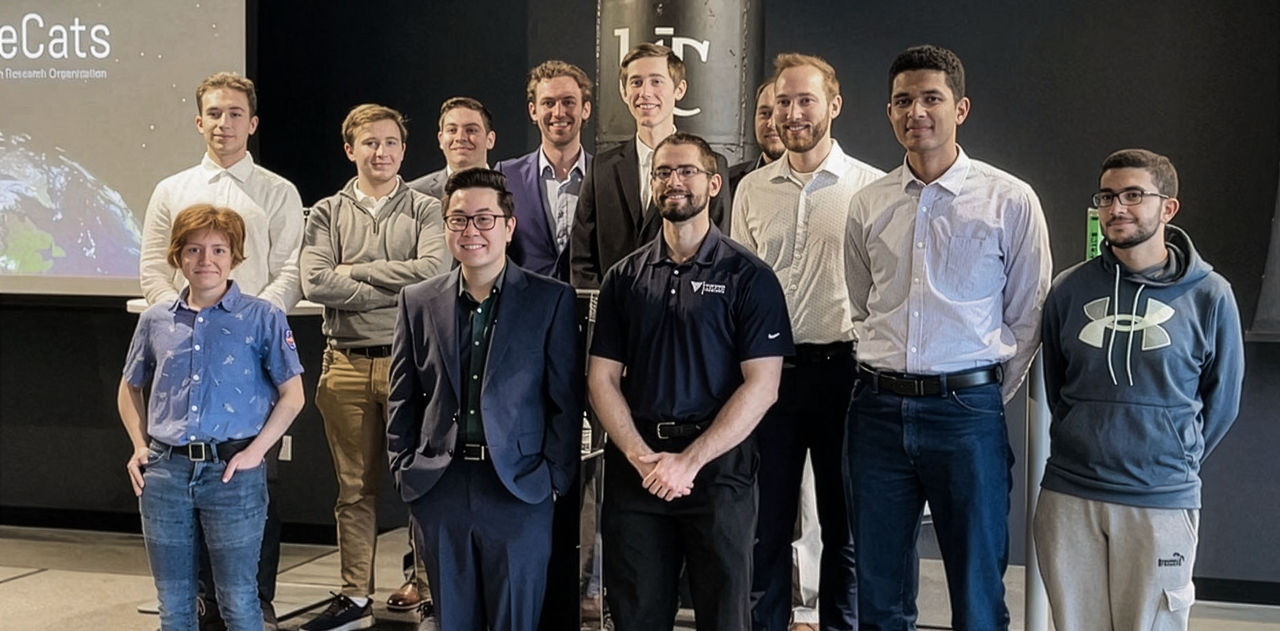
Generations of CubeCats, past and present, stand in solidarity knowing they each played a part in something historic. Photo/Greg Glevicky
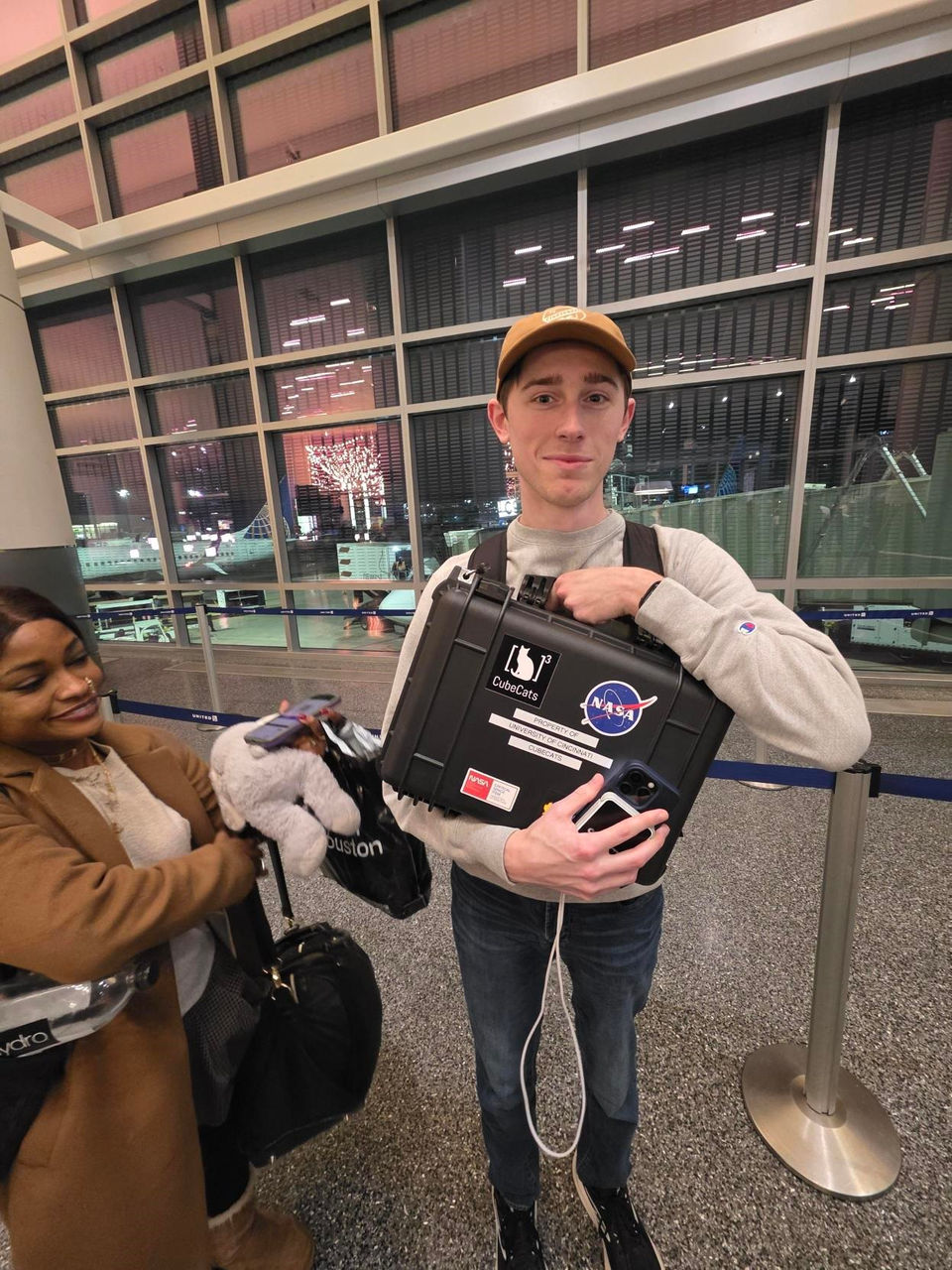
Sam Kohls in the airport, was literally attached to the case safeguarding the satellite to its destination in Houston. Photo/CubeCats
Founded in 2015, UC CubeCats has grown into a nearly 100-member, student-run nonprofit research organization. Its CATiSE program (CubeCats Applied Training in Space Exploration) immerses students, especially first-years, in hands-on spacecraft design, leadership and mission operations.
During the event current and former CubeCats members were invited to stand and be recognized, earning a thunderous round of applause. Carovillano shared a personal moment when Ares Schueller, a CubeCats alumnus, spotted the satellite at the airport on the way to Houston, bringing the experience full circle. “I introduced myself as a former member of the CubeCats team,” he said. “I worked on that satellite. Seeing it finally on its way to NASA was surreal.”
Launching new ideas
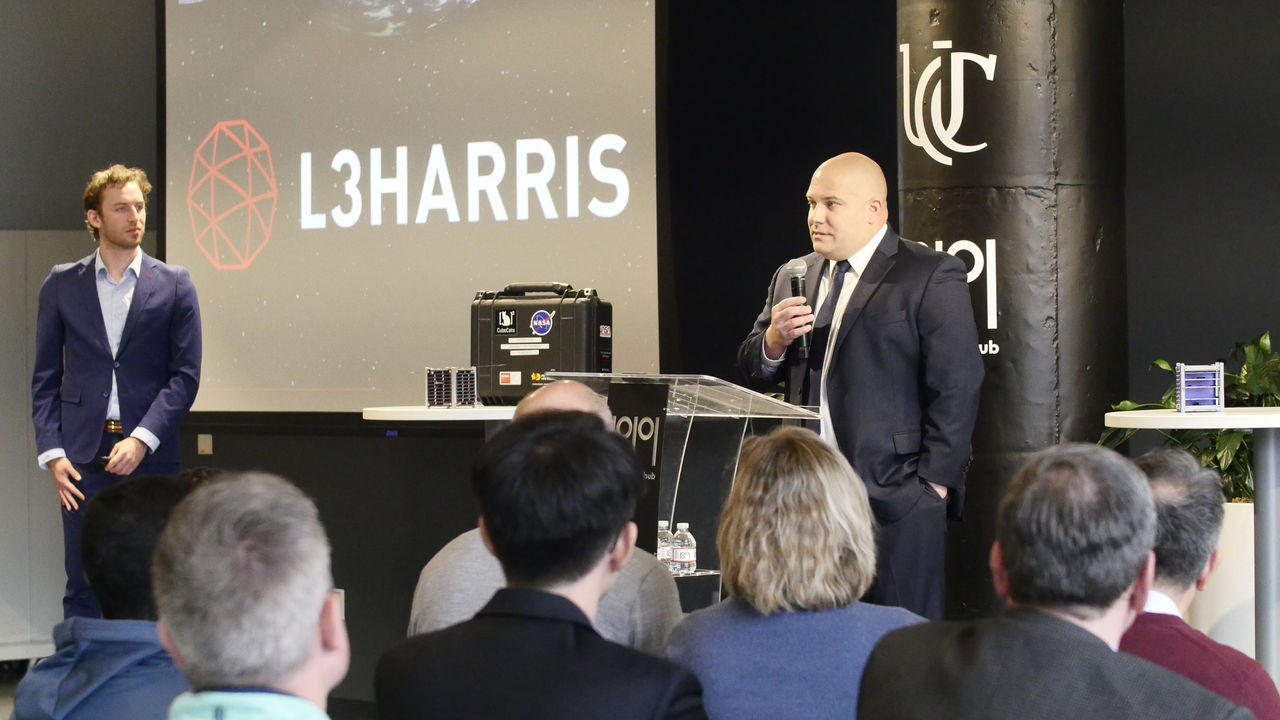
Jake Hendrickson, space avionics chief engineer at L3Harris. Photo/Greg Glevicky
Sponsors and partners such as L3Harris Technologies, one of the country’s largest defense contractors. Jake Hendrickson, space avionics chief engineer at L3Harris, praised the students: “They demonstrated the kind of technical rigor, collaboration and problem-solving we value at L3Harris. This project reflects the future of aerospace engineering, and we’re proud to support the next generation of innovators.”
What’s next for the CubeCats?
The team is already building its next mission, HABSat-1, an even more ambitious satellite expected to be twice the size of LEOPARDSat-1.
With LEOPARDSat-1 now integrated and awaiting launch, CubeCats leaders say the organization is just getting started. The past year saw unprecedented growth, new partners, sponsors and missions already in development. Soon, LEOPARDSat-1 will orbit Earth as a testament to student collaboration, innovation and perseverance.
UC students can join CubeCats by emailing uccubecats@gmail.com.
Cover image: Ohio's first fully student-led LEOPARDSat-1 satellite. Photo/CubeCats
Innovation Lives Here
The University of Cincinnati is leading public urban universities into a new era of innovation and impact. Our faculty, staff and students are saving lives, changing outcomes and bending the future in our city's direction. Next Lives Here.
Related Stories
UC students engineer robotics safety and strategy
January 22, 2026
Three UC co-op and capstone students joined Sensory Robotics as to position the fast-growing company for marketing success and engineering prowess.
UC CubeCats satellite makes hiss-tory at NASA
April 2, 2026
UC Students Launch First Satellite April 8. Help Send Bearcats to NASA Liftoff as they make history for UC and Ohio.
UC student’s start-up solves space management problem
November 9, 2018
Natalus, Inc. uses lidar sensors to help companies manage their space