
Intrapreneurship: Strategies to promote internal innovation
Intrapreneurship promotes innovative thinking within larger businesses

Innovation is usually seen as the work of agile startups and bold founders.
Intrapreneurship brings the same entrepreneurial drive inside large organizations, empowering employees to think bigger, move faster and build what’s next from within.
Experts in the Cincinnati innovation ecosystem say intrapreneurs need a clear strategy to gain the freedom and resources to succeed. The University of Cincinnati’s 1819 Innovation Hub supports startups while encouraging transformation within sizable companies, serving as a focal point for intrapreneurs in Southwest Ohio.
Below are strategies to help you innovate successfully within your current role.
Innovation in large businesses is rarely straightforward, easily becoming a maze of competing priorities, limited budgets and deeply rooted processes. Employees often find themselves fighting for resources while navigating goals that weren’t built for experimentation.
The most effective intrapreneurs understand this reality. They win by identifying real organizational pain points and delivering solutions that make the business stronger from the inside out.
I'm always looking for small things [in my organization] that I was like, 'Maybe we could make that better.'
Abby Hess, Clinical innovation lead, Cincinnati Children's Hospital
“I’m always looking for small things [in my organization] that I was like, ‘Maybe we could make that better,’” Abby Hess, a nurse practitioner and clinical innovation lead at Cincinnati Children’s Hospital Medical Center, said during an intrapreneurship discussion.
Hess recognized an opportunity to strengthen understanding of how pediatric anxiety during anesthesia was evaluated. She developed the Child Induction Behavioral Assessment (CIBA), a standardized tool that brings clarity and consistency to the measurement of outcomes. The tool is currently being used in hospitals worldwide.
Hess identified a daily challenge and solved it. She focused on an unmet need rather than trying to improve an already functioning process.
“Start small,” Hess advises. “Noticing those problems, coming up with ideas to solve them and then working with your leadership to say how you might do something different.”
Nate Sowder, ecosystem innovation manager at 1819 partner company Fifth Third Bank, said, “[Intrapreneurship] is a trust exercise … it’s about building a proof culture, building trust and then showing I learned something from it so I can keep doing those things.”
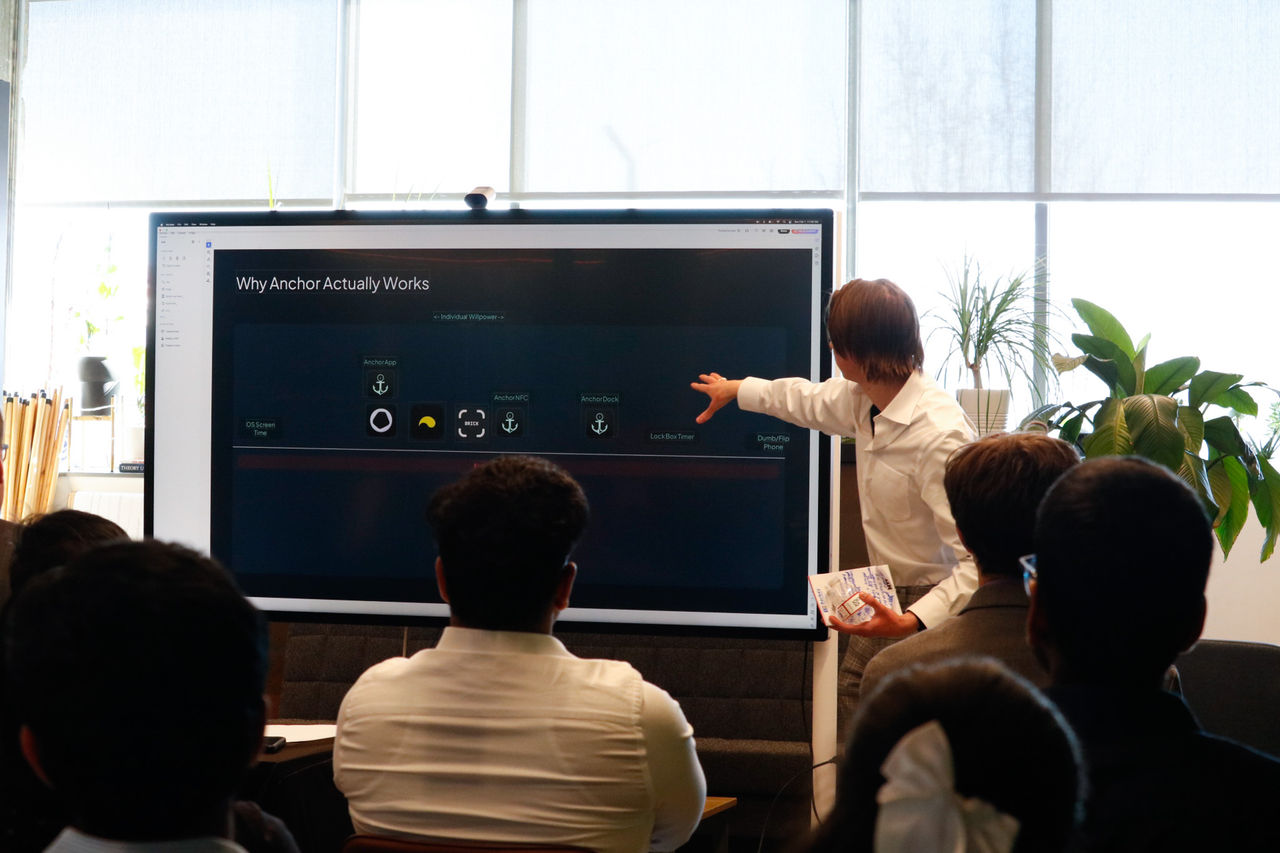
Project pitch at 1819. Photo/Kailyn Swarts
Building a culture of proof means demonstrating measurable results that earn trust and sustain momentum. When you consistently demonstrate impact, you make it easier for your organization to continue investing in your ideas. Without clear wins, even promising intrapreneurial efforts may quickly be dismissed as distractions rather than drivers of value.
“No one’s telling me to do these things when it comes down to intrapreneurship,” Sowder said. “It’s about me proving I should be allowed to work on it.”
Work visibility is essential to earning credibility and support. While self-promotion may feel uncomfortable, staying quiet about your impact can prevent momentum and limit opportunities to advance.
“Showing the work that I’m doing – showing that it’s valuable – is something I’ve never been great at,” Sowder said. “But I have to do that to show it’s worth doing all the time.”
Responsibility for transparency does not rest solely on your manager. “A lot of [making my work visible],” Sowder said, “falls on me.”
Intrapreneurs within the Cincinnati Innovation District have access to resources that many startup founders can only dream of such as funding streams, built-in infrastructure and a direct line to UC talent and STEM students. They also often have cross-functional teams to collaborate and network with to support and accelerate their ideas and scale impact more quickly.

People working on the second floor of 1819. Photo/Kailyn Swarts
“There’s so many advantages when you’re in a big organization,” Hess said. “Because of all the resources at your disposal to be able to tap into for innovation.”
These resources make time-consuming, costly research feasible. In many cases, intrapreneurship is the most practical way to pursue large-scale innovation.
Hess encourages leveraging workplace resources for ideas that address real problems. When a company resists change, entrepreneurship through outside groups like the UC Venture Lab may be a better path.
“Sometimes entrepreneurship is the right route for a certain idea,” Hess said. “And sometimes you can do it better if you’re building in collaboration with your organization.”
The most powerful ideas often start with simple projects. By making steady, iterative progress, intrapreneurs can test concepts, demonstrate impact and earn support one win at a time.
Our ideas need to get smaller ... it becomes a lot harder to say 'no' to.
Nate Sowder Ecosystem innovation manager, Fifth Third Bank
“Our ideas need to get smaller,” Sowder said. “Then you can easily test it, value if it’s true and then, in theory, it becomes a lot harder to say ‘no’ to.”
Modest projects demand fewer resources and are simple to implement. Achieving success with these manageable initiatives can open the door for larger intrapreneurial opportunities down the road.
“If we build something super small,” Sowder said, “it becomes a lot harder to say ‘no.’”
A home where innovators thrive
The 1819 Innovation Hub in the Cincinnati Innovation District serves more than UC students, connecting corporate leaders with startup founders and providing resources for both.

Front staircase at 1819 Innovation Hub. Photo/Gregory Glevicky
Intrapreneurs at 1819 may meet founders of AI startups or employees from partnering companies like U.S. Bank, Microsoft or Great American Insurance Group. These interactions can inspire new ideas and approaches.
Prototyping is also supported at 1819. The UC Ground Floor Makerspace spans 12,000 square feet and is the largest in Greater Cincinnati, enabling intrapreneurs to turn ideas into physical models quickly.
Whether you’re generating ideas or ready to implement them, the 1819 Innovation Hub provides the space and resources to turn intrapreneurial plans into reality.
Featured image at top: Business meeting at 1819. Photo/Gregory Glevicky
Innovation Lives Here
The University of Cincinnati is leading public urban universities into a new era of innovation and impact. Our faculty, staff and students are saving lives, changing outcomes and bending the future in our city's direction. Next Lives Here.
Related Stories
Get ready for your next job with a NEXT Mindset
February 17, 2026
University of Cincinnati students will discover how to prepare themselves for the workplace during the NEXT Mindset Professional Readiness Day on Feb. 24 at the 1819 Innovation Hub.
Ohio ranked America’s 5th best state for business
August 27, 2025
CNBC ranked Ohio as a top 5 state for business in 2025, and recent reports name Cincinnati as the Buckeye State’s destination of choice for global companies and startups.
Coding without code: How vibe coding rewrites the rules
March 17, 2026
Vibe coding allows beginners to build sophisticated web applications with zero coding skills. Discover how vibe coding can simplify workflows and drastically boost productivity.