'Time is brain' again, now for control of intracerebral hemorrhage
MedPage Today highlights UC-led research

MedPage Today highlighted research led by the University of Cincinnati's Joseph Broderick that found administering a synthetic protein can reduce bleeding and improve outcomes for certain patients at the highest risk of continued bleeding following a type of stroke called an intracerebral hemorrhage (ICH).
Broderick, MD, presented results of the FASTEST trial at the International Stroke Conference, with results also published in The Lancet. The trial tested a drug called recombinant factor VIIa (rFVIIa), a synthetic version of a protein the body naturally produces to help stop bleeding.
Overall findings of the trial were neutral, and the trial was ended early for futility. While the drug did slow bleeding overall, there was a lack of evidence of benefit for clinical outcomes in the overall study population.
However, researchers found the drug was most effective in people who have what is called a “spot sign” on computed tomography (CT) brain imaging and for patients treated within 90 minutes of stroke onset.
"We think we now have a very clear roadmap for the first hemostatic therapy for intracerebral hemorrhage," said Broderick, professor in UC’s College of Medicine, senior adviser at the UC Gardner Neuroscience Institute and director of the NIH StrokeNet National Coordinating Center. "The closer to time zero you can treat, the less bleeding you are likely to have with rFVIIa treatment."
Read the MedPage Today article.
Medscape and VJNeurology also covered the results.
Read more about the trial results.
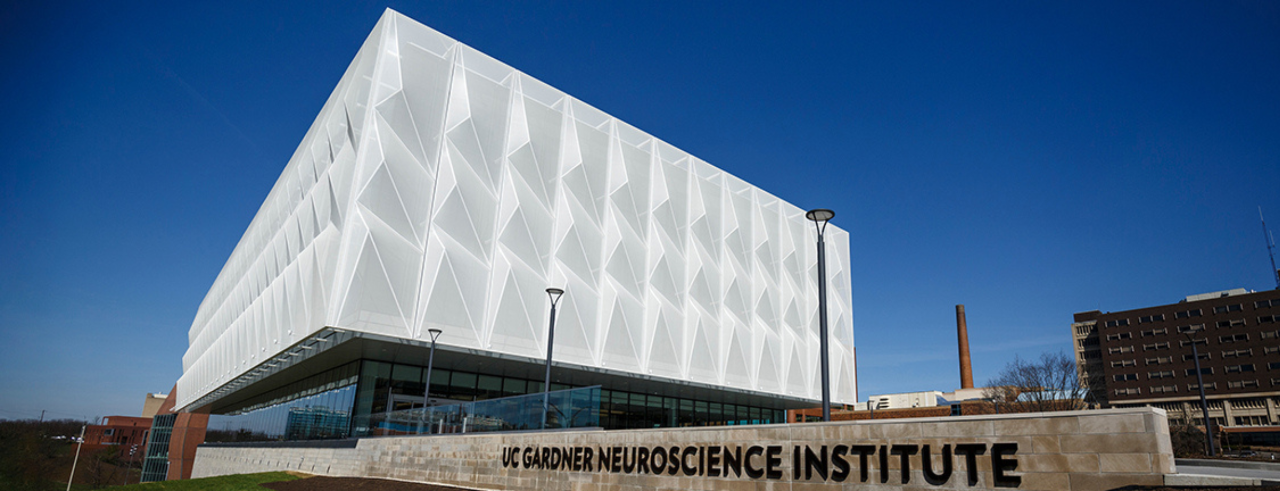
Featured photo at top of UC Gardner Neuroscience Institute. Photo/University of Cincinnati.
Related Stories
UC marks 4 years saving lives with mobile stroke unit
August 15, 2024

The University of Cincinnati's Christopher Richards spoke with Local 12 about the four-year anniversary of the mobile stroke unit that can bring the emergency department directly to patients.
Trial finds new drug safe, effective to treat deadliest form of epilepsy
October 23, 2024

MSN highlighted research presented by the University of Cincinnati’s Brandon Foreman that found ganaxolone is a safe and effective treatment for refractory status epilepticus.
Certain weather patterns can trigger migraines
June 30, 2026

Certain weather patterns really do trigger migraine headaches — and the incidence is more common in the Midwest. As WGN 9 in Chicago recently reported, researchers at the University of Cincinnati College of Medicine have identified two specific weather patterns associated with an increased risk of headaches.