
Volunteers work with UC to reforest parts of downtown
UC co-op students lend expertise to nonprofit Taking Root to bring ‘tiny forests’ to Cincinnati

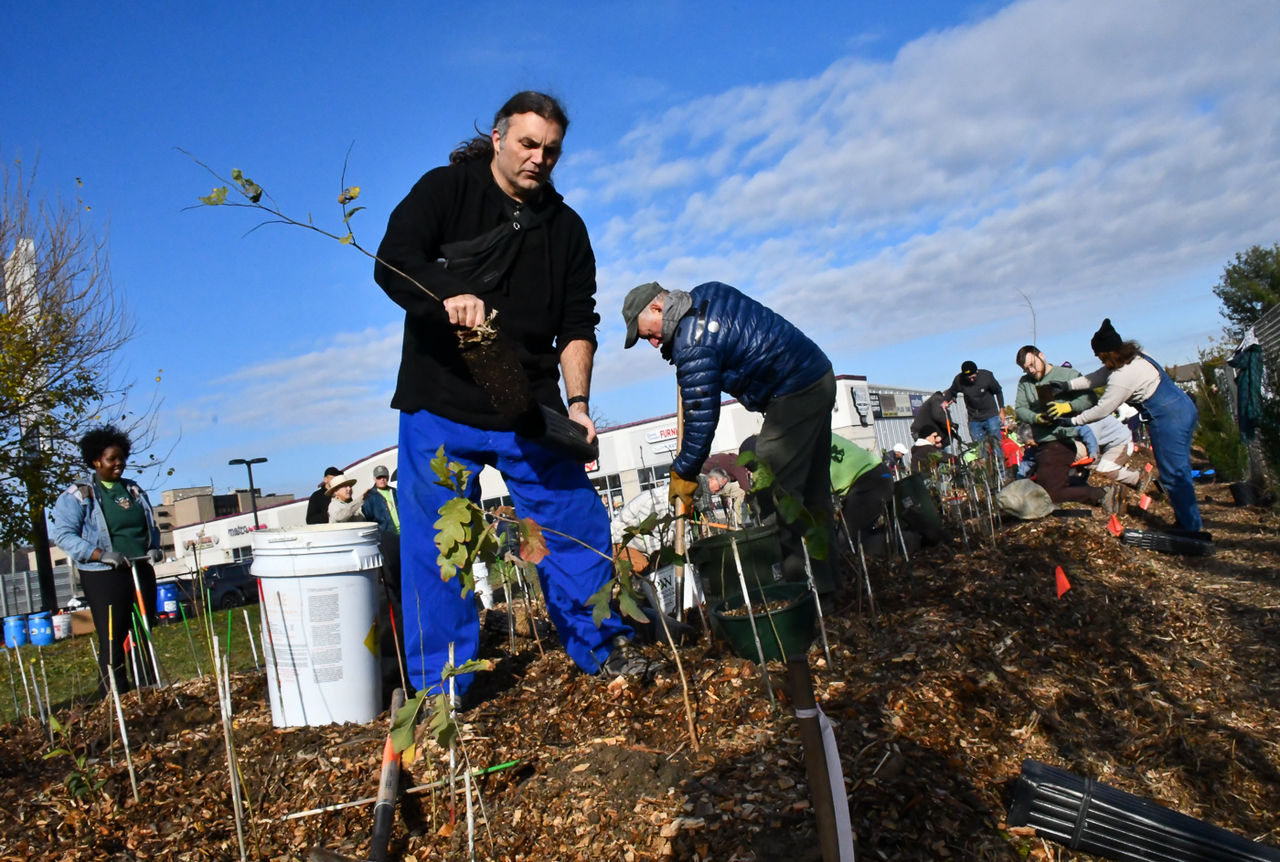
More than 70 volunteers on Saturday helped reforest a patch of ground next to a highway with help from co-op students from the University of Cincinnati.
UC’s Center for Field Studies worked with the Tristate environmental group Taking Root to plant a “tiny forest” along I-75 near Hopple Street.
The urban reforestation project is modeled after a demonstration project students planted across from the field center in Crosby Township next to Miami Whitewater Forest.
Center director and UC Professor Kenneth Petren and his students are lending their expertise to the effort to create new wildlife habitat downtown using ecological practices pioneered by Japanese botanist Akira Miyawaki. Miyawaki or “tiny forests” restore urban spaces with densely planted, very young trees and shrubs, placed in soil augmented with compost, Petren said.
“A tiny forest grows and matures rapidly, creates a variety of microhabitats, serves pollinators, beneficial insects, and in turn, birds, ultimately creating a more mature forest quickly,” he said.
Saturday's reforestation project marked the second UC-inspired tiny forest planted by the group. In April, they planted hundreds of trees at a nearby lot in Camp Washington.

Volunteers plant hundreds of saplings to reforest a lot along I-75 at Hopple Street with help from UC's Center for Field Studies and the nonprofit Taking Root. Photo/Michael Miller
UC biology student Brady Fitzgerald is working in UC’s cooperative education program at the Center for Field Studies, where he contributes to its conservation and research projects.
UC’s co-op program helps students graduate with up to 1.5 years of paid work experience and co‑op earnings that significantly offset the cost of a degree.
“Co-op helps me pay rent where I live down at UC. That’s a great help. And it’s amazing to have a job in something I’m interested in doing,” he said. “I’m meeting a lot of people and learning a lot of skills.”
Bringing the community together like this is a win, regardless of what happens with the forest.
Kenneth Petren, Director of UC's Center for Field Studies
On Saturday, he helped volunteers plant hundreds of saplings. They erected deer fencing around the perimeter to protect the vulnerable plants.
Fitzgerald said he has contributed to numerous projects at the center during his co-op, from surveying aquatic life in local streams to removing nonnative species at UC’s field center, a mix of meadows, forests and classrooms on a former Shaker farm.
“We took out invasive species like Johnson grass. Now we have a good mix of native plants: oaks, maples, cherry trees,” Fitzgerald said. “The one I’m most excited about are the two disease-resistant American chestnuts. They used to be the dominant tree before chestnut blight killed almost every single one.”

UC's Center for Field Studies in Crosby Township provides classrooms in a former Shaker farm surrounded by meadows, creeks and forests. Photo/Connor Boyle/UC Marketing + Brand
Petren said events like Saturday’s tree-planting have social benefits as well, showing what people can accomplish for their community in just a couple hours.
“Bringing the community together like this is a win, regardless of what happens with the forest,” he said. “But think of the sound noise coming from the highway. You’ll feel much more buffered from that. And there will be cleaner air. And a greater heat-island dissipation here.”
The nonprofit visited UC’s field center’s tiny forest demonstration site and was convinced of its potential.
“It seemed to be gaining traction. The idea that you can plant a forest in small spaces is an incredible concept,” Taking Root President Lauren Enda said.
“These forests grow much faster. The reason is the soil is amended. We did a lot of work excavating the soil and getting out stone and rock. We mixed in good compost. And added layers of woodchips on top. The moisture stays in the soil longer,” she said.
Group Vice President Joe Vogt said the close-growing community of plants also seems to provide unseen mutual benefits among their roots, something ecologist Suzanne Simard coined the “wood wide web.”
“They really strengthen one another. Not every tree will survive, but even those that die will nourish the rest. That’s what happens in a natural forest,” Vogt said.
Featured image at top: UC Center for Field Studies co-op student Brady Fitzgerald takes part in a reforestation project Saturday in Camp Washington. Photo/Michael Miller
UC co-op program: Frequently Asked Questions
What is co-op at the University of Cincinnati?
UC defines cooperative education, or co-op, as meaningful, career-oriented, compensated workplace experiences. Co-op is a structured program where students complete academic coursework and get a paid job in their field of study, graduating with both a degree and real-world professional experience.
Find more info: What is co-op in college? How cooperative education works
Are UC co-op positions paid?
Many UC co‑ops are paid, full‑time roles. Students often use co‑op earnings to help cover tuition and living expenses, which can reduce the need for loans and improve the overall return on investment of their degree.
Learn more: How cooperative education and paid experience change the ROI equation
Which majors offer co-op, and where do UC students work?
Co‑op is deeply integrated into programs in engineering, design, information technology, business, arts, sciences and more, with support from the College of Cooperative Education and Professional Studies. UC is committed to offering all students career-building, real-world experiences related to their field.
UC students co‑op in Cincinnati, across Ohio, throughout the U.S. and abroad with employers ranging from startups, design studios and nonprofits to hospitals, government agencies and Fortune 500 companies.
How does co-op help students after graduation?
By graduation, many Bearcats have up to 1.5 years of career‑related experience, strong resumes and professional networks. A significant number receive full‑time job offers from their co‑op employers, which is why the University of Cincinnati is widely recognized as the global founder of cooperative education and a national leader in co‑ops and internships.
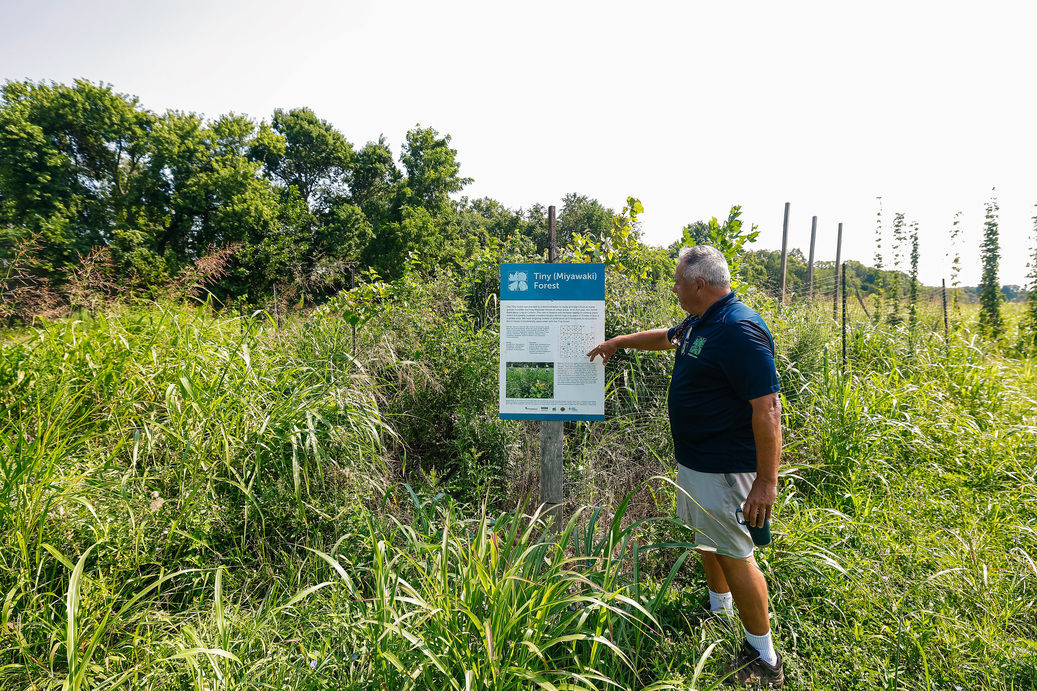
UC Professor Kenneth Petren shows off a Miyawaki 'tiny forest' demonstration project that students planted at the Center for Field Studies. A nonprofit environmental group visited the site and was persuaded to use the same technique to reforest parts of Cincinnati. Photo/Connor Boyle/UC Marketing + Brand
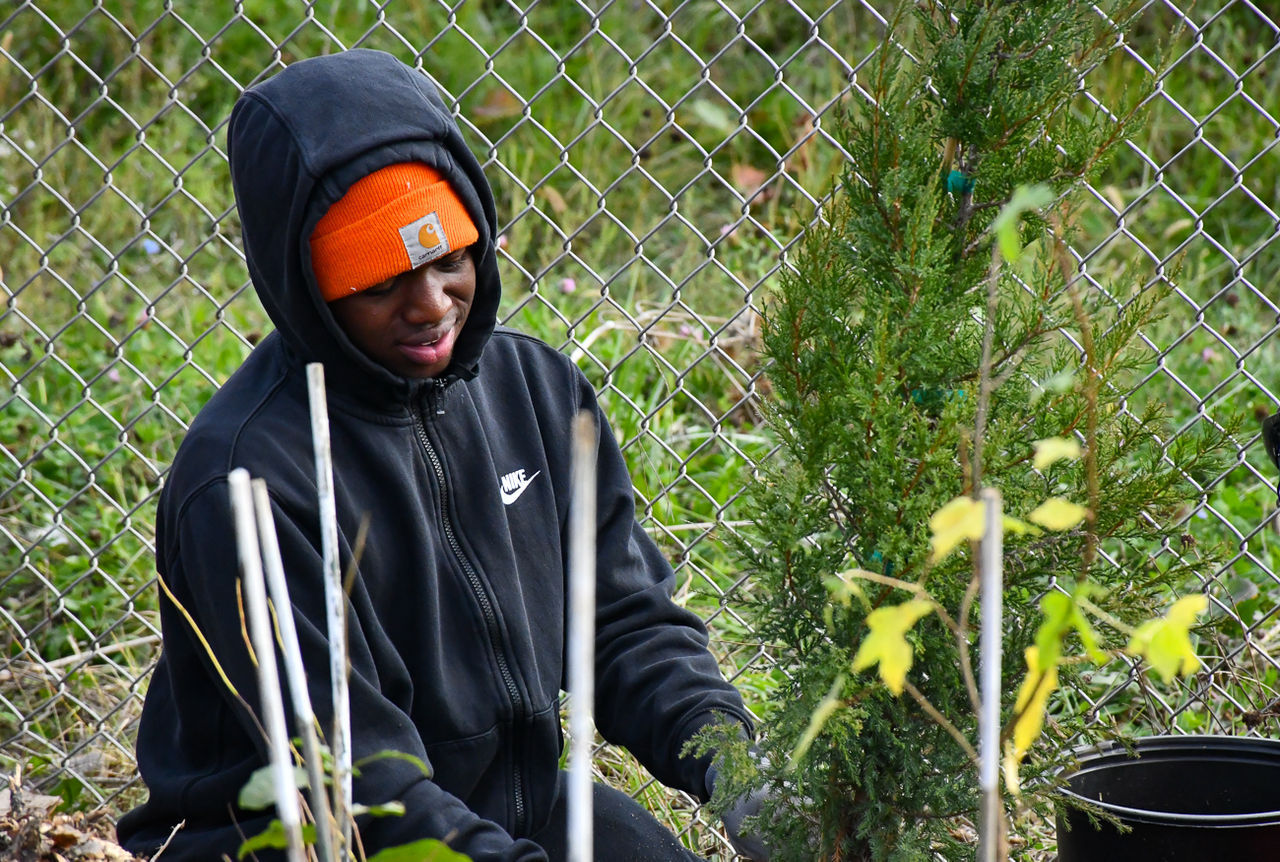
Students from several Cincinnati high schools take part in a tree-planting off I-75 in Camp Washington. Photo/Michael Miller
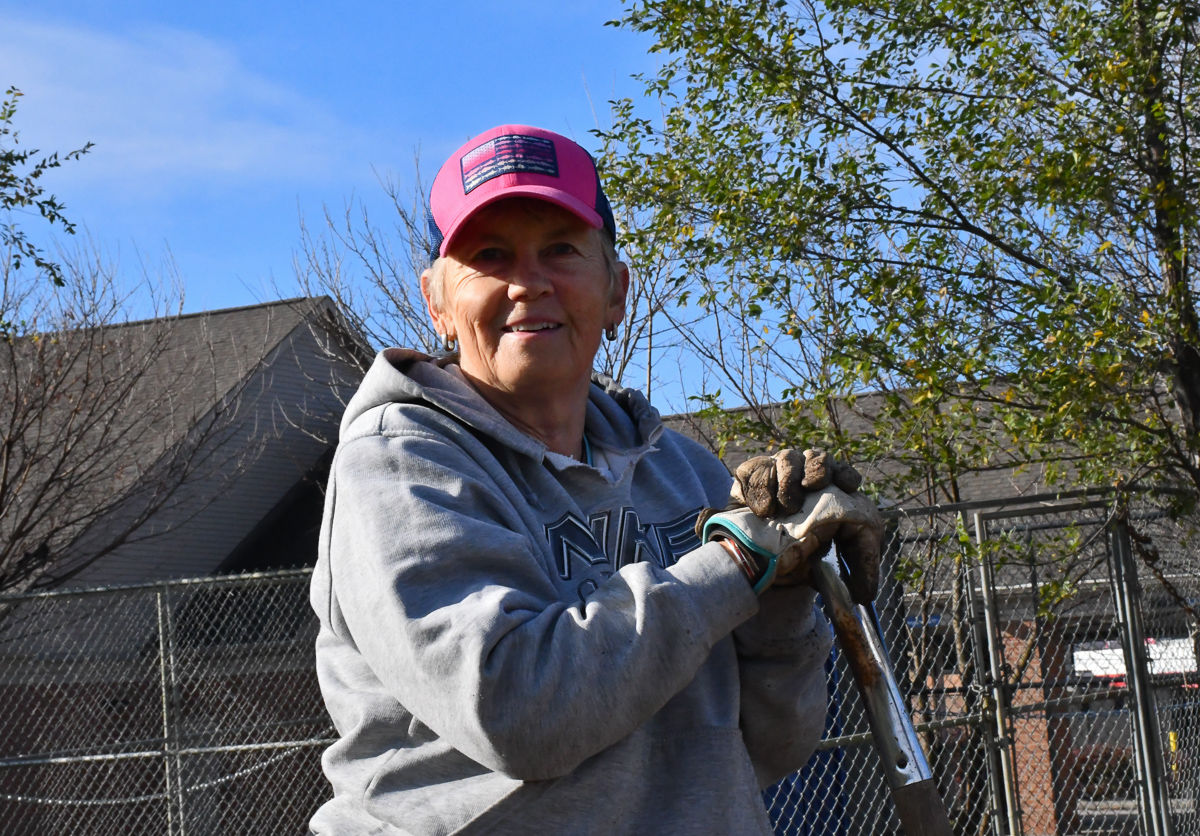
Cincinnati retiree Carolyn McClintock volunteers at the tree-planting in Camp Washington. McClintock said she is reforesting parts of a property she bought in Warren County, so she is no stranger to shovels. "I have the calluses to prove it," she joked. Photo/Michael Miller
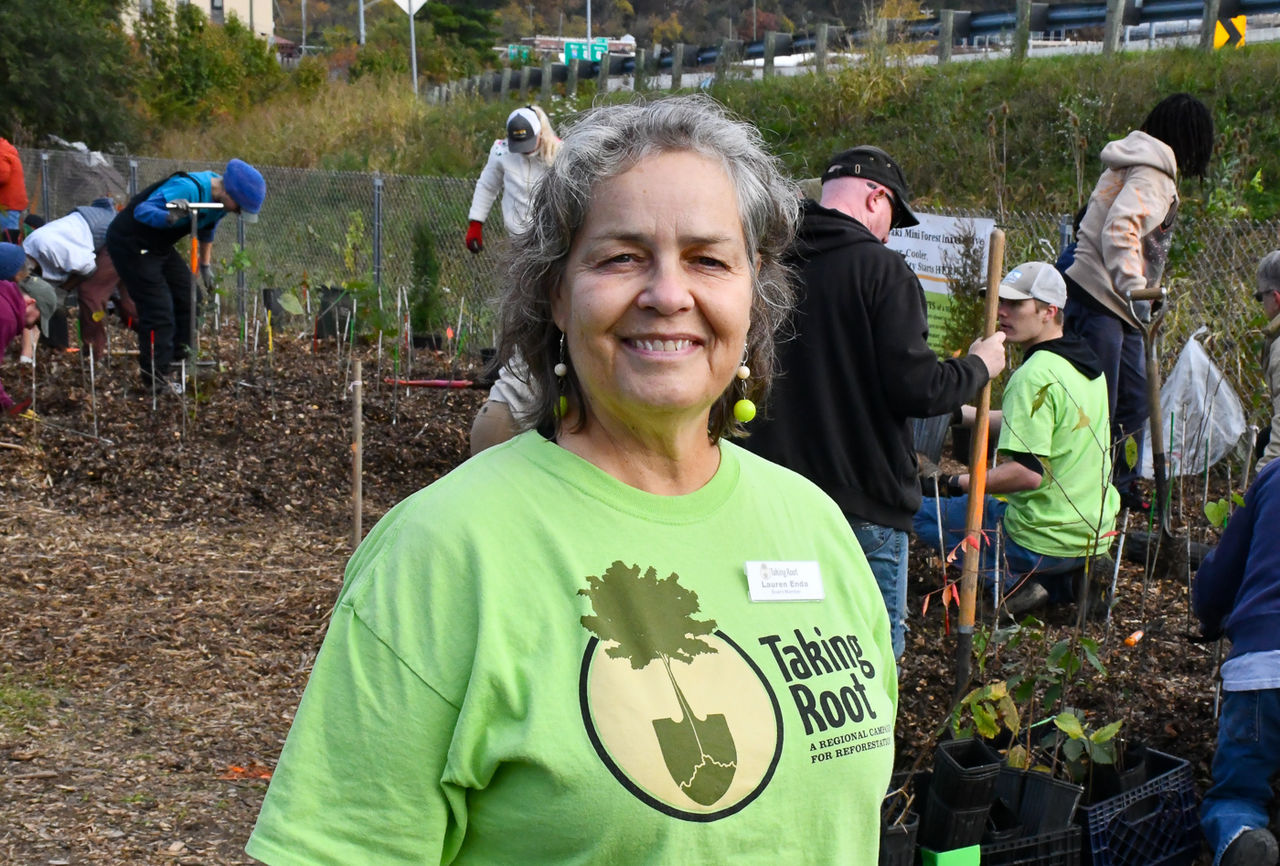
Lauren Enda, president of the nonprofit group Taking Root, said they were inspired to plant 'tiny forests' in downtown Cincinnati after seeing a demonstration project at UC's Center for Field Studies. Photo/Michael Miller
Randall Marshall, a microlab instructor in UC's Department of Biology, volunteers to reforest an urban lot in Camp Washington. Photo/Michael Miller
Cincinnati is our city
Cincinnati is our extended classroom, lab, career network and a place to explore, learn and serve. UC’s urban location gives students unmatched access to real-world learning, artistic inspiration and vibrant culture. Our research and community engagement continually benefit the city we call home.
Related Stories
How the University of Cincinnati co-op program is shaping the future of work at SXSW
March 17, 2026
The University of Cincinnati served as a 2026 Workplace Track sponsor at the annual South by Southwest (SXSW) Innovation Conference March 12-18 in Austin, Texas, showcasing how co-op is redesigning the future of work.
HEAPY goes all in on UC’s talent pipeline
August 29, 2025
Ohio-based engineering and construction firm HEAPY opened an office at UC's 1819 Innovation Hub to help recruit more students for co-ops. Now UC students top HEAPY’s recruitment list, with Bearcats delivering high-impact projects right from the Cincinnati Innovation District in UC's backyard.
Back to School 2025: UC’s sustained growth
August 25, 2025
The University of Cincinnati will continue to see growth in enrollment as classes begin Monday, Aug. 25, with a projected 54,000 students — a 1.4% increase over last year.